
AUDIO PODCAST
SUMMARY: KEY INSIGHTS INTO LAYERED APPROACHES TO SCRIPTURE
The article emphasize that studying the Bible through layered approaches is like using a nutcracker to open a walnut and access the nutritious kernel inside. These interpretive frameworks help us move beyond a superficial understanding of the text and uncover the deeper spiritual truths that nourish our souls. The sources highlight several key points:
- Scripture speaks on multiple levels: The Bible is not a one-dimensional book. It speaks to us both physically and spiritually, addressing the complexities of our existence. Hebrews 4:12 describes the Word of God as a powerful force that pierces deeply, dividing soul and spirit, while 1 Thessalonians 5:23 encourages the harmonious development of our spirit, soul, and body. These passages, along with 3 John 1:2, illustrate the interconnectedness of our physical and spiritual well-being. The Bible mirrors this duality by addressing both the visible and invisible aspects of reality.
- The Outer and Inner Layers: The sources compare the Bible to a walnut, with an outer shell and an inner kernel. The outer shell represents the literal, historical, and straightforward aspects of the text—the words on the page, the stories, and the events. This layer is essential for understanding the foundation of the Bible. The inner kernel symbolizes the spiritual, symbolic, and transformative truths within the text. This is where we discover deeper insights into God’s heart, His plans, and His kingdom.
- Bridging the Physical and Spiritual: The sources explain that Jesus often used parables and metaphors to communicate profound spiritual truths using familiar, physical objects. For example, when He said, “I am the bread of life” (John 6:35), He wasn’t just talking about physical bread but about Himself as the source of spiritual nourishment. The Bible employs this same principle, using tangible concepts to help our minds grasp spiritual realities.
- The Intersection of Literal and Spiritual: The sources use the image of the vesica piscis, the overlapping space created by two intersecting circles, to represent the point where the literal and spiritual meanings of scripture converge. This overlap is where we find the richest meaning, as the text becomes both grounded and transcendent. Examples include the manna in the wilderness, which served as both physical sustenance for the Israelites and a spiritual symbol of Christ, and the Tabernacle, which was a physical structure for worship but also a representation of Christ’s dwelling among us and within our hearts.
- Transformation through Understanding: The sources highlight that the goal of studying the Bible is not just to gain knowledge but to experience transformation. This occurs when the Word of God moves beyond intellectual understanding and becomes a life-changing revelation that impacts every aspect of who we are. Layered approaches help us see the Bible as a holistic message that speaks to our intellect, emotions, body, and spirit, leading us towards a deeper relationship with God.
The sources conclude that these layered approaches, while requiring effort and intentionality, ultimately reveal the treasures of God’s Word and draw us into a closer relationship with Him. By understanding the different layers of meaning within the Bible, we can experience its transformative power and connect with the eternal truths it offers.
INTRODUCTION
The Bible is unlike any other book. It’s both timeless and layered, filled with treasures that can’t simply be understood by intellect alone. While it speaks plainly to the mind, offering stories, teachings, and truths that even a child can grasp, it also contains mysteries—hidden depths waiting to be uncovered. These mysteries are not unlocked by sheer mental effort or intellectual genius. In fact, relying too much on our own cleverness can sometimes be a stumbling block. Jesus Himself said, “The secrets of the kingdom of God have been given to you” (Luke 8:10).
Did you catch that? The secrets—those hidden truths—are given. They aren’t earned through hard work or academic achievement. They are revealed by God in His timing to those who seek Him and are willing to spend time in His presence.
Studying the Bible is not merely an intellectual pursuit, but a sacred practice—an ongoing conversation with the Divine. It is not about mastering the text as such, but about allowing the Spirit within the Word to master and transform us.
This can be freeing, especially for those of us who feel overwhelmed or intimidated by the complexities of Scripture. You don’t need to pressure yourself into understanding everything at once. Your brain, designed by God, is a pattern-recognizing and connection-building tool. When you spend time in the Word—reading, meditating, and listening—it naturally begins to make connections and build understanding over time. Your role isn’t to force it, but to stay in the text, giving God the space to work in you.
Jesus modeled this beautifully with His disciples. He didn’t rely on their education or intellectual prowess—in fact, they were fishermen, tax collectors, and everyday people. But as they spent time with Him, they began to see and understand the deeper truths of the kingdom. The same is true for us today. The mysteries of God aren’t reserved for the brilliant; they are for the humble, those who take the time to be with Him, trusting Him to reveal His truth as we go.
The Bible is not just text, but programming code. It is not meant to just inform us. It is meant to transform us.
So as we approach this topic, remember: the Bible isn’t just a book to be analysed; it’s an invitation to know God. Its treasures are waiting to be uncovered—not by trying harder, but by staying longer. Let’s take this journey together, confident that the secrets of the kingdom are gifts God delights to give to those who seek Him.
DELVING INTO THE DIVINE: UNVEILING THE DEPTHS OF SCRIPTURE WITH FRAMEWORKS
For centuries, interpreters of Scripture have recognized that the Bible is not a one-dimensional text but a divine masterpiece, layered with meaning. Two of the most influential frameworks for understanding these layers are the Jewish interpretive method known as PARDES (Garden of Scripture) and the Christian Fourfold Senses of Scripture, also know as the QUADRIGA, from the medieval period. Both systems illuminate the depth of God’s Word, offering insights into its literal, moral, symbolic, and mystical dimensions.
Both systems of exegesis system flow from traditional belief in the text as Divine revelation; Mosaic authorship in regard to the Torah, prophetic inspirations in the rest of Tanakh i.o.w. the Old Testament, and now also the New Testament.
While these frameworks emerged in different traditions, they share remarkable parallels. Let’s explore their histories, uncover their principles, and see how we can apply these methods to enrich our own study of Scripture, before we look at a SIMPLIFIED FRAMEWORK called the Walnut System.
THE HISTORY AND DEVELOPMENT OF THE QUADRIGA

The Christian Fourfold Senses of Scripture, also known as the Quadriga, developed during the Patristic and Medieval periods. Its roots lie in the writings of early Church Fathers such as Origen (185–254 CE) and Augustine of Hippo (354–430 CE), who believed that Scripture was divinely inspired to reveal truth on multiple levels.
Origen, in particular, was instrumental in proposing that the Bible can be read with both a literal and spiritual lens. He divided spiritual interpretation into two categories: the moral sense, which instructs believers on ethical living, and the allegorical sense, which unveils Christ’s role in God’s plan. These early efforts to categorize biblical meaning paved the way for the more systematic Quadriga of the medieval period.
By the 12th century, the Fourfold Senses became a cornerstone of Christian exegesis, championed by theologians like Hugh of St. Victor and Thomas Aquinas. Aquinas famously wrote that all spiritual senses of Scripture depend on the literal sense, emphasizing the importance of a grounded understanding before moving to deeper levels. The framework became particularly vital in an era when biblical study was often the domain of monasteries and universities, offering scholars a structured way to explore the text’s richness
THE ROOTS OF PARDES
The word Pardes (פַּרְדֵּס) means “orchard” or “paradise” and is an acronym for four Jewish interpretive approaches:
- Peshat (Literal)
- Remez (Allegorical/Symbolic)
- Derash (Homiletic/Moral)
- Sod (Mystical/Hidden)
HISTORICAL DEVELOPMENT OF PARDES
This method arose in Jewish tradition during the Talmudic period (c. 200–500 CE), encouraging students of Torah to move beyond the surface of the text into deeper spiritual truths.
- Peshat represents the straightforward, literal meaning of the text, the foundation upon which deeper interpretations are built. It was essential for Jewish scholars to understand the historical and grammatical context of the Scripture.
- Remez explores hints or allegorical meanings, often drawing connections to other parts of the Hebrew Bible. This layer invites readers to see the broader theological implications of the text.
- Derash involves homiletic interpretations, often used in sermons and teachings to draw moral and ethical lessons from the text. This method employs various hermeneutical techniques, including midrashic stories and parables, to elucidate moral truths.
- Sod delves into the mystical and esoteric aspects of Scripture, exploring hidden meanings and spiritual insights. This interpretive level was particularly significant in Kabbalistic traditions, where the focus was on uncovering the divine mysteries embedded in the text.
THE MEDIEVAL FOURFOLD SENSES OF SCRIPTURE
During the Middle Ages, Christian theologians developed a similar interpretive method, often called the Quadriga, which organized biblical meaning into four senses:
- Literal/Historicus: What happened?
- Allegorical/Analogicus: What does it signify about Christ or theology?
- Tropological/Moralis: What does it teach us about living rightly?
- Anagogical: What does it reveal about eternity and the divine?
HISTORICAL DEVELOPMENT OF THE FOURFOLD SENSES
By the 12th century, the Fourfold Senses became a cornerstone of Christian exegesis, championed by theologians like Hugh of St. Victor and Thomas Aquinas. Aquinas famously wrote that all spiritual senses of Scripture depend on the literal sense, emphasizing the importance of a grounded understanding before moving to deeper levels. The framework became particularly vital in an era when biblical study was often the domain of monasteries and universities, offering scholars a structured way to explore the text’s richness
- Literal (Historicus) was the bedrock of medieval exegesis, emphasizing the importance of understanding the historical context and literal meaning of the biblical text.
- Allegorical (Analogicus) interpretation sought to uncover the deeper theological significance, often relating Old Testament events and figures to New Testament truths and the life of Christ. This method was heavily influenced by early Church Fathers like Origen, who believed that Scripture contained multiple layers of meaning.
- Tropological (Moralis) interpretation focused on the moral lessons and ethical teachings that could be derived from the text. Medieval scholars like Gregory the Great and Thomas Aquinas used this sense to provide practical guidance for Christian living.
- Anagogical interpretation, the most mystical of the four senses, explored the ultimate spiritual truths and eschatological realities signified by the text. This sense was concerned with the soul’s journey towards God and the eternal implications of Scripture.
PARALLELS BETWEEN PARDES AND THE FOURFOLD SENSES
| Pardes | Fourfold Senses | Description |
|---|---|---|
| Peshat (Literal) | Historicus (Literal) | The plain meaning of the text—what the words say and the historical context they describe. |
| Remez (Symbolic) | Analogicus (Allegorical) | Deeper theological significance, often pointing to Christ or overarching biblical themes. |
| Derash (Moral) | Moralis (Tropological) | Ethical and practical lessons for daily life and behaviour. |
| Sod (Mystical) | Anagogical (Eternal) | Hidden meanings, mysteries, or truths about the divine and eternal realities. |
By combining these systems, we can approach Scripture with a multifaceted lens, embracing both its historical roots and its timeless spiritual insights.
Interpreting Scripture through PARDES and the Fourfold Senses: Two Examples
To illustrate how Pardes and the Fourfold Senses can be applied to Scripture, let us explore two key biblical passages. Each layer of interpretation reveals a deeper dimension, transforming how we understand and engage with God’s Word.
Example 1: Jacob’s Ladder (Genesis 28:10-17)
- Literal/Peshat (Historicus): What happened?
In the literal sense, this passage recounts Jacob’s dream while fleeing from his brother Esau. He sees a ladder reaching from earth to heaven, with angels ascending and descending on it. God appears and reiterates His covenant promises: the land, numerous descendants, and blessings to all nations through his seed. - Symbolic/Remez (Analogicus): What does it signify?
The ladder symbolizes the connection between heaven and earth, signifying the mediation between God and humanity. In Christian theology, this ladder points to Christ as the bridge, as Jesus Himself explains in John 1:51: “You will see heaven open, and the angels of God ascending and descending on the Son of Man.” - Moral/Derash (Tropological): What does it teach us?
Jacob’s response—setting up a stone as an altar, calling the place Bethel (“House of God“), and vowing to serve God—teaches us the importance of responding to God’s revelation with worship and commitment. Just as Jacob consecrated the place, believers are called to dedicate their lives as living altars of worship (Romans 12:1). - Mystical/Sod (Anagogical): What does it reveal about eternity?
Mystically, the ladder reflects the ultimate reconciliation between heaven and earth, culminating in God’s eternal kingdom. It anticipates the New Jerusalem, where heaven and earth are fully united, and God dwells with His people forever (Revelation 21:3). The vision is a foretaste of the eternal union between God and humanity.
Example 2: The Burning Bush (Exodus 3:1-15)
- Literal/Peshat (Historicus): What happened?
This passage describes Moses tending sheep on Mount Horeb when he encounters a bush that burns but is not consumed. God calls Moses from the bush, reveals His name (YHWH), and commissions him to lead Israel out of Egypt. This is the historical account, anchoring God’s covenant with Israel and His plan for deliverance. - Symbolic/Remez (Analogicus): What does it signify?
The burning bush symbolizes God’s holiness and eternal nature. The fire represents God’s self-sustaining power, which does not depend on anything else. In Christian interpretation, it also foreshadows Christ, the “I AM” who comes to deliver humanity from spiritual bondage (John 8:58). - Moral/Tropological (Derash): What does it teach us?
Moses’ reaction—removing his sandals in reverence—teaches the importance of approaching God with humility and respect. The moral lesson here is that serving God begins with reverence and obedience, even when the task seems daunting. It also challenges us to trust God’s power to equip us for His calling. - Mystical/Sod (Anagogical): What does it reveal about eternity?
Mystically, the bush that burns but is not consumed signifies God’s glory dwelling with His people without destroying them. This reflects the eternal communion believers will experience with God in the new creation. It points to the sanctifying presence of God, who refines and purifies without annihilation, drawing us closer to His eternal holiness.
BRINGING IT ALL TOGETHER

Both examples demonstrate how Pardes and the Fourfold Senses enrich our understanding of Scripture. The literal sense provides the foundation; the symbolic sense unveils deeper connections; the moral sense guides practical application; and the mystical sense offers insight into eternal (universal) principles and centres us spiritually.
By using these layered approaches, we see Scripture not as a single, static message but as an ever-unfolding revelation. This method equips us to engage with God’s Word at every level—historical, theological, practical, and spiritual—drawing us into a deeper relationship with Him.
So next time you open your Bible, ask:
- What happened?
- What does it signify?
- What does it teach me?
- What does it reveal about eternity i.o.w. spirituality?
You might just find that the simplest of stories is a gateway to an orchard of divine truth.
ISN’T THERE AN EASIER WAY?
I’m so glad you asked! Let’s take a moment to break this down. When we hear words like PARDES or QUADRIGA, they can sound strange, intimidating even. That’s because PARDES is a Hebrew word, and Quadriga comes from Latin. But to the people of their time and culture, these words were anything but confusing—they were ordinary and instantly relatable. Everyone in ancient Rome knew what a four-horse racing chariot looked like, and an orchard in ancient Israel was as familiar as a backyard garden today.
But here’s what often happens: over time, academics come along and add layers of complexity. While these technical terms are incredibly useful to scholars and theologians, to the average person, they can feel like impenetrable jargon—gobbledegook, meaning,
“The over-involved, pompous talk of officialdom.” (Etymonline)
As the saying goes,
“It takes a good theologian to complicate matters.“
So, let’s get back to the heart of what these ideas are trying to convey. Forget the labels for a moment. What are we actually looking at?
At its simplest, PARDES and QUADRIGA are about recognizing two ways of reading and interpreting a text:
- One layer is literal, historical, and straightforward—what’s obvious to the eye, like walking a clear path.
- The other layer is hidden, symbolic, and spiritual—what requires thought, reflection, and revelation, like finding treasure buried beneath the surface.
It’s like looking at the world in two dimensions:
- The first dimension gives you the framework, the facts, the linear story.
- The second dimension takes you deeper, showing you connections, meanings, and truths that transcend the surface.
It’s not about choosing one over the other but holding them together—seeing the literal and the symbolic, the natural and the spiritual.
So instead of focusing on the technical words, think of it this way:
- It’s history and mystery.
- What’s clear and what’s concealed.
- The steps we walk and the vistas we see beyond them.
Sometimes, the simplest way to explain these ideas is to use metaphors from everyday life, like a map and a treasure, a root and a bloom, or a body and a soul. These make the concepts relatable and memorable.
Ultimately, it’s not about mastering big words—it’s about seeing the Bible for what it is: a living, multi-layered masterpiece that speaks to us on every level, if we’re willing to look with open eyes and hearts.
WHY SO COMPLICATED?
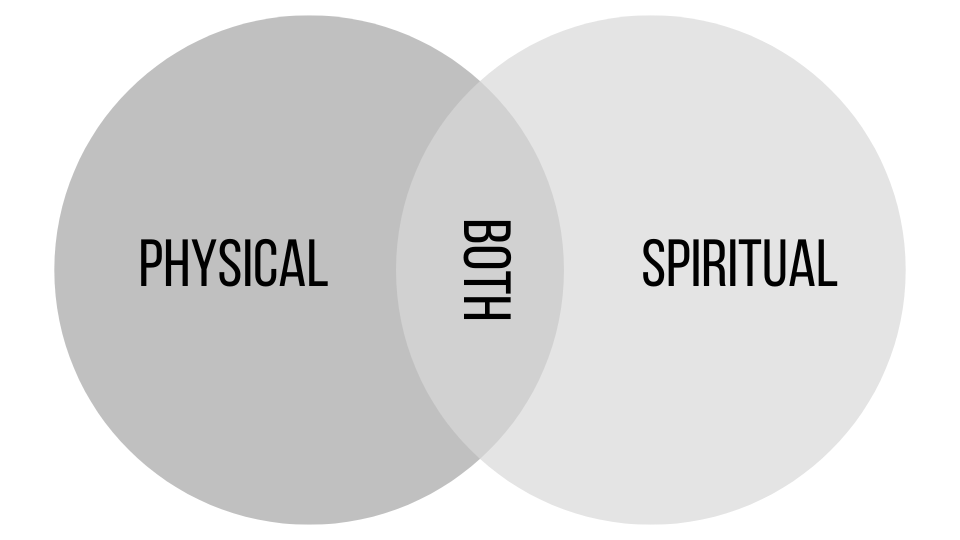
We have to remember that the Bible speaks to us on all levels. It speaks to us spiritually because we are spirits, and it speaks to us physically because we live in bodies. As Genesis 2:7 reminds us, we are both dust of the earth and breath of life—spirit and body intricately woven together. Hebrews 4:12 teaches that God’s Word pierces deeply, dividing soul and spirit, joints and marrow, judging the thoughts and intentions of the heart. And in 1 Thessalonians 5:23, Paul prays that we can be sanctified wholly—spirit, soul, and body—keeping all parts of us in harmony for the coming of Christ.
This interplay between the spiritual and the physical is beautifully captured in 3 John 1:2, where John says, “
I desire that you will prosper in all things and be in good health, just as your soul prospers.”
In other words, the flourishing of our outer life is connected to the well-being of our inner life.
Paul echoes this truth in 2 Corinthians 4:7,
“But we have this treasure in jars of clay to show that the surpassing power belongs to God and not to us.”
Here, the “treasure” is specifically the light of Christ, the gospel, and the mysteries of God’s kingdom, while the “jars of clay” are our physical bodies—fragile, ordinary, and imperfect. This contrast highlights the extraordinary reality that God has chosen to place eternal glory within mortal vessels like us.
In the same way, the Bible as a compiled text—ancient, tangible, and proven—is physically like a clay jar. It’s a collection of writings, ink on paper, passed down through generations. On the surface, it’s a book like any other, bound by physical materials. Yet, just like a clay jar, its true value is not in its outward appearance but in the treasure hidden within.
The treasure is the divine revelation, the eternal truths, and the mysteries of God’s kingdom that the Bible holds. It is the living Word that transforms hearts, renews minds, and reveals the nature of God to humanity. This treasure is what makes the Bible unique—infinitely precious, powerful, and alive.
As Paul says in 2 Corinthians 4:7, “But we have this treasure in jars of clay to show that the surpassing power belongs to God and not to us.” Just as our bodies are fragile vessels containing the glory of Christ, the Bible’s physical form is a vessel for something far greater: the infinite, timeless Word of God.
This duality mirrors the way Jesus Himself communicated. He often spoke in parables and metaphors, using everyday, physical objects—bread, water, seeds, lamps—to convey profound spiritual truths. These simple, familiar items acted like the “jars of clay” for His message, carrying a treasure that only those with eyes to see and ears to hear could fully grasp (Matthew 13:13).
In the same way, the Bible’s physical form—its words, stories, and historical accounts—serves as the vessel through which God’s infinite wisdom and revelation are delivered to us. For those who look only at the surface, it may seem like just another ancient text. But for those willing to dig deeper, it reveals the treasure of God’s heart and His plan for humanity.
The Bible’s very nature reflects the reality of who we are: physical beings with spiritual potential. Just as we are the intersection of the spiritual and physical realms, so too is the Bible. It is both a physical artifact, rooted in history, and a living, breathing message from God. Its outward form gives our minds the data we need, while its inner truth nourishes our spirits.
This is why the Bible is not just a book to be read but a treasure to be discovered—a divine mystery that speaks to every layer of who we are, inviting us into deeper relationship with the One who inspired it.
And this brings us to a profound truth: as human beings, we are uniquely equipped to bridge the physical and the spiritual realms. We are the only place in all of creation where heaven and earth meet.
When Jesus speaks in parables and metaphors, He’s doing more than just teaching moral lessons. He’s communicating spiritual mysteries—truths so deep they cannot be confined to human language alone. Consider John 6:35, where Jesus says, “I am the bread of life.” He’s not just talking about bread as food; He’s revealing Himself as the spiritual nourishment our souls desperately need. Yet He uses the language of the physical world—bread, hunger, eating—because our minds need tangible concepts to grasp spiritual truths.
This duality is not a matter of choosing one over the other. It’s not either/or but both/and. We are both spiritual and physical, and what is fascinating is that we have the ability to connect with both realities.
- Our minds need data, structure, and understanding.
- Our spirits need revelation, insight, and truth.
Both are essential; both are food. Jesus even said, “
Man shall not live on bread alone, but on every word that comes from the mouth of God” (Matthew 4:4).
Just as our bodies need daily sustenance, so do our spirits.
Ultimately, the only place in all of creation where the spiritual and physical realms intersect is within us. That is to say, heaven and earth are in us, as is the ladder that connects them. We are the meeting place of heaven and earth, made in the image of God (Genesis 1:27), and through us, His glory is revealed. Understanding this truth reshapes how we approach Scripture—it’s not just a book of rules or a collection of inspiring stories. It’s a living, multi-layered message that speaks to every part of us, inviting us into deeper communion with God and a fuller understanding of who we are as His creation.
In essence, we’re called to live in both realms: to walk in the physical world with spiritual awareness, carrying the treasure of Christ in our earthen vessels, and to embrace the fullness of what it means to be both body and spirit, uniquely designed to connect with God and His mysteries.
THE WALNUT SYSTEM
WHY THESE FRAMEWORKS MATTER
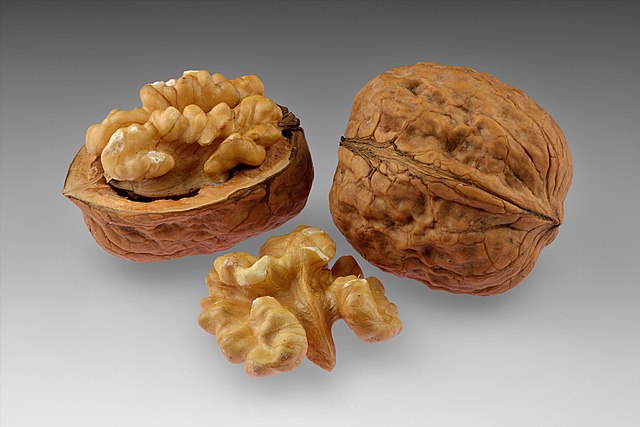
Have you ever seen someone try to open a walnut shell with their bare hands? It’s nearly impossible for most people. That’s why we use a nutcracker—it’s a simple tool designed to break through the hard, impenetrable shell and access the nourishing, delicious kernel hidden inside.
This is exactly what these interpretative frameworks, like PARDES or QUADRIGA, are meant to do—they serve as tools, like a nutcracker, to help us break open the surface of Scripture and uncover the treasure within.
Unfortunately, much of academia today—and as a consequence, many theologians and Christians—gets too fixated on the outer shell of the Bible. They study the words, the structure, and the historical context, which are all important, but they remain stuck on the surface. The problem is, the outer shell—though essential—is dry, tough, and inedible on its own. It won’t satisfy or nourish you spiritually.
For true nourishment to happen, you have to break it open. You have to move beyond the surface, beyond the tough exterior, and access the spiritual truths and mysteries hidden inside. This is why I prefer a simpler, more relatable metaphor: the two levels of Scripture—the outer and the inner.
The outer level is the literal, the historical, and the obvious—the words on the page, the stories, the people, and the events. This is like the shell of the walnut: protective, important, and necessary to hold the whole thing together. But by itself, it’s not enough.
The inner level is the spiritual, the symbolic, and the transformative truth—the deeper revelation of God’s heart, His purposes, and His kingdom. This is the nourishing kernel, the part that feeds and sustains your soul.
The beauty of the Bible is that it operates on both levels. The outer shell gives our minds something to grasp—data, structure, and context—while the inner truth speaks directly to our spirits, bringing life, understanding, and spiritual nourishment. Together, they work in harmony, but we can’t stop at the shell.
Just as a nutcracker is needed to break through a walnut, these interpretative frameworks, and more importantly the guidance of the Holy Spirit, help us break through the surface of Scripture. They remind us that the Bible is not just a historical document to be analyzed, but a living Word meant to reveal God to us and transform us from the inside out.
The overlap between the two circles—the vesica piscis, where the literal meets the spiritual—is where the Bible becomes both grounded and transcendent, a place where meaning operates on multiple levels simultaneously. This is the space where the tangible truths of history, culture, and human experience converge with the eternal, invisible truths of God’s kingdom.
For example, consider the manna in the wilderness (Exodus 16). On the outer level, manna was a real, physical provision—literal bread from heaven that sustained the Israelites’ bodies. But in the overlap, it is also a profound spiritual metaphor for Jesus as the true Bread of Life (John 6:32-35), nourishing our souls. In this overlapping space, manna is both food for the body and a symbol of God’s sustaining grace.
Another example is the Tabernacle. On the outer level, it was a physical tent with precise dimensions, made of specific materials, and served as a place for Israel to worship. But in the overlap, it becomes a living picture of Christ (John 1:14, “the Word became flesh and tabernacled among us”) and a representation of our own hearts, where God desires to dwell. It is both historical and spiritual, pointing to deeper realities while remaining firmly rooted in its earthly context.
This overlap is the “meeting place”—where heaven touches earth, where the physical reflects the spiritual, and where revelation flows through human experience. It is where the Word becomes alive in us, engaging both our minds and our spirits.
The beauty of this overlap is that it invites us to see connections:
- The stories in Scripture are not just about people who lived long ago; they mirror our own lives and struggles.
- The laws are not just rules for ancient Israel; they reflect God’s eternal principles of justice and love.
- The prophecies are not just distant predictions; they reveal God’s redemptive plan for all creation.
In this overlapping space, the Bible speaks to the whole person—our intellect, emotions, body, and spirit—because it addresses both the visible, physical realm and the invisible, spiritual reality.
Ultimately, this is the place of transformation, where the Word moves beyond being just information for the mind or inspiration for the heart and becomes life-changing revelation that touches every part of who we are. It’s where we realize that Scripture is not an either/or—it’s a both/and. It speaks to us as whole beings, made in God’s image, designed to connect with both the earthly and the divine.
So don’t settle for the shell alone. Take hold of the tools God has given us, and break open the Walnut of Scripture. Only then will you discover the nourishment and satisfaction your soul truly needs.
The Jewish Garden of Scripture, the Medieval Fourfold Senses of Scripture and the Walnut Letter and Spirit of Scripture, all remind us that the Bible is a divine masterpiece. Its richness is not confined to a single interpretation but invites us to explore its depths. Each layer offers unique insights:
- Outer:
- The literal sense grounds us in the historical reality of Scripture.
- Overlap
- The moral sense calls us to action, shaping how we live.
- The symbolic sense helps us see Christ woven throughout the Bible.
- Inner
- The mystical sense draws us into the eternal mysteries of God.
By embracing these methods, we cultivate a deeper relationship with the Word—and with the One who gave it to us.
PRACTICAL TIPS FOR STUDY
- Begin with prayer: Ask the Holy Spirit for insight and understanding as you study. Revelation is a gift (Luke 8).
- Work from the literal sense upward: Ensure your symbolic and mystical interpretations align with the plain meaning of the text.
- Start with Context: Always begin with the literal sense (Peshat or Historicus). What does the text say? Who wrote it? To whom? Why?
- Explore Symbolism: Look for recurring motifs and connections (Remez/Analogicus). For example, how does the theme of deliverance in Exodus prefigure Christ’s redemptive work?
- Ask Moral Questions: How does the passage challenge your daily life (Derash/Tropological)? What action does it inspire?
- Seek the Eternal: Contemplate how the text points to God’s ultimate purposes and the workings of spiritual principles (Sod/Anagogical).
- Use cross-references: Scripture interprets Scripture. Look for connections between passages.
- Keep Christ at the center: Whether using Pardes, Quadriga or the Walnut System, remember that Jesus is the key to unlocking the Bible’s full meaning.
- Focus on understanding: The goal isn’t merely to fill our minds with facts or head knowledge but to gain true understanding. This kind of understanding enables us to align with God’s will and actively cooperate with Him, empowering us to walk in the victory He has already secured for us.
- Focus on faith: While knowledge nourishes the mind, faith nourishes the heart. Faith is what allows us to take hold of what God has provided for us, moving beyond intellectual comprehension into a living, active trust in His promises.
- Focus on Christ: If what we are learning draws us closer to the Lord—deepening our love for Him, fuelling our desire to seek Him, and strengthening our relationship with Him—then we are headed in the right direction.
FUELING FAITH AND CONNECTING WITH ETERNITY
This multi-layered approach to Scripture, where we dig deeper and deeper, mirrors the spiritual journey we each must undertake. By uncovering the treasure buried beneath the surface of the text, we not only fuel our faith but also connect with something far greater: eternity itself.
As we mine the Word, we begin to see beyond the temporal, understanding more about the nature of God, His will, and our place in the grand story of salvation. Like a miner who eventually strikes gold after much effort, we, too, will encounter the divine riches that bring lasting transformation.
In digging deeper into Scripture, we’re not just looking for information—we’re seeking communion with God, growing in wisdom, and building a faith that connects us to Christ and eternity. Each layer of understanding that we unearth serves as a bridge to the infinite, an invitation to enter into the presence of the Creator, and a step toward understanding our ultimate purpose.
THE SECRET OF SOAKING
And don’t put too much pressure on yourself. Your brain is a remarkable creation—it’s a self-learning, pattern-recognizing, model-building machine. All it needs from you is consistent exposure to the information. Simply spend time in the text, let it soak in, allowing it to settle in your mind, and connections will naturally form, often without you even trying. Your job is not to force understanding but to linger in Scripture, trusting the process and the One who speaks through it.
In the same way, Jesus reminds us that the mysteries and secrets of God’s kingdom are not unlocked by mental brilliance, intellectual effort, or advanced education. In fact, these things can sometimes get in the way, because we tend to rely on ourselves and over-complicate what God has made simple. As Jesus said, “
The secrets of the kingdom of God have been given to you” (Luke 8:10).
Notice that: given. These mysteries are not discovered through cleverness or sheer effort—they are revealed as a gift from God.
Jesus wasn’t looking for scholars; He was looking for people willing to spend time with Him, to listen, and to learn. The mysteries of the kingdom are hidden in plain sight, and they’re only revealed through relationship. When we sit with the Word—both the written Word and Jesus, the living Word—He opens our eyes, just as He did for the disciples on the road to Emmaus (Luke 24:27).
So don’t worry about understanding everything right away. The key is time and trust. As you immerse yourself in Scripture, the Spirit of God will guide you into truth (John 16:13). Your part is simply to stay close to Him, reading, meditating, and allowing your heart to be open and soak in the goodness. Remember, the kingdom of God is not about striving; it’s about receiving what God has already made available to you. Let Him reveal His mysteries in His time as you walk with Him.
TRANSFORM, NOT JUST INFORM
The Bible is not just a collection of words; it is akin to programming code. It is not merely designed to inform us but to transform us. Just as a well-written program doesn’t just deliver information but actively shapes the systems it interacts with, the Bible works to shape our hearts, minds, and lives. Every verse is like a line of code, holding the power to change how we think, act, and relate to God and others.
When we engage with the Bible, it’s like inputting instructions into the soul. Its truths are not just for mental ascent, but for heart transformation and spiritual renewal. Like the source code of a program that runs silently in the background, the Word of God infiltrates the depths of our being, making us into the people God designed us to be. The Bible’s purpose goes beyond merely informing us of spiritual facts—it reprograms our hearts, reorients our thoughts, and rewires our behaviour. It invites us into a dynamic process of transformation, where we are shaped by the very essence of God’s will.
CONCLUSION: A JOURNEY INTO THE ORCHARD
Pardes, Quadriga and the Walnut, all invite us to journey into the “heart” of Scripture, where we can taste the fruit of divine revelation. These methods remind us that the Bible is not merely a book to be read but a living Word to be experienced. By studying its layers, we come to know its Author more deeply, and through knowing Him, we are transformed.
Revelation is received, not achieved.
So grab your Bible, and step into the orchard. There’s more waiting for you than you can ever imagine.
QUESTIONS FOR REFLECTION
- What are the key principles of interpreting Scripture through layered approaches?
- What are the practical benefits of understanding the interplay between the physical and spiritual realms in the Bible?
- What are the historical, theological, and practical implications of interpreting Scripture through frameworks like Pardes, the Fourfold Senses and the Walnut?
- How does the interplay between the physical and spiritual realms in the Bible inform our understanding of both ourselves and God’s message?
- What are the core principles of interpreting Scripture through layered approaches, and how can these methods be applied to deepen our understanding of faith and relationship with God?
Images by wikipedia and Peter Hasert
 The Hungry Hearts Collective
Leave a comment