
AUDIO PODCAST
Dragons: Guardians of Mysteries, Bearers of Chaos, and Symbols of Transformation
Throughout the tapestry of human history, dragons and serpents have slithered and soared through our imaginations, appearing as enigmatic figures in myth, legend, and religion. These awe-inspiring creatures, often portrayed as both majestic and fearsome, embody the paradoxes of existence: creation and destruction, wisdom and chaos, divinity and monstrosity. Across cultures and continents, they emerge as guardians of forbidden knowledge, protectors of sacred treasures, or harbingers of cosmic upheaval.
Why is humanity so captivated by these serpent-like beings? Perhaps it is because they mirror something primal within us—a reminder of forces greater than ourselves, forces that simultaneously inspire wonder and demand humility. Whether coiled in the depths of the earth or soaring high above the heavens, dragons occupy the liminal spaces between order and chaos, life and death, creation and annihilation.
From the serpent gods of ancient Mesopotamia to the benevolent dragons of Chinese lore, from the trickster Nidhogg of Norse myth to the fire-breathing terrors of medieval Europe, these beings have shaped how we understand the natural and spiritual realms. They provoke us to ask questions that transcend time: What lies beyond human comprehension? How do we confront the unknown? Are these dragons protectors or adversaries—or both?
In this journey, we will explore some of the most profound examples of dragon and serpent deities across religious and mythological traditions. Prepare to step into a world where legends take flight, wisdom slumbers in scaled coils, and every story pulses with deeper truths about humanity and its relationship to the sacred.
1. Chinese Dragon
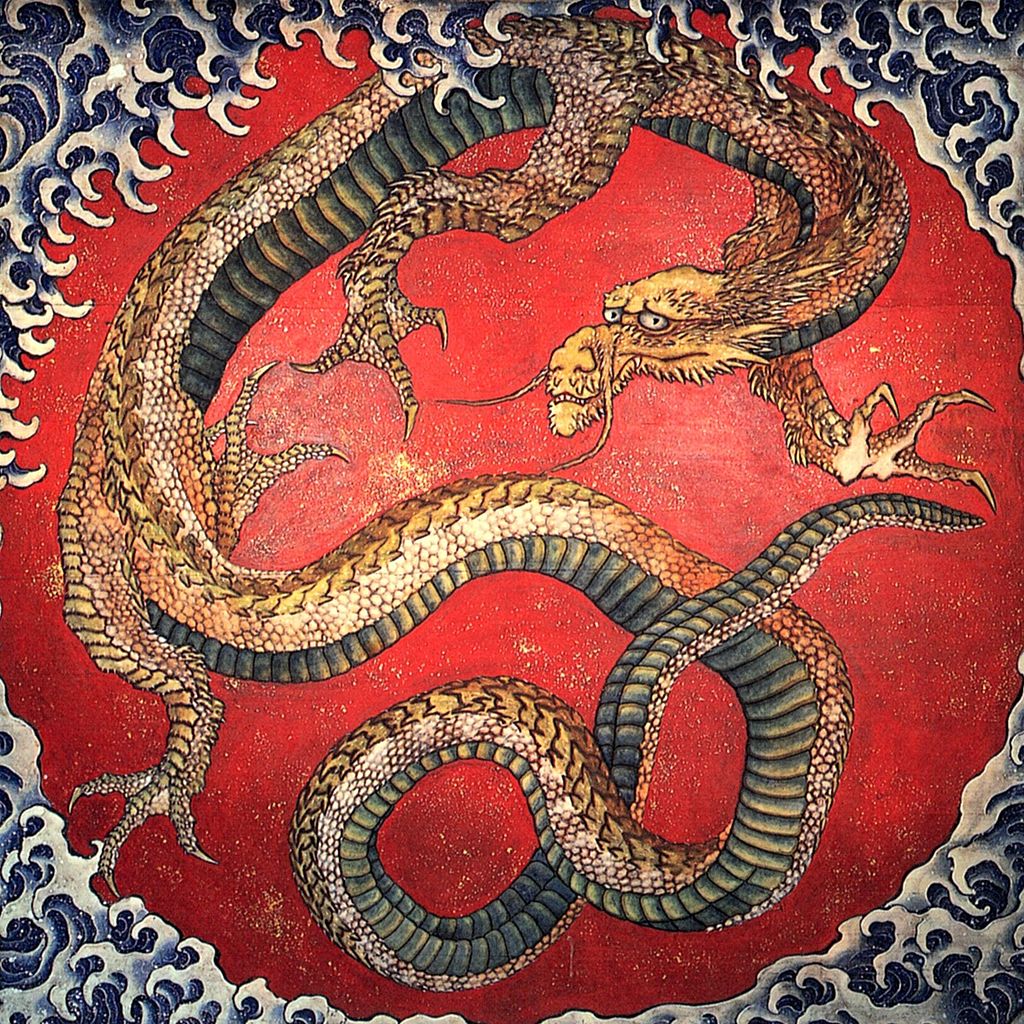
At the same time as Moses was raising the bronze serpent “nechash nehoshet” (נְחַשׁ נְחֹשֶׁת) in the Sinai Peninsula, around 1250 BC, China was ruled by the Shang Dynasty, known for its advancements in bronze metallurgy and intricate ritual practices. “Bronze serpent” could also be translated as “shining or glowing serpent” because of the shimmering quality of bronze when light shines on it.
The Shang Dynasty’s capital was located in present-day Anyang, Henan Province. They had a hierarchical society with a polytheistic religion centred around ancestor worship and divination. Divination is linked to the nachash (serpent) in Hebrew (Genesis 3:1) and the spirit of Python in Greek (Acts 16:16). “Divination” is translated from the Greek word “python” (πύθων). In Greek mythology, the name of the Pythian serpent or dragon that dwelt in the region of Pytho at the foot of Parnassus in Phocis is said to have guarded the oracle at Delphi and been slain by Apollo (Online Bible).
The Shang period saw significant cultural achievements in writing and art, along with military conflicts and territorial expansion. The Shang Dynasty’s reign ended around 1046 BCE, marking a transition in China’s history from the Bronze Age to the Iron Age.
The word “dragons” in Chinese can be transliterated as “龙” (simplified) or “龍” (traditional), pronounced as “lóng“.
Revered as celestial creatures associated with water and rain, perhaps because of their shimmering quality, they are considered symbols of imperial authority, wisdom, and prosperity. Unlike Western depictions of dragons as fearsome beasts, Chinese dragons are believed to be benevolent beings that bring blessings and guard treasures. In Chinese philosophy, they are also associated with fertility and the natural world, embodying the harmony between heaven and earth, that is, the spiritual and physical plain.
The contrast in viewpoints between East and West seems to stem from different spiritual understandings of these beings, who have been imbued with divine qualities. Divine, as opposed to mundane, refers to something that is heavenly or godlike rather than ordinary or earthly. Western civilisation has traditionally held a Christian perspective on the battle between good and evil, associating dragons with demonic forces. In the East, this perspective is different. These spiritual beings are not recognised as fallen entities. Although they can be placated with worship and obedience, this is not a relationship to be forged, as aligning with such beings is akin to being in league with the devil, which is risky. Jesus’ words in John 10:10 illustrate this:
“The thief comes only to steal and kill and destroy; I have come that they may have life, and have it to the full.”
The dichotomy of good versus evil is central to Christianity, with spiritual battles often depicted between angels and demons, or Christ and Satan—the great dragon (Revelation 12:9). Although dragons have come to symbolise evil, there is no doubt in the author’s mind about the physical aspects of dragons recorded in history, whether through oral traditions, art, or literature. These fearsome creatures have come to embody pure evil and, therefore, serve as a symbol for the chief of evil, Satan himself.
2. Naga
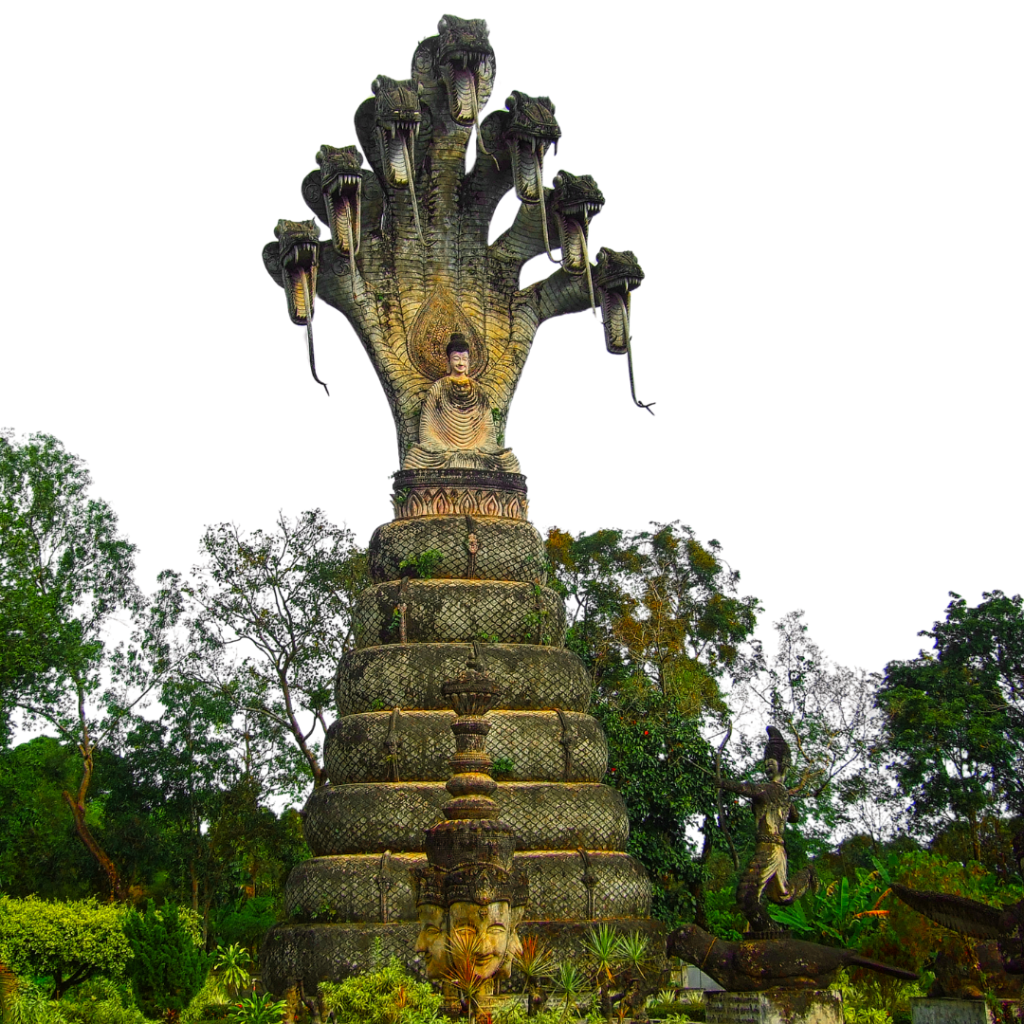
In Hinduism and Buddhism, Nagas are serpentlike deities or semidivine beings. They are often depicted with human upper bodies and snake tails, residing in underground realms or bodies of water. Nagas are associated with fertility, protection of the Buddha and Dharma (teachings), and the control of weather phenomena like rain. In Buddhist tradition, Nagas are revered as guardians of treasures and wisdom, while in Hindu mythology, they play multifaceted roles as both benevolent protectors and agents of cosmic balance.
Back to the real world, Naja, a genus of venomous elapid snakes often referred to as true cobras, is renowned as the most widespread and widely recognised among these species. Found in various regions across Africa, Southwest Asia, South Asia, and Southeast Asia, different species of Naja embody the quintessential cobra archetype.
The linguistic process of moving from a sound represented by “g” to a sound represented by “j” could be called palatalization.
Palatalization involves the articulation of a consonant (in this case, “g“) closer to the hard palate of the mouth, altering its pronunciation to a sound closer to “j“. This shift can occur due to phonetic or phonological processes in languages, where neighbouring sounds influence the articulation of consonants. In the case of “naga” to “naja,” palatalization reflects a change in pronunciation as the word transitions from its original form in local languages to its Latinised or scientific classification form.
Naga is an abbreviated form of “nachash” present in many languages today, i.e.
- Sanskrit: “Nāga” (snake), which shares the NG root.
- Ancient Egyptian: “Nik” (serpent demon), showing the NG root.
- Finnish: “Ankerias” (eel), retaining the NG root.
- Swahili: “Nyoka” (snake), which also follows the NG pattern.
- Thai: “Nguu” (snake), demonstrating the NG root.
- Zulu: “Inyoka” (snake), where the NG root is evident.
- German: “Schnecke” (snail), which incorporates the NG root indirectly through the ‘ng‘ sound becoming ‘nk‘.
- Old High German: “Unk” (snake), maintaining the nasal-guttural root (NG→NK).
3. Quetzalcoatl

Among the Aztecs and other Mesoamerican cultures, Quetzalcoatl is a prominent deity often depicted as a feathered serpent. Quetzalcoatl is also known as Kukulkan and Gucumatz. The name Quetzalcoatl combines “quetzal” (a colourful bird) with “coatl” (serpent), symbolising the union of earth and sky, thus creating a flying serpent.
In Isaiah 14:29, we read about a fearsome creature that will strike fear into the hearts of its enemies—the “fiery flying serpent” (שׂרף מעופף, saraf m’opep). This biblical description shares a fascinating connection with ancient Near Eastern mythology and symbolism.
The Hebrew word “saraf” (שׂרף) means “fiery” or “burning,” evoking images of intense heat and power and providing a good etymological link for a proto-Semitic “serp-ant.” Meanwhile, the word “m’opep” (מעופף) literally translates to “flying.” This combination creates a striking image of a fearsome serpent that is both blazing with energy and soaring through the skies.
But this victory requires surrender. Like knights of old who trusted their king to lead them into battle, we must lay down our weapons of self-rule and submit to Christ’s authority. Only then can the chaos within us be subdued, and the dragon’s grip on our lives be broken.
We cannot conquer the dragon alone. But the shining Knight has come, offering His armour of light and the power of His Spirit to overcome the forces that threaten to consume us. True freedom begins with surrender. True peace begins with submission. And true life begins when the chaos within us is brought under the perfect rule of the King.
The fiery flying serpent has parallels with other ancient Near Eastern mythological accounts.
In ancient Egyptian religion, “opep” refers to two distinct entities: the deity Apophis, also known as Apep, and the goddess Ipy, also known as Opet. In Assyrian mythology, the goddess Tiamat is described as a sea monster with a fiery breath.
The “fiery flying serpent” is likely a symbol of judgement and divine wrath against the Philistines. This image serves as a powerful warning to those who would defy God’s power and authority.
The “fiery flying serpent” in Isaiah 14:29 stands as a testament to the rich symbolic language used throughout the Bible, drawing connections between ancient mythologies and biblical themes. As we explore this passage further, we are reminded of the enduring power of Scripture to shape our understanding of the world and our place within it.
Quetzalcoatl—image courtesy of wikipedia—represents life, knowledge, and civilisation. He is associated with the wind and is revered as a creator god who brought wisdom and cultural advancements to humanity.
When the Conquistadors, led by Hernán Cortés and his allies, arrived in what is now Mexico in 1519, the capital city of the Aztec Empire was Tenochtitlán. Tenochtitlán was located on an island in Lake Texcoco, which is now the site of modern-day Mexico City. The city was founded by the Aztecs in 1325 and became the capital of their empire in 1431.
At its peak, Tenochtitlán was a large and impressive “island” city with a population of over 200,000 people. It was known for its elaborate palaces, temples, and markets, as well as its sophisticated system of canals and floating gardens rivalling Venice in Italy. In fact, Cortés was so impressed with what he found that he famously compared Tenochtitlan to Venice in his letters to King Charles V of Spain. His vivid descriptions aimed to convey the grandeur and sophistication of the Aztec capital to a European audience.
While the Aztecs were known for their sophisticated civilisation, human sacrifice was an integral part of daily life in this ancient society. During a four-day festival, it’s estimated that between 20,000 and 40,000 people were sacrificed—a grim reminder of the empire’s dark side.
Quetzalcoatl, often revered as a benevolent deity, played a role in human sacrifice and bloodletting as part of his service. However, this was not unique to Quetzalcoatl; most human sacrifices were dedicated to Huitzilopochtli, the warrior god born on Coatepec (Snake Mountain), who vanquished his siblings with divine might.
This mythological narrative underscores Huitzilopochtli’s role as a fierce and powerful deity, akin to Mars in Roman mythology. In both cases, these gods consume human life to sustain their own existence and power, highlighting the darker aspects of ancient civilisations that continue to provide a warning to us today.
The Aztec civilisation, brought down by Hernán Cortés, was often romanticised as a primitive society of noble savages in tune with nature and “God’s will.” In reality, this was no ignorant tribe, but a complex and intelligent culture that paradoxically nurtured a dark tradition of human sacrifice and other heinous practices, a gross violation of divine morality.
4. Apep (Apophis)

Ancient Egyptian mythology features Apep (or Apophis), an evil serpent god associated with chaos and darkness. Apep is depicted as a colossal serpent that resides in the underworld and attempts to thwart the sun god Ra’s journey through the night sky—a perfect allegory for how Satan attempts to thwart the Son of God’s attempt to shine light on a world that cannot survive without it.
As the ancient Egyptians knew, each night brought a daunting challenge: Apep, the monstrous embodiment of chaos, had to be vanquished for the sun to rise again and bring light to the world. This eternal struggle between order and chaos was a potent metaphor for the human experience—a reminder that even in the darkest moments, there is always hope for rebirth and renewal.
And yet, as we gaze out upon our world, it seems that chaos may be gaining the upper hand once more. The darkness that has descended upon many aspects of human existence is palpable: the collapse of society, the deterioration of social fabric and infrastructure, the wars over resources, and the social media echo chambers that amplify hatred and division… It’s as if Apep, the eternal force of disorder, has finally breached the walls usually guarded by the watchmen.
In this era of uncertainty and turmoil, it’s easy to feel overwhelmed by the forces of chaos when they press upon us. But perhaps, just as the ancient Egyptians found solace in their daily battles against Apep, we too can find strength in our own struggles against the darkness that surrounds us when we look to the Lord and His Word for guidance on how to deal with the darkness.
In the end, it’s not about eradicating chaos from our lives altogether, but rather about cultivating an inner alignment with the Light of heaven. When we tap into this source of illumination and make it our guiding force, we can effectively dispel the darkness that surrounds us, both personally and collectively, and begin to flourish and grow again.
As we anchor ourselves in this radiant energy, we begin to rise above the turbulence, just as the sun rises anew each morning, banishing the darkness and bringing warmth and light to all that surrounds us. It’s a process of personal transformation, where we awaken to our true nature, live from a place of heavenly alignment, and so keep “apophis” at bay.
In this way, we can create a society that is no longer defined by darkness, but rather by the collective light that shines forth from each individual’s heart. As we stand united in our radiance, we become reflectors of heaven’s light, illuminating the path forward for ourselves and for generations to come.
The Forces of Chaos: Dragons, Serpents, and the Existential Threat
Throughout mythology and religion, dragons and serpents often symbolise the chaotic and untamed forces that threaten to disrupt order. These creatures, whether seen as predators of destruction or guardians of forbidden knowledge, represent humanity’s most primal fears. Yet, these fears are not merely external; they are deeply internal, reflecting the chaos within us—our doubts, desires, and rebellion against the divine.
In the Bible, the dragon appears as the ultimate enemy in the apocalyptic visions of Revelation. This great, fiery-red serpent, identified with Satan, embodies the chaos and rebellion that began with the fall of humanity. In Revelation 12:9, the dragon is called “that ancient serpent,” connecting it back to the Garden of Eden, where sin and disorder first entered creation. From that moment, the human heart has carried the existential threat of chaos—a relentless force within us that resists God’s authority and seeks autonomy.
This dragon of Revelation is no ordinary beast. It is described as having seven heads and ten horns, a monstrous amalgamation of strength, intelligence, and authority. It represents not only the sin nature within individuals but also the systemic evil in the world—corruption, greed, violence, and the relentless drive toward self-rule. It is a cosmic enemy, yet one that finds a foothold in the hearts of every human being.
The Existential Threat Within
The chaos symbolised by the dragon is not just an external force but an internal battle. It whispers to us through pride, selfishness, and the insatiable desire for control. The dragon’s roar echoes in our anxieties, our fears of the unknown, and the despair that comes from realizing how powerless we are to tame the chaos ourselves.
Left unchecked, this inner chaos manifests in broken relationships, moral decay, and spiritual alienation. The human condition is one of disorder—an inner fragmentation that mirrors the external struggles of the world. We are both the victims of chaos and its unwitting agents, contributing to the very disorder we fear. This existential threat cannot be subdued by human effort, for it is deeply rooted in our very nature.
As Paul writes in Romans 7:19,
“For I do not do the good I want to do, but the evil I do not want to do—this I keep on doing.”
This inner struggle reflects the dragon within us: a force too powerful, too cunning, and too entrenched for us to defeat on our own.
The Knight in Shining Armour: Jesus and the Dragon of Revelation
In Revelation, we see the climactic confrontation between the dragon and the ultimate Knight in shining armour—Jesus Christ. In Revelation 19:11-16, Christ is depicted as a warrior on a white horse, whose robe is dipped in blood and whose name is “King of Kings and Lord of Lords.” This vision reveals Him as the conqueror of chaos, the one who alone is able to defeat the dragon that threatens creation.

The dragon of Revelation wields immense power, deceiving nations and waging war against the people of God. But Jesus, the Lamb who was slain, confronts the dragon not with brute force but with the authority of His Word. Revelation 12:11 declares that the faithful,
“triumphed over [the dragon] by the blood of the Lamb and by the word of their testimony.“
Jesus’ victory over the dragon is not just a cosmic battle; it is deeply personal. His death and resurrection confront the chaos within each of us, offering a path to freedom from the sin that enslaves us. The blood of Christ does not merely cover sin; it breaks its power, rendering the dragon powerless in the lives of those who surrender to Him.
Confronting the Chaos Within
The dragon of Revelation is ultimately a mirror of the battle raging inside every human being. It represents the inner turmoil, the rebellion, and the chaos that seek to overthrow God’s order in our lives. But Jesus, the Knight in shining armour, offers a way out of this existential threat.
Through His death and resurrection, Christ shines a light into the darkest corners of our hearts, confronting the chaos we would rather ignore. His victory over the dragon invites us into a new reality—one where the forces of sin and destruction are replaced by peace, purpose, and harmony under His rule.
The Choice Before Us
The dragon in Revelation is destined for defeat, cast into the lake of fire (Revelation 20:10). But the question remains: Will we allow Jesus to slay the dragon within us? The chaos we face is not just a mythological construct; it is a reality that shapes our fears, decisions, and destiny.
The dragon is defeated. The battle is won. Will you let Christ’s victory become your own?
In Conclusion
While this is literally just a handful of examples from the myriad of cultures and mythologies, snakes and dragons, throughout history, have been depicted as enigmatic creatures embodying both allure and danger. From the Garden of Eden’s serpent to the cunning dragons of mythologies worldwide, they wield a power that captivates and unsettles. Often worshipped to appease their perceived influence over chaos and transformation, they simultaneously evoke fear and fascination.
In Terrence Malick’s cinematic masterpiece, “The Thin Red Line,” the opening scene whispers a haunting truth: that evil is represented by a crocodile—another water monster—that lurks just beneath the surface of human perception (consciousness), an ever-present danger waiting to devour the unsuspecting pilgrim. This subtle subversion of humanity’s path echoes through ancient myths and modern interpretations, as snakes and dragons slither into our collective consciousness and seek to devour all that is good and holy.
These mythical beings embody the deep-seated dualities that reside within us all, within our consciousness. Itrepresents the insatiable desire for knowledge and the fear of its unintended consequences; the allure of power and the peril of playing with fire or pandora’s box gifted to her by Zeus and foolishly opened by Epimetheus, upon which all the contents escaped. They were said to be the host of human ills (escaping to afflict mankind), or, in a later version, all the blessings of the god (escaping to be lost), except Hope, which alone remained. these mythologies weave a tapestry of timeless truths about the human condition, revealing our eternal quest for understanding and release from life amidst the shadows, but ultimately unable to save orselves from the consequences of our actions.
What we all yearn for is salvation from the calamity of our own making—an escape from the chaos that resides both within us and around us. This chaos, born from pride, selfishness, and rebellion, leaves a trail of brokenness in its wake: fractured relationships, shattered dreams, and a deep, abiding sense of emptiness. It is a calamity we cannot undo, no matter how fiercely we struggle against it.
Personified in Christ Jesus, salvation comes not as an abstract concept, but as a living, breathing reality. He is the embodiment of grace, the Knight who steps into our chaos and offers us not condemnation but redemption. In Him, we find the answer to the longings we dare not name and the antidote to the destruction we cannot fix. Christ doesn’t merely rescue us from the calamity; He transforms it, turning ashes into beauty and chaos into peace.
What we yearn for is not just relief but restoration—freedom from the weight of our own failures and the assurance that our lives can be made whole. In Jesus, we find the One who not only saves us but redefines us, giving us purpose, peace, and the promise of eternal life. Salvation in Him is the fulfillment of our deepest yearning, the light that overcomes our darkest night.
As we gaze upon these serpentine and draconic symbols, we are confronted with the darkness that has seeped within our very own souls. And yet, it is precisely this introspection that allows us to confront it with the light of heaven and to emerge transformed. In this way, the narratives of snakes and dragons continue to captivate us, speaking to the primal fears and desires that define our humanity and point us ultimately to Christ.
QUESTIONS FOR REFLECTION
- How do cultural perspectives shape dragon and serpent symbolism?
- What common archetypes and themes unite diverse dragon mythologies?
- How do dragons and serpents reflect humanity’s internal struggles?
- How does Christ save us from the forces of chaos in the world?
- What is our role in the battle btween good and evil?
Like & Subscribe
 The Hungry Hearts Collective
Leave a comment