
TECHNICAL NOTE
Please note that this article explores some technical aspects of Hebrew language etymology and definitions. I’ve made every effort to present the information in an accessible manner, and I hope you find it insightful. If you have any questions, feel free to leave a comment.
AUDIO PODCAST
RELATED POST(S):
INTRODUCTION
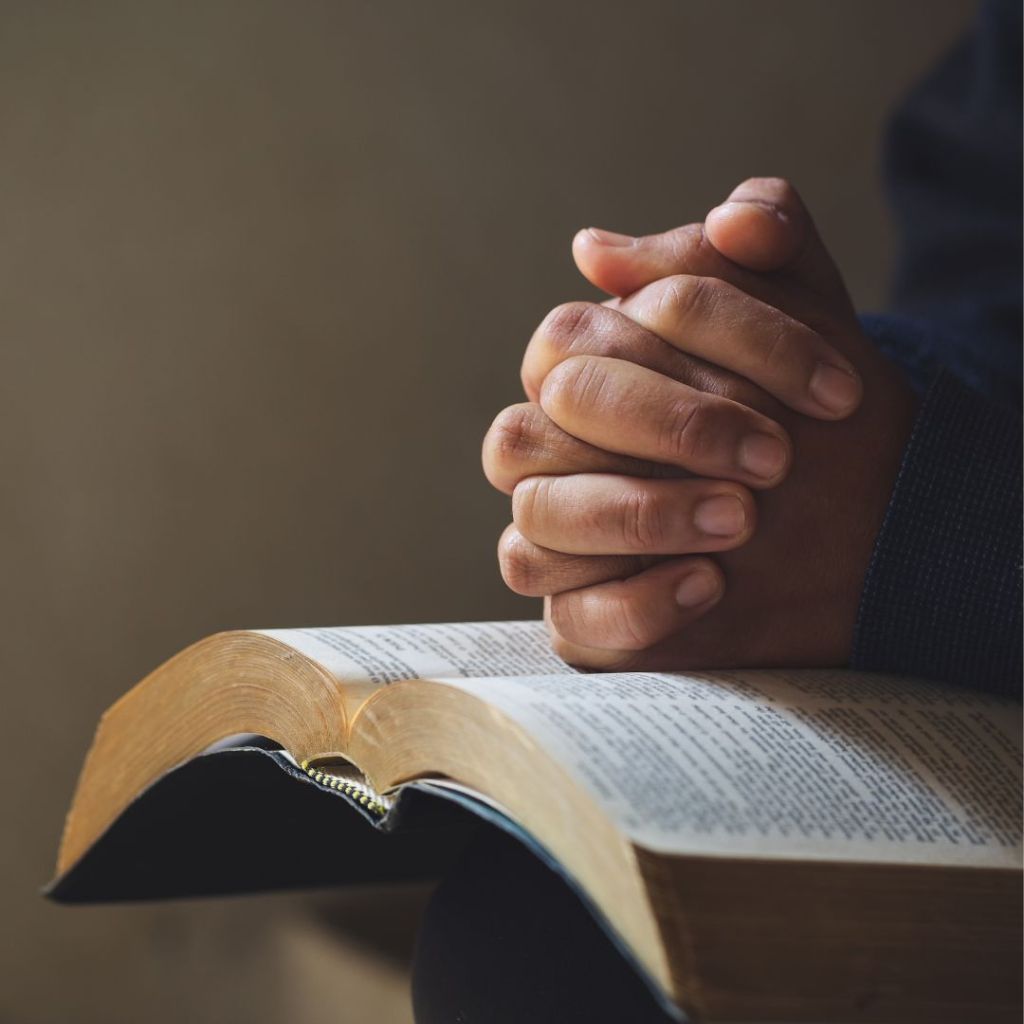
Although Tefillah (תְּפִלָּה) is the Hebrew word for prayer, there is something profoundly intimate about the act of Tefillah, a word whose depth of meaning far surpasses this surface understanding. Unlike saying Tehillim, the beautiful Psalms that pour forth as hymns of praise and cries of the heart, Tefillah is something much more deliberate. It is not just speaking; it is binding oneself to something eternal. Tefillah is akin to swearing an oath and keeping it.
True faith is more than simply honouring God the Divine with our lips; it is, in fact, living a life that continuously honours Him with our spiritual service. As we will explore, Scripture clearly defines what honouring God truly means, and it stands in stark contrast to how religion often defines it. When we begin our investigation into this topic, we must ask ourselves a very important question,
“WHAT IS THE POINT OF SWEARING AN OATH IF YOU DO NOT INTEND TO KEEP IT?”
As the aphorism goes, “The road to hell is paved with good intentions.” The gap between intention and action provides one key reason why many Christians feel as though they are experiencing hell on earth rather than heaven. While good intentions can exist in the heart, without the corresponding actions that align with God’s will, those intentions remain unfulfilled, leaving a sense of dissatisfaction and disillusionment. As we will see, this is the reason why Jesus links “the will and control of heaven on earth” with the covenant act of prayer in Matthew 6:5-15.
The two, God’s will and God’s controll, cannot be separated from one another. In the same way, both making a promise and keeping it are two sides of the same coin in God’s economy.
WHAT IS A TORAH OATH?
A Torah oath is an oath taken in the name of God, often invoking the principles and teachings of the Torah, which is the foundational text of Jewish law and tradition. It is a solemn declaration or promise made by an individual, typically before a religious authority or in a formal setting, to attest to the truth of their words or actions.
In the Jewish tradition, oaths are considered serious and binding, and taking one lightly is discouraged. In the context of the Torah, an oath can serve as a way to ensure honesty and integrity, and it is often used in situations of legal testimony or when making significant commitments.
The Torah itself outlines various laws related to oaths, including how they should be made, when they are required, and the consequences of breaking them. For example, in the book of Numbers (30:2), it is stated that a person who makes an oath in the name of God must fulfill it, and failure to do so can lead to consequences. The Torah also places great importance on avoiding false oaths or using God’s name in vain.
A key element in our relationship with our Creator is to “serve Him with all your heart” (Deuteronomy 11:13). In Hebrew avodah (serve) carries the sense of labourious work. But what labour can the heart do to serve God? Tefillah is that labour of awakening the heart until a state of intimate union with the divine is achieved.
KEY ASPECTS OF TEFILLAH
In any relationship, we know that showing up consistently is key to keeping it thriving. It’s not enough to simply say “I love you” once and leave it at that.
SELF-JUDGMENT AND REFLECTION:
Prayer is more than a ritual—it is an invitation to step into the depths of one’s soul, to lay bare the intricate layers of thought, action, and intention before the infinite gaze of the Divine. In the quiet sanctuary of communion with God, the silence in prayer becomes a mirror, reflecting not only what we present to the world but also what we hide within ourselves and from ourselves. It demands honesty, stripping away pretense, and compels the worshiper to confront their imperfections with both humility and courage.
In this sacred act, self-judgment is not a harsh condemnation but a reverent acknowledgment of our humanity. It is a moment of reckoning, where we pause amidst the noise of life to ask, Who have I become? and Am I living as I ought? or even Where am I? Reflection weaves itself into this process, as the heart sifts through its intentions, weighing them against the eternal truth of divine presence.
Before God, there is no room for half-truths or excuses. The worshiper stands exposed—not to face divine wrath, but to seek alignment with the Creator’s will, to recalibrate the moral compass, and to chart a path forward with renewed integrity. Prayer thus becomes a transformative space where self-awareness blossoms, and the soul exposes itself to the delicate work of realignment and restoration performed by the invisible hand of God.
Prayer invites us into a sacred dialogue with the Divine, a moment of profound self-examination and surrender. It is here, in this stillness, that we confront the truth of our lives—our actions, intentions, and the hidden complexities of our hearts. Yet, the beauty of prayer is that it does not leave us to navigate this introspection alone. While we reflect and evaluate, we are reminded that there are limits to what we, in our human frailty, can achieve.
God can do what we never could. Our striving, though sincere, cannot mend the fractures in our souls. Thus, our duty is distilled into something profoundly simple yet infinitely powerful: to present ourselves to Him as we are, with all our imperfections laid bare. It is in this act of offering, of stepping into His presence through prayer, that we open ourselves to His transformative work.
This holy operation of realignment is not ours to perform; it is His. It is the sacred act of a loving Creator, reorienting us toward wholeness and purpose. Prayer, then, is a two-sided coin. On one side, it is our effort to bring ourselves into His presence, to bow our hearts before Him in honesty and trust. On the other, it is His act of saving—of reaching into the depths of our being to realign what is broken, to restore what we could never fix alone.
In this exchange, we see the divine paradox of prayer: it requires everything we can give—our presence, our willingness, our surrender—and yet it is ultimately about what God alone can do. He saves, He heals, He redeems. We come as we are, and He does the rest.
We must remember that Jesus is not merely a historical figure recorded in the pages of time or an abstract concept shaped by theology—He is a living, breathing Savior, real and present. His role in our lives is not confined to a single, defining moment when we first come to Him; He is the Savior in the present continuous tense. His saving work is ongoing, dynamic, and active in every moment of our lives.
When we initially come to Him, we enter into the fullness of His great salvation positionally. In that moment, we are redeemed, justified, and set apart. Yet, salvation is not just a static state; it is a relationship, a continual communion. This is where tefillah—prayer—becomes essential. Prayer is not simply a practice or ritual; it is the lifeline by which we abide in His salvation, the means through which we remain in Him and continue to draw from the wellspring of grace that never runs dry.
Through prayer, we partake of His saving work daily. It is how we lean into the reality of His presence, how we align ourselves with His will, and how we allow Him to shape us, moment by moment. Prayer sustains us in the salvation we’ve entered into, reminding us that while the work of redemption was finished at the cross, its power is ever-flowing, ever-available, ever-sufficient flowing from that bed of nails.
And it is through prayer—this ongoing dialogue of trust, surrender, and love—that we remain tethered to Him, abiding in His salvation and experiencing its fullness day by day.
STRUCTURED AND SPONTANEOUS:
Tefillah can refer to formal, structured prayers such as the Jewish Amidah (עמידה), meaning “standing” prayer, which is the central prayer of the Jewish liturgy. Observant Jews recite the Amidah at each of three daily prayer services in a typical weekday: morning, afternoon, and evening.
- Shacharit (morning prayer)
- Mincha (afternoon prayer)
- Maariv (evening prayer)
The Amida reflects deep themes of communion with God, repentance, and reliance on His ongoing provision and grace. One of its core statements speaks profoundly to the relationship between human dependency and divine action:
“Blessed are You, O Lord, who sustains the living with kindness, resurrects the dead with great mercy, supports the fallen, heals the sick, releases the bound, and fulfills His faithfulness to those who sleep in the dust.”
This line from the Gevurot (second blessing of the Amidah) captures the essence of trust in God’s continuous, saving work. It emphasises that salvation and sustenance are not one-time acts but ongoing expressions of God’s kindness and faithfulness.
When linked to prayer (tefillah), the Amidah teaches that our role is to present ourselves before God in humility and trust. In standing continuously before Him, we bring our needs, our frailty, and our gratitude, knowing that it is God who heals, supports, and saves—daily and eternally. It beautifully parallels the idea that while we draw near to God through prayer, it is ultimately He who performs the holy work of realignment, restoration, and renewal in our lives.
This structured prayer seems to be inspired by Daniel’s structured prayer life,
“Daniel always prayed to God three times every day. Three times every day…I prayed to the Lord my God and confessed…toward Jerusalem…giving thanks” (Daniel 9:4–19).
Amidah, literally “standing” (see Ephesians 6:13-14), is defined as:
- The structure of prayer times (three daily prayers).
- The physical posture (standing and facing Jerusalem. Daniel kneeled).
- The themes of confession, supplication, and thanksgiving.
The Amidah, though rooted in Hebrew tradition and practice, serves as a powerful reminder to us as Christian believers that across millennia and cultures, believers who came before us are united by a shared practice that “joins” oneself to the one true God and the timeless act of prayer. It shows that true prayer transcends boundaries, encompassing deeply personal and heartfelt prayers that align our hearts with God’s will. Rooted in scripture (Daniel), the Amidah reflects the call to uphold and enforce God’s written judgments, as instructed in Psalm 149:6-9, where we are charged to wield the “high praises of God in our mouths” and “the sword in order to “enforce His written Word,” We do this through agreement (2 Corinthians 1:20). This ancient practice echoes through history, binding us to a legacy of faithfulness, devotion, and the power of prayer.
CENTRAL ROLE IN WORSHIP:
Traditional tefillah includes blessings, praise, petitions, confession, and thanksgiving.
It is an essential part of faith life, often performed in the community but also practiced individually.
HISTORY & ORIGIN:
The Amidah was formally composed by the Men of the Great Assembly (circa 5th century BCE), a group of Jewish sages traditionally said to include figures like Ezra and Nehemiah, but it was built on earlier prayer customs, including those exemplified in the Book of Daniel. Thus, Daniel’s example served as an important inspiration for Jewish prayer, including the Amidah.
A PERSONAL STORY OF TEFILLAH
Let me take you back to a moment in my own life—a night when prayer became more than words, and the lines between pleading and sacred surrender blurred in a way I will never forget.
I was alone in the dim light of my bedroom, overwhelmed by a burden too great for words, too great for me to bear in my own strength, too tangled for anyone else to understand. The Psalms (Tehillim) were open before me, their ancient words a refuge I had turned to time and time again. I began to read, whispering David’s prayers like they were my own, letting his words give voice to the things I couldn’t articulate, letting David’s words carry the weight I could not. But as the minutes passed, something stirred within me—a restlessness that those Psalm alone could not satisfy. It was a hunger, a yearning for more. It seemed that as though my challenging situation was courting me to come closer, and see prayer in a way I had never seen it before.
To me, prayer had always been about asking for things—treating God like some kind of cosmic vending machine. Insert a request, pull the lever, and wait for the answer to drop into my life. It was mechanical, transactional, and honestly, superficial. I thought that was all prayer was meant to be. But then came a moment that shattered that illusion and confronted me with something far deeper, something far more beautiful. The cosmic vending machine seemed stubborn, even broken and I was frustrated.
That night, weighed down by burdens I couldn’t carry alone, I stumbled into prayer not out of habit but out of desperation. I ha nowhere else to turn to. I was at the end of myself, and I thought I knew what I needed from God. But as I began to pray—fumbling, pleading, even complaining—it was as though God gently turned the mirror on me. Prayer wasn’t about what I needed at all. It wasn’t about my requests, my wants, or even my struggles. It was about Him and who He wanted to be to me.
In that moment, I realized God was more than my source, more than a provider or a fixer of problems. He wasn’t just the well I drew from when I was empty. He was my lover. My heart’s true desire. Prayer was never supposed to be a transaction; it was meant to be an intimate communion, a meeting of my soul with the One who knows me completely.
That night, my prayer shifted. It wasn’t about asking anymore; it became about abiding. About being with Him, listening, and offering my heart back to the Lover of my soul. And in that space, I discovered something far greater than the answers I had been chasing—I discovered Him.
In that space, I realised I wasn’t just revisiting the oath I had sworn when I became a Christian twenty years ago. No, this was deeper—this was me finally embodying that oath. I wasn’t demanding that my Heavenly Husband fulfill His duty to provide and protect; I was His betrothed, His spiritual bride, stepping into my duty to Him. I wasn’t just clinging to promises He had made to me; I was finally beginning to live the promise I had made to Him. My oath became more than words—because words alone are cheap in a world that demands so little of us. This was an oath embodied with my entire being.
I wasn’t merely asking for His help anymore; I was laying down my life again and committing myself fully to Him, to the path. And in doing so, I understood that He isn’t just the one who answers prayers—He is the path itself (John 14:6). And through that prayer, I found what I had been searching for all along. Him. We so often confuse the answer we seek with the answer we need. This goes beyond an oath of words alone, for words cost nothing and their value has become cheapened in our current cultural context and no-cost theology we propose to avoid offending anyone. No, this was an oath with my entire being. An oath that demands sacrificial service.
A key element in our relationship with our Creator is to “serve Him with all your heart” (Deuteronomy 11:13). In Hebrew avodah (serve) carries the sense of laborious work. But what labor can the heart do to serve God? Tefillah is that labour of awakening the hidden love within the heart until a state of intimate union with the divine is achieved. This command to serve is also phrased as “love the Lord your God with all your heart, soul and strength” (Deuteronomy 6:5)
PRAYER OF DEVOTION
A Prayer of Renewed Dedication
Heavenly Father, Merciful and Faithful Keeper of Covenants,
Today, I stand before You with a heart open to Your truth and a spirit yearning for renewal. You are the God who never breaks His promises, the One who has upheld Your covenant through all generations, from Abraham to this very moment. I humbly confess the moments I’ve faltered, the times when my actions have not aligned with my vows, and I ask for Your forgiveness and grace.
Renew in me the spirit of a covenant keeper. Help me beyond the promise I made to you, but to fulfil it with steadfast faith and unwavering commitment. Teach me, Lord, to align my tefillah with my life—that my prayers may be more than words, but the seeds of righteous action, loving others as I love you in secret. Strengthen me to walk in the ways of Your Torah, listening for your instructions, living out my oath as an act of worship, honour, and devotion to You.
Fill me with Your Spirit so that I may keep your covenant faithfully, so I may honour the sacred trust You have placed in me. Let my life be a reflection of Your faithfulness, and may I walk as one who not only proclaims but fulfils the power of tefillah in every action I take. In Your holy name, I commit myself anew to be not just a covenant maker but a covenant keeper.
Amen.
 The Hungry Hearts Collective
Leave a comment