
AUDIO PODCAST
NOSTALGIC FIXATION: THE ENEMY WITHIN

What if I told you the greatest obstacle between you and the life you were designed to live isn’t the devil, your past, or even your circumstances? It’s the seduction of yesterday, the story you keep feeding on. The one you rehearse silently. The one you defend unconsciously. The one you say you dislike, yet somehow preserve and justify, by repeating it over and over.
Have you ever paused to consider just how many thoughts pass through your mind each day?
Neuroscientists estimate that the average person thinks between 60,000 to 80,000 thoughts every single day. That’s a thought every second or so. And yet, astonishingly, over 90% of those thoughts are the same as the ones we thought yesterday. And the day before that. And the month before that. And the year before that.
Many Christians are stuck on a mental hamster-wheel.
How much of your mental chatter runs on autopilot? We rehearse old fears. We revisit past wounds. We recycle limiting beliefs, doubts, assumptions, and worn-out narratives—often without even noticing. Like a well-worn path in a forest, the more we walk a particular mental route, the more deeply it becomes ingrained.
And yet, in the midst of this repetitive mental loop,this fest of cognitive dissonance, we hope—long, even pray—for life to look different.
We want breakthrough, but our thinking is barricaded behind yesterday’s reasoning. But how can a new life be born from the same old thoughts?
We desire transformation, yet continue to feed the patterns that sabotage it.
CHANGE COME FROM WITHIN
It is all kinds of insanity to expect change without first addressing the content of our thoughts. It has been said, and correctly so that,
“The definition of insanity is doing the same thing over and over again and expecting a different result.“
If our minds remain rooted in fear, unworthiness, scarcity, and resignation, then our external lives will reflect exactly that. Because as Scripture reminds us,
“As a man thinks in his heart, so is he.” (Proverbs 23:7)
or if you prefer a new testament verse,
“Beloved, I earnestly desire that in every way you may prosper and enjoy good health, as your soul also prospers [flourishes].” (3 John 1:2)
“Who looks outside, dreams; who looks inside, awakes.”
Carl Jung
True change does not await a shift in circumstance—it is born the moment the mind is renewed. Too often, when we turn inward, we see only the flickering reflection upon the surface of the soul, like a face mirrored on the still water of a lake. But the answers we seek are not found in the superficial reflection; they lie much deeper in the quiet depths beneath, waiting to be discovered by those willing to look beyond what first meets the eye.
So, what would happen if even 10% of your daily thoughts became conscious, faith-filled, and aligned with divine truth? What if we stopped waiting for life to change and started thinking the kind of thoughts that build the life we were created for? You can’t expect
You were never designed to live on repeat. You were designed to renew.
You can’t fight the old and feed it at the same time.
THE STORY YOU’RE STILL FEEDING
We all carry stories. Some of them are sacred; some of them are survival mechanisms dressed as identity. Many of the stories we carry were formed in times of pain, trauma, or fear. These stories served a purpose — often to protect us — but over time, we can begin to identify with them so strongly that we think they are who we are. For example:
- “I can’t trust anyone” becomes a protective wall dressed as wisdom.
- “I always get abandoned” becomes an identity of unworthiness.
- “I had to be strong for everyone” becomes an identity of control or isolation.
So why do we sometimes insist on playing the victim? At its core, the victim narrative offers us emotional validation and a sense of meaning. Sometimes, it’s not about manipulation or malice—we simply don’t know what else to do. No one has shown us another way. And without a renewed framework for agency, restoration, or hope, the role of the victim becomes our default.
Rather than stepping into our divine authority in Christ, we remain trapped in this narrative—not because we want to, but because it’s the only one we’ve known.
Why does this story hold such power?
- It gives us a sense of moral high ground or the comfort of sympathy.
- It helps us avoid responsibility—or the terrifying risk of trying again.
- It makes our pain feel seen, validated, and justified.
- It offers a structure of meaning—even if it is limiting—because it’s familiar and predictable.
- It allows us to carry on without expecting transformation, because the story itself defines who we are and justifies why we’re stuck.
However, this is not to say people are consciously doing this in a manipulative way. Often, these patterns are deeply unconscious and rooted in unhealed wounds, or simply because we have never learned to take our response-ability serious.
We all have a story, a script, a subconscious program. The problem isn’t that you have a story—it’s that you’re still feeding the one you should have outgrown. The story you tell yourself is like the software behind your life’s operating system. Every belief, every response, and every expectation is filtered through it—you will never rise above it.
WHAT DOES CHANGE LOOK LIKE?
The Greek word we are looking for is Metanoia (μετάνοια), a profound Greek word often translated in English Bibles as repentance—but this translation barely scratches the surface of its depth. It really means change, and isn’t that what we are looking for?
ETYMOLOGY
- μετά (meta) – beyond, after, change
- νοῦς (nous) – mind, intellect, way of thinking, inner understanding
TOGETHER
Metanoia = A change of mind — but more literally, a going beyond the mind you currently have.
FROM THE HEAD TO HEART: THE ORIGIN OF ‘SHIFTING’
The Greek nous refers not just to mental activity, but our inner lens, through which we interpret life and reality.
Thus, metanoia is:
- → A shift in perception (change of mind)
- → A surrender of self-rule (my way hasn’t worked)
- → A re-calibration of values (discard unhelpful and dis-empowering thought patterns)
- → An alignment with the Divine (‘install’ new, empowering, thought patterns)
“Do not be conformed to this world, but be transformed by the renewing of your mind…” (Romans 12:2)
The renewing of your mind isn’t a one-time prayer or a motivational quote. It is deliberate, continuous, and often uncomfortable inner work. It’s less about putting on new makeup and more about undergoing heart surgery. And most importantly, it involves alignment—not just awareness. Transformation comes when you stop analysing your pain and start aligning with God’s truth.
THE SEDUCTION OF YESTERDAY: BREAKING FREE FROM THE GRAVE OF WHAT WAS
We say we want change. We whisper prayers for breakthrough—asking for new beginnings, fresh direction, open doors. And yet, more often than not, we are still found dwelling on the failure of yesterday. Our bodies move forward, but our minds remain tethered to the past. We rehearse old conversations, nurse ancient wounds, and polish painful memories like precious heirlooms, as though they are too sacred to release.
We long for the future, yet find ourselves worshiping at the altar of regret. We claim to crave transformation, but the truth is—we keep romancing the past. Not because it was perfect, but because it is familiar. And familiarity can feel safer than freedom.
THE POWER OF NOSTALGIA
There is a danger in nostalgia, it often masquerades as reverence or spirituality, but beneath the surface lies subtle deception. It’s not true honouring of the past—it’s emotional entrapment, a clinging to what no longer nourishes but instead undermines us. This kind of nostalgia becomes a counterfeit spirituality: a sentimental prison that keeps us emotionally enslaved to what was, all while silently stealing what could be. It doesn’t honour life—it steals it.
It’s why people who no longer believe still return to church at Christmas or Easter—not for faith, but for the feeling. It’s their emotional altar. It’s why arguments erupt over favourite pews or traditions—because memory becomes a shrine, and familiarity becomes an idol. But the past, when romanticised, can deceive the soul. It lures us into longing for what once was while quietly resisting what could be.
Beloved, you cannot build the future while clinging to the ruins of yesterday. You cannot carry the raw materials of a new life if your hands are full of ashes. What once served you has expired. What once held you has released you. What once defined you is no longer your name. Yes GOd can redeeem it, but the Spirit of God is not dwelling in what died—He is moving forward. He is doing a new thing (Isaiah 43:18–19), and He calls you to join Him in it.
DANGER A-HEAD
Like Lot’s wife, many of us keep looking back. Not just with our eyes, but with our hearts. Mentally. Emotionally. Spiritually. We keep glancing back—and we get stuck. We replay scenes where we were misunderstood, mishandled, or betrayed. We re-enter rooms we should have exited long ago. We walk the same broken paths in our minds, in our heads, hoping we might somehow feel better, and yet if we are honest, it always feels the same.
We nourish these memories until they become monuments. Then we bow to them—and call it reverence. We baptise our attachment to pain, disappointment, and familiarity, and dare to name it God’s will. But it isn’t, and it’s blasphemy to say so.
In Genesis 19:17, the angel gave a clear command:
“Flee for your lives! Don’t look back, and don’t stop anywhere in the plain!” Yet Lot’s wife disobeyed. Verse 26 tells us plainly: “But Lot’s wife looked back, and she became a pillar of salt.”
The Hebrew verb used for “looked back” is nabat (נָבַט), meaning to gaze intently—to regard something with deep focus. This wasn’t just a glance; it was a fixation. Her body may have been moving forward, but the eyes of her heart were anchored in the past. And for that, she became frozen in time—a monument to hesitation. A warning carved in salt.
So it is with us. When the inner eyes of our heart remain fixated on what was—on the pain, the disappointment, the familiarity—we become emotionally paralysed. The past becomes not a place of learning, but a prison of longing. We stop moving. We stop believing. And worse, we call it faithfulness.
But the Spirit of God calls us to refocus. To lift our gaze. To set our hearts on what is ahead, not behind. Ephesians 1:18 speaks of this very need:
“I pray that the eyes of your heart may be enlightened in order that you may know the hope to which he has called you…”
Hope doesn’t live behind you. It lives in the direction God is leading you.
When we romanticise the past, we become blind to the new thing God is doing in our midst. We trade resurrection for ruins. Forward motion for emotional survival. But God says in Isaiah 43:18–19,
“Forget the former things; do not dwell on the past. See, I am doing a new thing! Now it springs up; do you not perceive it?”
We cannot perceive the new if we’re still clinging to the old. We cannot move into resurrection while worshipping tombstones. Some of us aren’t stuck because of the devil — we’re stuck because we’ve made an idol of our suffering. We’ve sacralised our disappointments. We’ve enshrined what should have been surrendered.
SYMBOLIC MEANINGS OF SALT
Salt in Scripture has many layers of meaning. Here’s a breakdown of symbolic interpretations:
| Symbol | Meaning | Connection to Lot’s Wife |
|---|---|---|
| Preservation | Salt was used to preserve food from decay | She is “preserved” in death as a warning to others — frozen in time |
| Judgment | Destroying cities with salt (Deut. 29:23) | Her fate mirrors the judgment on Sodom |
| Covenant | “Covenant of salt” in Num. 18:19, 2 Chron. 13:5 | She broke trust with God’s deliverance; the salt mocks her faithlessness |
| Sterility/Desolation | Salted land = barrenness (Judg. 9:45) | Her life becomes fruitless because of her attachment to the past |
| Tears | Salt = tears, sorrow, grief | She becomes a statue of mourning for a city that was unworthy of her weeping |
| Crystallisation | Salt is what’s left after evaporation | She is what remains when all divine movement has withdrawn—a shell without spirit |

Lot’s wife didn’t just disobey — she refused to be transformed. She looked back with the eyes of the heart—eyes that had not yet been healed. Rather than becoming a new creation, she became a cautionary tale.
While others were being delivered, she was being defined by what she couldn’t leave behind.
It’s time to refocus and break free from the chrysalis of the past—to lift the eyes of our heart and look ahead, toward healing, restoration, and the radiant future prepared for us in Christ. Remember? Jeremiah 29:11,
“For I know the thoughts that I think toward you, saith the Lord, thoughts of peace, and not of evil. They are plans for good and not for disaster, to give you a future and a hope.”
TIME FOR RESURRECTION
But the future cannot be shaped by the tools of the past. You were not designed to live in the graveyard of your own history. Your calling does not reside in what was; it waits in what is becoming. The tomb of your former self is not your home—it was only a hallway. You cannot answer the call to “Go forward” while clinging to the echo of “What if?”
If we are to step into the fullness of our divine assignment, we must break the habit of fixating on the familiar. We must resist the soul’s tendency to re-live old pain as though it were identity. As Romans 12:2 declares, transformation begins with the renewing of our minds. And our minds cannot be renewed while they remain recycled by yesterday’s dialogue.
To desire change while continually feeding the old story is to ask for new fruit from old soil. We cannot cultivate the garden of tomorrow while watering the weeds—the thorns and thistles—of yesterday. If you are constantly romancing the past—grieving what should have been, longing for what once was, or reliving what broke you—you are spending emotional energy that was meant for your destiny.
The enemy of your future is not always failure. More often, it is fixation.
Let go. He won’t let you fall.
Let the old stories fall silent. Let the expired versions of yourself be buried with honour, but not with attachment. You are not who you were. The future is not a continuation of your past—it is a new creation , a new world, entirely. The same Spirit that raised Christ from the dead calls you forward now. Not to look back. Not to turn to salt. But to become.
OLD NARRATIVE (THE CHRYSALIS) VS. NEW IDENTITY (THE BUTTERFLY)
There comes a time when the old story—no matter how familiar—becomes a cage, a prison. Like a chrysalis that once served its purpose, it now tightens around us, no longer a womb for transformation but a tomb for potential. We rehearse its lines, wear its labels, think its thoughts, not realising we have outgrown its shape. It once gave us meaning, safety, and identity—but now it suffocates our wings. To remain inside is to choose confinement; to emerge is to embrace the unknown, radiant, and expansive possibility of who we are becoming. Shedding the old is not betrayal—it is obedience to growth. It is time to slip out of the husk and step into the brilliance of a new name.
| OLD NARRATIVE (CHRYSALIS) | NEW IDENTITY (BUTTERFLY) |
|---|---|
| Feels familiar but constricting | Feels risky but liberating |
| Thinks in loops of fear and limitation | Thinks in vision, hope, and expansion |
| Looks like sameness, safety, repetition | Looks like colour, change, and movement |
| Speaks from wounds and past failures | Speaks from healing, wisdom, and destiny |
| Holds tight to “who I’ve always been” | Embraces “who I am becoming” |
| Anchored in regret, shame, or comfort | Rooted in purpose, grace, and growth |
| Resists change and clings to the past | Welcomes transformation with surrendered trust |
AGREEMENT IS RIGHT-EOUSNESS
To confess, in the language of Scripture, is far more than the mere admission of guilt.
The Greek word translated as confession is homología (ὁμολογία), a beautiful compound of homo- (ὁμός), meaning “same,” and logia (λογία), from logos (λόγος), meaning “word,” “speech,” or “reason” (thought).
At its heart, this word means “to say the same thing,” or “to speak in agreement” or simply “to agree.” Confession, then, is not simply telling God what we’ve done wrong—it is declaring what God has said is right and true.
Confession is the audibly declared alignment of our reality with His reality,
Confession is the bold agreement between heaven’s truth and our earthly experience.
When we confess, we are not just speaking; we are echoing. We are joining our voice with the divine voice, proclaiming what God has already spoken—about Himself, about us, and about the world He is redeeming. This is why Hebrews urges us:
“Therefore, holy brothers, you who share in a heavenly calling, consider Jesus, the apostle and high priest of our confession [homologia].” (Hebrews 3:1)
Consider this: How can Jesus stand as our representative before the throne of justice if we are continually at odds with Him?
THE TRAP OF SUBCONSCIOUS AGREEMENT
“As a man thinks in his heart, so is he.” (Proverbs 23:7)
You are not what you say you believe; you are what your subconscious has agreed to as normal. We often overlook this reality: Our subconscious beliefs shape our conscious experiences. You may declare, “I am healed, whole, loved,” but if your heart still agrees with shame or fear, that deeper script will direct your outcomes.
“According to your faith be it done unto you.” (Matthew 9:29)
Faith isn’t a theological concept—it’s a spiritual technology. It is a bridge between the unseen truth and visible manifestation. Faith is agreement. Not with what you hope might happen, but with what God has already said is true.
When your inner dialogue contradicts God’s word, you disable faith and empower fear. Every thought you entertain is an invitation to agreement. Choose wisely.
THE HEART AS A GATEWAY
“Out of the heart flow the issues of life.” (Proverbs 4:23)
“Guard your heart with all diligence, for from it flow the springs of life.”
The heart in Scripture isn’t just a poetic symbol of emotion—it’s the seat of desire, belief, memory, and spiritual perception. It’s a portal.
What you allow into your heart—what you ponder, meditate on, and accept as truth—doesn’t stay locked away in some inner chamber. It becomes the lens through which you perceive your entire life.
This is why trauma left unhealed, lies left unchecked, and wounds left uncared for wreak havoc on our future. You may have left the situation, but if it still lives in your heart, you’re carrying Egypt into your Promised Land.
TENDING YOUR MENTAL EDEN
“The Lord God took the man and put him in the Garden of Eden to work it and keep it.” (Genesis 2:15)
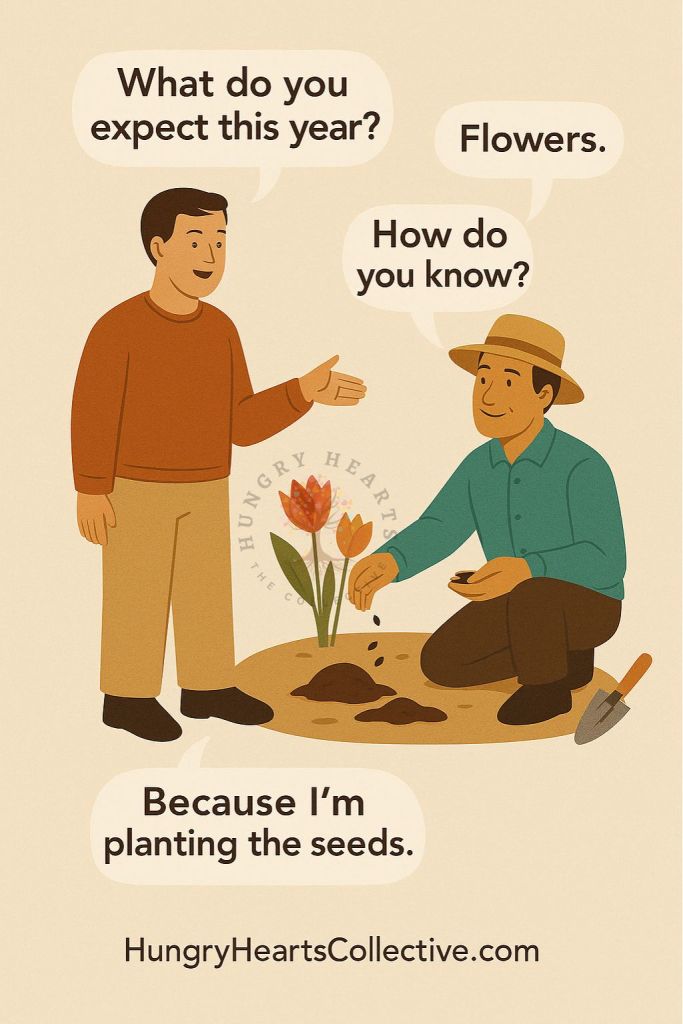
Eden wasn’t just a location. It was a divine atmosphere—a place of presence, provision, and peace. Adam’s assignment was twofold: work it (cultivate) and keep it (guard).
Now, through Christ, your mind and spirit are your Eden. A sacred space of communion and creativity.
The same instruction applies: cultivate it and protect it. That means intentionally planting new truths, pruning old patterns, and protecting that space from lies and intrusions. The enemy isn’t after your stuff—he’s after your mind, because that’s where Eden begins or ends.
YOUR PROSPERITY IS ROOTED IN SOUL ALIGNMENT
“Beloved, I wish above all things that you may prosper and be in health, even as your soul prospers.” (3 John 1:2)
You will only rise to the level your soul is prepared to sustain. That’s why success without inner healing often becomes sabotage. God desires wholeness in every part of you—but the gateway is the soul.
Until your internal world reflects divine truth, you will unintentionally resist what your spirit is praying for. You may desire love but feel unworthy. You may long for success but fear rejection. And so, you unknowingly build lives that fit your old story, not your future.
Change your soul’s agreement, and you change your entire trajectory.
5 THINGS YOU CAN DO TO CHANGE YOUR THINKING NOW!
Transformation is not a single moment—it is a process, a series of sacred choices. If you want to renew your mind and walk into the future God has designed for you, it begins with what you choose to think, feel, and rehearse each day. Here are five powerful and practical ways to start reprogramming your inner world and engage the change-process:
1. START A TRUTH & GRATITUDE JOURNAL
- Speak life daily: Write 3 truths about your identity in Christ (not feelings or past).
- Declare them aloud—let truth rewrite your mental script.
- Pair each truth with gratitude to open your heart to hope.
- Example: “I am chosen. I am whole. I am empowered. Thank You for breath, purpose, and restoration.”
2. AUDIT YOUR SELF-TALK
- Monitor your internal dialogue—it shapes your destiny.
- Identify and challenge thoughts rooted in fear, shame, or limitation.
- Replace them with God’s truth; speak to yourself with grace and boldness.
- Proverbs 23:7: “As a man thinks in his heart, so is he.”
3. MEDITATE INTENTIONALLY
- Choose one Scripture weekly—memorise, visualise, and pray it.
- Let it interrupt toxic thoughts and renew your mind.
- Schedule daily moments to revisit it until it becomes part of you.
- Romans 12:2: “Be transformed by the renewing of your mind.”
4. VISUALISE WITH FAITH
- Use imagination as a prophetic tool—see yourself healed, whole, walking in purpose.
- Speak and act from that vision—faith sees before it manifests.
- Matthew 9:29: “Be it unto you according to your faith.”
5. CURATE YOUR ENVIRONMENT
- Surround yourself with voices that call out your future, not your past.
- Eliminate limiting influences; build a space that echoes truth and peace.
- Let your environment support the identity you’re stepping into.
- Proverbs 4:23: “Guard your heart, for everything you do flows from it.”
DEVOTIONAL PRAYER
Lord,
I surrender the story I’ve been feeding—the one stitched with pain, wrapped in fear, and bound in old identity. I want the story You wrote. The one founded on truth, laced with destiny, sealed by grace. Help me think higher. Speak truth. And believe fully. Let my thoughts be a sanctuary for Your Word, and my heart a garden where only Your truth takes root. Let it be unto me according to Your Word. In Jesus’ name,
Amen.
QUESTIONS FOR REFLECTION
- What story from your past still tries to shape your identity?
- How often do you listen to your thoughts—and are they aligned with God’s truth?
- What would shift in your life if your faith determined your decisions—not fear?
- What can you begin doing daily to renew your mind and protect your heart?
- What does your “mental Eden” need more of—cultivation or guarding?
Like & Subscribe!
 The Hungry Hearts Collective
Leave a comment