
AUDIO PODCAST
WHY STUDY THE BIBLE?
“And that from a babe thou hast known the sacred writings which are able to make thee wise unto salvation through faith which is in Christ Jesus. Every scripture inspired of God is also profitable for teaching, for reproof, for correction, for instruction which is in righteousness. That the man [human] of God may be complete, furnished completely unto every good work.” — 2 Timothy 3:15-17
The Bible is not just a book to be read—it is a living mystery to be explored. Every verse holds layers of wisdom, and every passage contains both the simplicity for a child and the depth to humble a scholar. God, in His infinite wisdom, has hidden riches in His Word, not to frustrate us, but to invite us into fellowship—to draw us close in the joy of discovery.
God hides things not from us, but for us.
And we are called not just to be believers, but seekers. It is the glory of kings—that is, the honour of those with royal access—to search out what God has placed beneath the surface. The Spirit does not reward laziness; He rewards hunger.
“It is the glory of God to conceal a matter,
but the glory of kings is to search it out.”
— Proverbs 25:2
That’s why Bible study is more than a discipline—it is an adventure. And like any treasure hunt, it helps to know the map.
“Explanatory note,” from Greek exegesis “explanation, interpretation.”
Exegesis (n.)
What follows is one powerful way of breaking through the hardened crust of humanism, cultural opinion, and religious tradition—layers that often mask, distort, or altogether replace the truth revealed in Scripture. These are the shifting sands of man-made ideas: well-worn, widely accepted, and yet perilously detached from the solid foundation of God’s Word.
To uncover the unshakable rock of Christ, you must press past these dusty layers. It requires discernment, hunger, and the courage to dig deeper than what’s popular or comfortable. This is precisely what Jesus meant when He said:
“Everyone who hears these words of Mine and does them is like a wise man who built his house on the rock… but everyone who hears and does not do them is like a foolish man who built his house on the sand.”
— Matthew 7:24–26
Building on sand feels easy at first—but when the storms come, only what’s founded on truth will stand. That’s why we don’t just read Scripture—we search it. We don’t skim the surface—we dig for treasure.
The Rebbe once replied to a frustrated seeker:
“My son, a Rebbe is like a geologist. He can tell you where to dig—but he cannot do the digging for you. I can show you the field beneath which treasure lies. I can mark the place. But if you do not pick up the spade, if you do not bend your back and get your hands dirty, you will uncover nothing but dust and stones. in all your seeking”
He paused and added:
“Many walk away discouraged, saying there is no gold here. But it was not the land that lacked treasure—it was that they never truly dug.”
WHAT IS THE QUADRIGA?
The Quadriga is an ancient method of interpreting Scripture that sees the Bible as a text with four distinct layers of meaning. Like the wheels of a Roman chariot (quadri- = four, -ga = yoke or team), these four senses move together, each adding depth and momentum to the understanding of God’s Word.
Used widely by the early Church Fathers and medieval theologians, the Quadriga invites us to approach Scripture as spiritually multi-dimensional—a living text that speaks not only to the mind, but also to the soul, the imagination, and the moral life.
Here are the four senses:
- Literal (historical) – What actually happened?
The plain, grammatical-historical meaning of the text. - Allegorical (Christological) – What does this tell us about Christ?
The symbolic or typological reading that points to Christ or divine truths. - Moral (tropological) – What does this teach us about how to live?
The ethical application for personal transformation. - Anagogical (eschatological) – What hope or future does this reveal?
The spiritual or prophetic sense pointing to eternity, heaven, or final things.
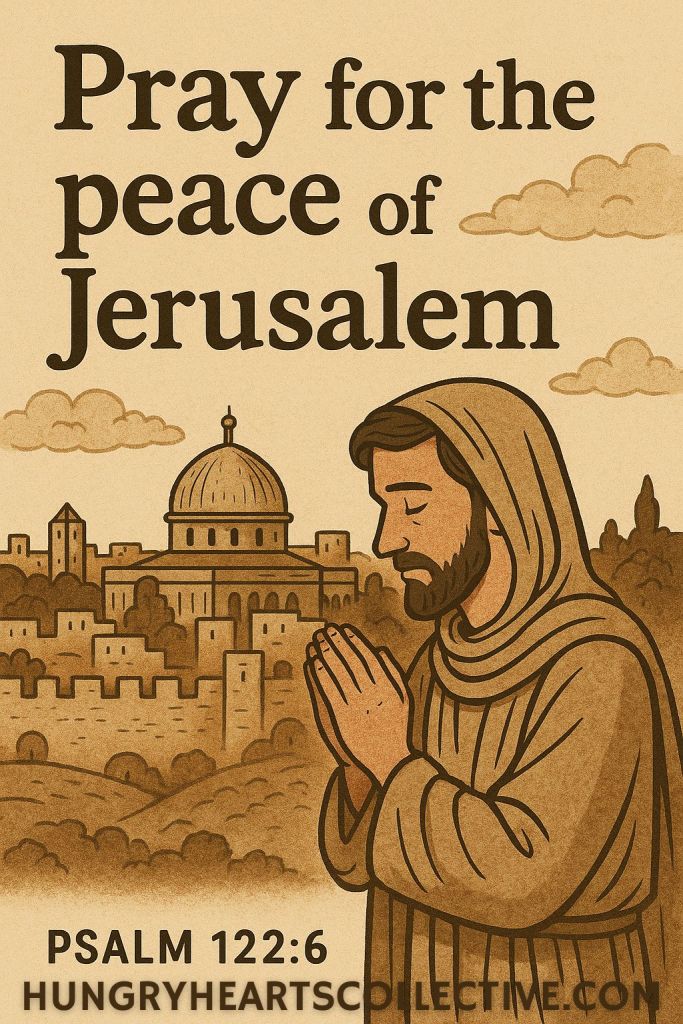
Example: Jerusalem
- Literal: A historical city in Israel.
- Allegorical: A type of the Church or the Bride of Christ.
- Moral: A symbol of the soul being restored or sanctified.
- Anagogical: The heavenly Jerusalem, the final dwelling place of the saints (Revelation 21).
This give new meaning to the verse, “Pray for the peace of Jerusalem, may those who love you be secure” (Psalm 122:6).
The Quadriga honours the integrity of the complete text—including its layered depth—acknowledging there is more to it than meets the eye. It’s not merely a method—it’s an invitation to go beyond superficial appearances (the shadow), into the true intended meaning of what the scriptures are saying (the reality). Ultimately history is His-story, and the actors, events and places serve as props to tell that story.
HISTORICAL CONTEXT OF THE QUADRIGA
The Quadriga arose in the early centuries of the Church as theologians wrestled with how to interpret Scripture faithfully—especially the Old Testament—in light of Christ. As the Church moved beyond its Jewish roots and into the Greco-Roman world, early Christian thinkers began to see multiple layers of meaning in the biblical text, much like Greek philosophy had taught about poetry and myth.
ROOTS IN JEWISH EXEGESIS AND GRECO-ROMAN THOUGHT
The Quadriga developed from the Jewish tradition of multi-layered interpretation, which included methods such as PaRDeS (Peshat, Remez, Derash, Sod), and was further shaped by Hellenistic philosophical categories.
Philo of Alexandria (1st century) famously used allegorical methods to harmonise Hebrew Scripture with Greek philosophy, influencing both Jewish and Christian thinkers.
FORMALISATION IN THE EARLY CHURCH
The idea of Scripture having more than one meaning was already present in the writings of:
- Origen (c. 184–253 AD), who taught that Scripture has body, soul, and spirit—a threefold model (literal, moral, spiritual).
- Augustine of Hippo (354–430 AD), who frequently applied multiple layers of meaning to passages, especially the Psalms.
But it was in the medieval period that the model was formalised as a fourfold structure, known as the Quadriga: Literal →Allegorical → Moral → Anagogical
This method became a cornerstone of medieval Christian exegesis, especially within monastic and scholastic communities such as the Benedictines and later the Dominicans.
WIDESPREAD USE IN THE MIDDLE AGES
Throughout the Middle Ages (5th–15th centuries), the Quadriga shaped sermons, commentaries, hymnody, and even cathedral architecture. It was not uncommon for a single verse to be unpacked across all four dimensions—each offering a deeper understanding and encounter with God.
The Glossa Ordinaria, a widely used medieval Bible commentary, often followed this model.
REFORMATION AND REDISCOVERY
During the Protestant Reformation, figures like Martin Luther and John Calvin critiqued the excesses of allegorical interpretation, arguing for a return to the literal-historical meaning as primary. As a result, the Quadriga fell out of favour in many Protestant circles, though typology (a form of Christ-centred allegory) remained.
Today, the Quadriga is being revisited by theologians, pastors, and biblical scholars who value both spiritual depth and exegetical rigour, seeing it as a valuable framework for lectio divina, preaching, and theological reflection.
THEOLOGICAL SIGNIFICANCE
The Quadriga reminds us that Scripture is not just a historical document—it is living, multi-dimensional, and Christ-centred. It connects the past to the present, the earthly to the eternal, and the written Word to the Living Word.
QUADRIGA VS. PaRDeS
| 🔍 Aspect | 🕎 PaRDeS (Jewish) | ✝️ Quadriga (Christian) |
|---|---|---|
| Origin | Rabbinic Judaism (Post-Temple period, rooted in Pharisaic tradition) | Early Church (2nd–4th century, formalised in medieval Christianity) |
| Structure | 4 levels (acrostic: P-R-D-S) | 4 levels (named after Latin: Quadriga = “team of four” i.e. like the four horses that pulled a roman chariot) |
| P: Peshat | Literal, surface meaning | Literal – What the text says historically or plainly |
| R: Remez | Hint or allegory, deeper symbolic meaning | Allegorical – What the passage points to in Christ or Church |
| D: Derash | Comparative or homiletic meaning (midrash, moral teaching) | Moral (Tropological) – How it teaches us to live |
| S: Sod | Secret, mystical or esoteric meaning (often Kabbalistic) | Anagogical – What it reveals about heaven, eternity, final things |
| Usage Context | Talmud, Midrash, Mystical texts (Zohar) | Church Fathers, Medieval Exegesis, Monastic Lectio Divina |
| Primary Goal | Torah understanding through layers of divine insight | Christ-centred spiritual depth and edification |
| Modern Application | Used in Kabbalah and rabbinic exegesis | Reemerging in theological reflection, biblical theology, and spiritual study |
TIMELINE: DEVELOPMENT OF THE QUADRIGA
| 📆 Date | 🏛 Milestone |
|---|---|
| 1st c. | Philo of Alexandria uses allegorical methods to harmonise Torah with Greek thought |
| 2nd c. | Origen of Alexandria teaches Scripture has body, soul, and spirit (a threefold method) |
| 4th c. | Augustine employs multi-layered readings (especially in the Psalms); anticipates Quadriga |
| 5th c. | John Cassian (Monastic teacher) formalises the fourfold method in the West |
| 9th–12th c. | Quadriga becomes the dominant model in medieval exegesis (used in Glossa Ordinaria) |
| 13th c. | Thomas Aquinas uses Quadriga to reconcile theology and Scripture in systematic theology |
| 16th c. | Reformers critique allegory’s excesses; Quadriga fades in Protestant circles |
| 20th–21st c. | Rediscovery of spiritual and symbolic readings renews interest in Quadriga and PaRDeS |
THE THEOLOGY OF WORK AND REST: FROM GENESIS TO HEBREWS
Let’s apply it.
I. OVERVIEW OF WORK AND REST IN SCRIPTURE
| Phase | Work | Rest |
|---|---|---|
| Creation (Genesis 1–2) | God works six days in order, purpose, and structure | On the seventh, He rests (shavat), sanctifying time |
| Fall (Genesis 3) | Work becomes cursed: toil, sweat, resistance | Rest becomes distant: man is driven out from Eden |
| Exodus | Israel labours under Pharaoh’s slavery | God promises “rest” in the Promised Land |
| Wilderness | The people “work” in disobedience and die wandering | “They shall not enter My rest” – a withheld promise (Ps 95) |
| Joshua | Land entered physically, but full rest not realised | Points forward to another day (Hebrews 4) |
| Christ | Christ finishes the true work (John 17:4, 19:30) | In Him is the true sabbath rest (Hebrews 4:9–11) |
II. HEBREW AND GREEK WORD TABLE: WORK & REST
| Concept | Hebrew | Meaning | Greek | Meaning |
|---|---|---|---|---|
| Work | עָבַד (avad) | to serve, labour, cultivate, worship | ἔργον (ergon) | deed, task, action |
| Toil | עִצָּבוֹן (ʿitsavon) | pain, sorrowful labour (Gen 3:17) | κόπος (kopos) | fatigue, wearisome effort |
| Rest | שָׁבַת (shavat) | to cease, desist, sabbath | κατάπαυσις (katapausis) | cessation, final rest |
| Sabbath | שַׁבָּת (shabbat) | cessation, holy seventh day | σάββατον (sabbaton) | sabbath day, weekly rest |
| Settle/Dwell | נוּחַ (nuach) | to settle down, rest, be quiet | ἀνάπαυσις (anapausis) | refreshing pause, rest |
| Dwelling Place | מָנוֹחַ (manoach) | resting place (Ps 132:14) | κατοίκησις (katoikēsis) | indwelling, habitation |
III. THE QUADRIGA: FOURFOLD INTERPRETATION
Let’s apply the Quadriga to a key verse: Hebrews 4:9 — “There remains, then, a sabbath-rest for the people of God.”
| Lens | Interpretation |
|---|---|
| Literal (Historia) | There is an actual state of rest promised by God that has not yet been fully entered |
| Allegorical (Mystica) | Christ is our rest — He fulfilled the Law and now invites us to rest in His finished work |
| Moral (Tropologica) | Cease striving; walk in faith, not works. Live from rest, not for rest. Trust God daily (like manna) |
| Anagogical (Futura) | Eternal rest in the New Creation — the true Sabbath when all striving and sorrow will end (Rev 14:13) |
IV. THE BARDES FRAMEWORK
| Dimension | Insights |
|---|---|
| Biblical | Scripture starts with God’s rest and ends with eternal rest (Rev 14:13) — all history is framed by this rhythm |
| Aesthetic/Literary | Genesis 1–2 is poetry in motion: 6 days of structured work, climaxing in the majestic stillness of day 7 |
| Rhetorical | Isaiah 30 warns against relying on human “horses” and urges return and rest — a divine contrast between frantic effort and holy stillness |
| Doctrinal | Christ is both the Lord of the Sabbath (Mark 2:28) and the final rest (Heb 4). Salvation is ceasing from our works (Heb 4:10) |
| Experiential | Sabbath rest is not laziness but divinely ordered wholeness: a return to Eden’s balance, a foretaste of eternity |
V. KEY TEXTS DEEP DIVE
GENESIS 1–2
- Work and rest are both good and sacred.
- God “saw that it was good” — creation is functional work, not frantic toil.
- Shavat (שבת) — the verb means to cease; not because of fatigue, but fulfilment.
GENESIS 3
- Work becomes cursed: “by the sweat of your brow…”
- Man is exiled from Eden’s rest.
- First mention of toil (ʿitsavon)—both man and woman now labour in pain.
ISAIAH 30:15
“In returning and rest you shall be saved; in quietness and trust shall be your strength. But you would not.”
- Rest here (נַחַת / שׁוּב) is repentant stillness, not laziness.
- Judah trusts in horses (symbol of Egypt, self-reliance), not God.
- Application: Self-willed work is rebellion. Rest is trust.
PSALM 95 / 90
“So I swore in my wrath, ‘They shall not enter My rest.’”
- Rebellion in the wilderness is met with exclusion from rest (manoach).
- Moses’ generation laboured but never arrived — work without faith is death.
HEBREWS 3–4
- Explicit connection between OT rest and the Gospel.
- “Let us labour therefore to enter into that rest…” (Heb 4:11)
- Paradox: You “labour” to cease from your own works.
- Christ’s finished work is the new Sabbath.
VI. HISTORICAL AND CULTURAL CONTEXT
| Period | Work | Rest |
|---|---|---|
| Ancient Israel | Agriculture, sacred festivals, temple service | Weekly sabbath, land sabbath (Lev 25), jubilee |
| Exilic/Post-Exilic | Work under foreign empires (Babylon, Persia) | Longing for spiritual return (Isa 58) |
| Greco-Roman NT | Economic slavery, daily labour | Jesus offers inner rest (Matt 11:28), not just cessation of labour |
VII. SYMBOLIC THEMES
| Symbol | Meaning |
|---|---|
| Sabbath | God’s original intention — rhythm of worship, gratitude, trust |
| Land/Promised Rest | Not mere geography but a covenantal state of shalom |
| Christ | The new Eden, the dwelling place of God (John 1:14, Rev 21) |
| Temple | Place of God’s rest (2 Chr 6:41), but ultimately fulfilled in us (Heb 3:6) |
CONCLUSION
Rest in Scripture is not inactivity, but divine completeness. It is the cessation of striving, the return to Eden, and the goal of salvation. God works, then rests—not from exhaustion, but as a king enthroning Himself in creation. We work from that rest—not to earn, but to reflect.
“Come unto Me, all you who labour and are heavy laden, and I will give you rest.” — Matthew 11:28
“There remains a sabbath-rest for the people of God.” — Hebrews 4:9
DEVOTIONAL PRAYER
Lord of the Sabbath,
teach me to cease from my striving.
Break the pride that toils in fear and grant me grace to rest in You.
Let me walk in rhythms of grace—not burnout, but blessing.
May Your finished work be my foundation,
And may I become a living temple of Your peace.
In Yeshua’s name, Amen.
QUESTIONS FOR REFLECTION
- Do I truly believe that God works while I rest, or do I functionally live as if everything depends on me?
- What is my theology of productivity? Do I equate fruitfulness with frantic labour?
- How might a biblical Sabbath rhythm look in my current lifestyle?
- What am I still trying to earn that Christ already finished?
- Where is God asking me to “return and rest” (Isaiah 30:15) — and will I listen?
MEMORY VERSE
“Do your best to present yourself to God as one approved, a worker who has no need to be ashamed, rightly handling the word of truth.” — 2 Timothy 2:15
 The Hungry Hearts Collective
Leave a comment