
AUDIO PODCAST
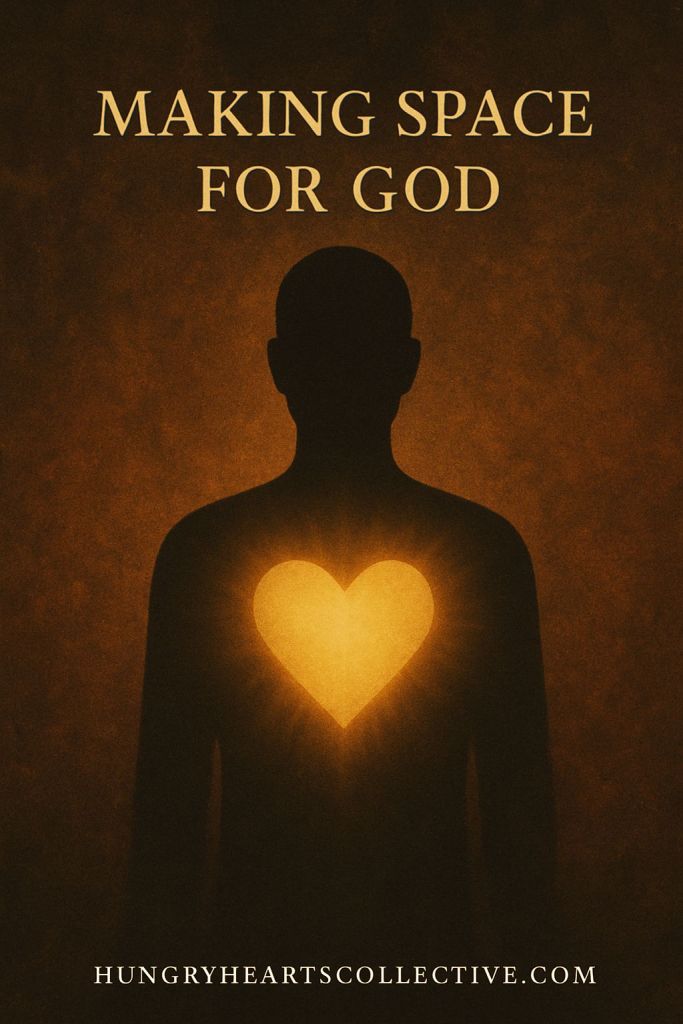
To love is to remember who you are. The separation between us is a mirror of the separation within us. To make space for another is to make space for God—and in that space, you become whole.
KEY STATEMENT (Romans 13:8–14)
PERFORMANCE CHRISTIANITY VS FORMATIONAL CHRISTHOOD
There is a great illusion in much of modern Christianity: that doing for God is the same as being with God—that performance is equivalent to transformation. But God does not merely want our service—He wants our self.
“Jesus answered and said to her, Martha, Martha, you are worried and troubled about many things. But only one thing is needed, and Mary has chosen that good part, which will not be taken away from her.” (Luke 10:41-42)
What if our frantic attempts to be “used by God” are often just subtle forms of hiding from Him? A seemingly legitimate means of avoiding Him? What if we’ve replaced the sacred intimacy of abiding with the public theatre of religious performance? We pretend we are serving God when in reality He has told us what it truly means to serve Him.
“I urge you therefore, brethren, by [in full view of] the mercies [covenant benefits] of God, that you present your bodies a living sacrifice, holy, acceptable to God, which is your reasonable spiritual service [worship].” (Romans 12:1)
Many of us were handed a version of faith that was more transactional than transformational. Attend. Obey. Serve. Produce. Perform. Prove. But beneath the surface, the soul cries out not to be used, but to be known. Not to be platformed, but to be formed. God is not impressed by productivity but drawn to presence. Not your performance, but your personhood.
In contrast, performance is driven by a deep-seated panic rooted in the fear of abandonment. It arises from a place of insecurity, where one feels the constant pressure to prove their worth and avoid rejection. This frantic striving to meet perceived external expectations stems from anxiety about being left out or unloved. In contrast, true presence flows from a place of groundedness and acceptance, where value is not earned by doing but is inherent and unshakable. While performance reacts to fear and scarcity, presence embodies peace and abundance.
That is why He says,
“Be still….and know…that I am God” (Psalm 46:10)
To be Christian is not to become a more efficient human doing—but a truer human being.
And herein lies the ancient invitation: to return to the garden of being. To return to love—not as a sentiment or moral imperative—but as the very architecture of reality.
LOVE AS ONTOLOGY: THE ESSENCE OF EXISTENCE
Ontology is not theology—it is deeper.
The metaphysical science, or study of being and the essence of things,
Ontology (n.)
Theology speaks of God. Ontology studies the nature of being itself—what is. And in the Christian tradition, there is a bold and terrifying claim: that love is not merely a virtue, but the very substance of being. The sinew of existence. The loom upon which all reality has been woven.
Consider how these verses inform each other:
→ “God is love.” (1 John 4:8)
→ “In Him all things hold together.” (Colossians 1:17)
→ “In him we live and move and have our being.” (Acts 17:28)
→ “Without Me you can do nothing.” (John 15:5)
To say God is love is to declare that love is not an attribute of God—it is His essence. The source code of being. And if all things hold together in Him, then all things are held together by love. Love is not a private virtue—it is the ontological glue of the cosmos.
When Paul says in Romans 13:8, “Owe no one anything, except to love one another,” he is not making a moral suggestion, but issuing an ontological warning: to fail to love is to step out of alignment with reality itself. It is to fall out of harmony with the universe’s very nature
DISSONANCE OR RESONANCE: ALIGNING WITH THE DIVINE FABRIC
We do not “break” the law of love—we break ourselves against it.
To live in hatred, jealousy, competition, or ego is not merely to sin—it is to warp the essence of your being. Just as a body that resists oxygen will suffocate, a soul that resists love will disintegrate.
Love is the law—not just in an ethical sense, but in the sense that gravity is a law. It governs what is real. You may resist it, but you cannot escape its consequences.
We are called not to obey love but to become love. That is another way of saying, “Embrace your new identity, your new nature” (2 Corinthians 5:17). That is why Paul says, “Put on the Lord Jesus Christ” (Rom. 13:14). Not mimic Him. Not quote Him. Put Him on. Wear love as your skin. Let it shape your internal world, your relational posture, your psychic structure.
This is the high and holy work: inner resonance. To come into rhythmic alignment with the God who is love.
Anything else is noise.
JUNGIAN MYSTICISM: YOUR NEIGHBOUR IS WITHIN YOU
Carl Jung said something staggering: that the work of the soul is not to flee from shadow, but to integrate it. To love others is not a nicety—it is a deep mystical task of wholeness (individuation).
“Love your neighbour as yourself.” (Matthew 22:39)
In the Jungian frame, this means: love the part of yourself that your neighbour represents. Every person you meet evokes an image within you, just as you exist in a unique (different) way in the mind of each person that meets you. And the way you treat them is the way you treat that part of yourself.
- Your enemy? They may mirror the aggression you repress.
- Your partner? They may reflect your own hunger for love.
- Your child? A living embodiment of your innocence—or your vulnerability.
- Your shadow? The unintegrated, disowned parts of your soul.
THE SCATTERING AND THE GATHERING: LOVE AS REINTEGRATION
The command to “love your neighbour as yourself” is not merely ethical—it is ontological and alchemical. It is a call to psychic reintegration: to recognise that the “other” is not truly other, but a projection, a mirror, a scattered echo of your own soul. To love them is to gather back what has been disowned, to reclaim the holy sparks of your own being that you’ve cast into the outer world.
And isn’t this—mysteriously, profoundly—what God has done for us?
From the very beginning, He breathed His own Spirit into man. “Then the Lord God formed man from the dust of the ground and breathed into his nostrils the breath of life” (Gen. 2:7). That breath—the divine essence—made us living souls, temples of the Infinite. But with the fall, that image fractured. The dust forgot the breath. The mirror broke. And what once was whole became scattered across the inner landscape of humanity.
Yet God, in His relentless love, refused to leave His image shattered. He sent Christ—not merely to save us from judgment, but to gather us back into wholeness. He descended into our fragmentation and gathered the sparks of divinity scattered in the dust. He came to integrate what had been lost.
“For God so loved the world, that He gave His only Son,
that whoever believes in Him should not perish but have eternal life.
For God did not send His Son into the world to condemn the world,
but in order that the world might be saved [preserved, made whole] through Him.”
(John 3:16–17)
Christ is the Divine Alchemist. Through love, He gathers the broken members (embers) of Adam’s lineage and restores them into His own body. He absorbs our hatred, shame, projections, and distortions—and returns them as peace. The Cross was not just a payment—it was a cosmic act of reintegration. In His death, all division was collapsed. In His resurrection, all things were made new.
To love, then, is to participate in this divine pattern: to be like Christ, the One who went out into the far country to bring home the prodigal parts of creation. When you love your neighbour, you imitate the movement of God Himself. You extend the breath that once formed you. You become a gatherer of scattered sparks, a priest of integration.
Love is not soft. It is the strongest force in the universe—the very vibration that pulls dust into being and breath into form. It is what unites flesh to Spirit, neighbour to neighbour, earth to heaven. It is God’s act of remembrance—and your invitation to remember yourself in every other.
To love is to remember what was never separate. To love is to join in the eternal rhythm of the One who, even now, is gathering all things back into Himself.
Every other is thus an image in your inner world, of your inner world.
To “love” them is to redeem them within you which ironically means to see them differently—graciously, kindly, patiently, and lovingly. This is what Scripture calls mercy.
This is what Christ did on the cross. And it is what we do when we open our arms to the unlovable of humanity, which it turns out, are just projected parts of ourselves. So it is true then,
“We do not see others as they are, we see others as we are.”
To make space for your neighbour is to make space for God. And to make space for God… is to finally come home to yourself. Thus, to love others is simply to see them differently, and to see them differently, we must acknowledge their true identity as image bearers of God.
THE GREAT HOLOGRAM: HOW WE TREAT OTHERS IS HOW WE TREAT OURSELVES
You are the projector and the canvas. Your world is not objective—it is filtered through the vast, trembling architecture of your heart. Jesus wasn’t exaggerating when He said,
“As you do to the least of these, you do unto Me.” (Matthew 25:40)
In mystical truth: the entire world exists within you. Your judgments, your hatred, your generosity, your forgiveness—they are internal before they are external. When you curse another, you curse yourself. When you bless another, you bless yourself.
To make space for others in your heart is to become spacious yourself. Love expands the soul. Bitterness poisons it. Selfishness shrinks it. Grace makes room.
The world we perceive is a mirror—sometimes cracked, sometimes clear. And love is the healing that mends the glass.
SOCIAL MEDIA AS PSEUDO-PRIESTHOOD
In the digital age, we’ve accepted a new priesthood. Not one that mediates between God and man—but one that pretends to mediate between person and person. Social media has become a counterfeit Holy Spirit: ever-present, always listening, interpreting, translating, connecting, and… dividing.
It gives the illusion of connection while eroding communion. It injects itself between souls and replaces presence with performance. We don’t know each other—we curate our shadows and perform to each other’s projections.
Meta (Facebook’s name) means “beyond”—and ironically, it pushes us away from what is real.
To return to love is to unplug from performance. To reclaim presence. To make space—in our hearts, our homes, our timelines—for what is true.
OWING NOTHING, GIVING EVERYTHING
Romans 13 ends with a call to awaken:
“The hour has come for you to wake from sleep [somnambulance, autopilot]. The night is far gone; the day is at hand… put on the armour of light.” (Rom. 13:11–12)
The only true obligation, Paul says, is love—aligning and synchronising with God. Not duty. Not guilt. Not religious pride. Just love. That is the only debt that liberates you even as you pay it.
And to love is not passive. It is the fiercest act of spiritual warfare. It unbinds the demonic. It breaks generational curses. It dethrones idols. It collapses hierarchies. Love is the true revolution. And you do not need a platform to do it.
You need only space. And stillness. And surrender.
MAKE SPACE FOR GOD: PUT ON LOVE
Paul’s words in Romans 13 aren’t just moral advice—they’re a quiet summons to awaken: “The night is far gone; the day is at hand… put on the Lord Jesus Christ” (Rom. 13:12,14). This isn’t about behaviour modification; it’s about returning to our true nature. To “put on Christ” is to be re-clothed in love—the same love by which all things were made, and by which all things are being remade.
God, who formed humanity from the dust, breathed His very Spirit into us. In Christ, He breathes again—gathering the scattered sparks of His image lost in the fallout of the Fall. “For God so loved the world…” (John 3:16)—not with distant pity, but with restoring fire. His love doesn’t just forgive; it integrates. It heals the split within us, between us, and between us and Him.
To love our neighbour, then, is to join God’s work of reintegration. Each act of love is a return to oneness, a remembrance of the image of God in the other—and therefore, in ourselves. When we make space for another, we’re making space for God. And perhaps that is holiness: not perfection, but presence. Not striving, but surrender. Love is how we remember who we are. Love is how we embody wholness.
Thus, to love is to remember who you are in the first place!
MEMORY VERSE
“The night is far gone; the day is at hand… put on the Lord Jesus Christ” (Rom. 13:12,14)
DEVOTIONAL PRAYER
Lord,
Strip me of performance.
Deliver me from the religion of doing.
Teach me to become a human being again.
Let love become the architecture of my breath,
the pattern of my thoughts,
the posture of my heart.
May I treat others as fragments of my own soul—
and may I learn to love what I once rejected.
Dwell in the spaces I create.
Sanctify my heart, Your temple.
Amen.
REFLECTION QUESTIONS
- In what ways have I prioritised performance over presence in my spiritual life (prayer)?
- Who in my life triggers a distorted image within me—and how might I recreate them with love?
- How can I create “space” for God this week in a practical way?
- What unconscious obligations am I living under that contradict the law of love?
- Where have I allowed technology to mediate my relationships, and how can I reclaim true connection?


Leave a comment