
AUDIO PODCAST
Today I woke up here in Edinburgh, also known as Din Eidyn in Celtic and Dunedin, I’m struck by how deeply human beings reflect their longing for something lost. The name echoes the human yearning for a greater reality—a paradise we once knew but no longer possess. It brings to mind the Garden of Eden, or Gan Ayden in Hebrew. The word Aydan resonates with the idea of delight, abundance, and perfection—a state where God’s presence was complete, His reign unchallenged, and humanity lived in harmony under His care.
That world, however, is gone. We live in exile from Eden, and humanity has been mourning this loss ever since. Deep within our collective soul, we are all aware of this truth, whether consciously or not. It is the prime mover that drives all human behavior: the desire to regain what we lost, to recreate paradise on earth.
THE UNIVERSAL YEARNING FOR EDEN
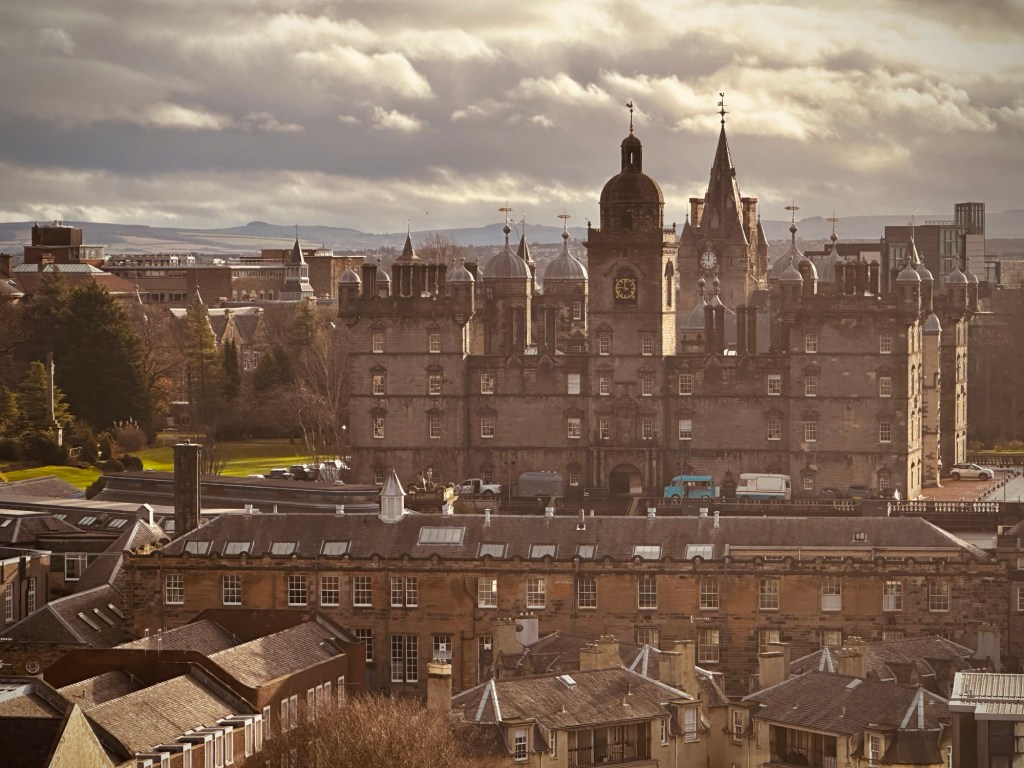
Every culture and civilization carries this ache for Eden, attempting in various ways to reconstruct it. We build cities, form ideologies, pursue careers, relationships, and independence—all in an effort to create a version of paradise. Even the very names of our cities often reflect this longing. But all these attempts are fundamentally flawed because they are built on our limited and broken understanding of what paradise truly is.
Hebrews 8:5 reminds us of an eternal truth,
“They serve a copy and shadow of the heavenly things. For when Moses was about to erect the tent, he was instructed by God, saying, ‘See that you make everything according to the pattern that was shown you on the mountain.’”
The mountain’s summit symbolizes the sacred meeting place with God, a space where divine connection and prayer converge.
God showed Moses the pattern for the Tabernacle, instructing him to build it as a reflection of the heavenly reality. Too often however, we are attempting to recreate ‘heaven’ in the image of earth, a very broken earth. The Tabernacle, like Eden, was a place where God’s presence dwelled. Similarly, Eden was the prototype of the Kingdom of God, with its center—the Tree of Life—symbolizing God’s authority, provision, and more importantly, His life sustaining presence. This centrality of Eden finds its echo in the Temple, the Church, and ultimately, in the New Creation.
In John 15, Jesus declares,
“I am the vine; you are the branches. If you remain in me and I in you, you will bear much fruit; apart from me, you can do nothing” (John 15:5).
This imagery of the vine echoes the Tree of Life in Eden—a source of sustenance, abundance, and eternal life. Just as the Tree of Life was the center of Eden, symbolizing connection to God and the flourishing of life under His reign, Jesus positions Himself as the center of our spiritual life and thus of the New Creation.
The Tree of Life in Genesis was humanity’s access to divine life, and now Jesus, as the true and living vine, fulfills that role. By abiding in Him, we reconnect with the life and sustenance we lost in Eden. Through Christ, the Tree of Life is no longer a distant hope but a present reality, restoring our access to eternal life and the presence of God.
But instead of seeking God’s pattern, we try to build paradise with our own hands. We pour our efforts into education, career, wealth, or relationships. We seek control, but in doing so, we unwittingly perpetuate the very exile we are trying to escape.
In light of our constant inclination to wander, the Lord declares His truth with unmistakable clarity and weight in Psalm 127:1:
“Unless the Lord builds the house, those who build it labor in vain. Unless the Lord watches over the city, the watchman stays awake in vain” (Psalm 127:1).
No amount of education, achievement, or self-improvement on our part can rescue us from the brokenness of this world. Knowledge may enlighten us, but it cannot heal the deep fracture between humanity and God.
Relationships, no matter how fulfilling, cannot save us—whether we cling to others for comfort or strive for independence to shield ourselves from pain, both ultimately fall short. Wealth, success, or even good deeds cannot bridge the gap, for the issue is not external but spiritual.
The brokenness we see, feel, smell and taste is a reflection of the separation from God within us, and no human effort can restore what was lost in Eden. Only through Christ, the one who reconciles us to God, can this brokenness be mended and true healing begin.
PARADISE LOST AND THE SOURCE OF CONFLICT

This universal pursuit of paradise often collides with others’ visions of it. When competing ideologies clash, or when someone threatens our deeply held concept of paradise, conflict arises. These clashes, like tectonic plates grinding against each other, produce friction, heat, and often violence—whether through words or actions. Instead of moving closer to Eden, we create less of it.
At the heart of this struggle is not the defense of paradise but the defense of our pride and fear of loss. This is what humanity mourns universally: the loss of Eden and the loss of God’s presence. Romans 8:22 describes this beautifully,
“For we know that the whole creation has been groaning together in the pains of childbirth until now.”
The world itself is in death throes because it was never designed to operate without God’s presence.
LIVING IN SELF-INFLICTED EXILE
Many Christians today dwell in a state of self-imposed exile, in ‘death’, estranged from the very source of life that sustains and empowers them—Christ, the true vine.
In John 15, Jesus declares,
“I am the vine; you are the branches. If you remain in me and I in you, you will bear much fruit; apart from me, you can do nothing.”
Yet, despite this clear invitation, countless believers attempt to navigate life independently, severed from the life-giving connection that is essential for their spiritual vitality.
This mirrors the tragedy of Eden, where Adam and Eve’s disobedience barred humanity from the Tree of Life (Etz HaChayim). What was once a place of unbroken fellowship with God became a memory, replaced by toil, separation, and spiritual barrenness.
Today, we perpetuate that exile—not because God has banished us, but because we have chosen to live apart from Him. Prayer is neglected, Scripture is reduced to ritual, and communion with God is sidelined, leaving us spiritually parched and fruitless.
Like a branch severed from the vine, we wither under the weight of our own independence, forgetting that apart from Him, we can do nothing. We labor to construct our own “trees of life” in the form of careers, relationships, or personal achievements, hoping to find the fulfilment, the life we thirst for, and that only He can provide. But these pursuits leave us empty, for they are poor substitutes for the abundant life that flows from Christ alone.
“On the last and greatest day of the festival, Jesus stood and said in a loud voice, ‘Let anyone who is thirsty come to me and drink. Whoever believes in me, as Scripture has said, rivers of living water will flow from within them.’” (John 7:37-38)
Thus, exile, along with a sense of abandonment and orphanhood, is not imposed by God but self-inflicted. His voice still calls to us, echoing Revelation 3:20,
“Behold, I stand at the door and knock. If anyone hears my voice and opens the door, I will come in and eat with that person, and they with me.”
Yet, like Adam and Eve hiding among the trees, we resist His presence, avoiding the very source of healing and restoration. Thus, we remain ‘stuck’ in the old creation often reproaching God in our ignorance and spiritual negligence.
To remain in this exile is to choose barrenness over abundance, death over life. But the invitation to return is always open. Jesus calls us to abide in Him, as He promises in John 15:4,
“Abide in me, and I in you. As the branch cannot bear fruit by itself unless it abides in the vine, neither can you, unless you abide in me.”
True flourishing, eternal fruitfulness, and the restoration of our souls lie in communion with Him. The question remains: will we continue to exile ourselves, or will we return to the One who is Life itself?
THE KINGDOM OF GOD VS. THE KINGDOM OF HELL
The etymology of Basileia (Greek for kingdom) is instructive. It is where the word “basilica” originates—a house of kingship and dominion. Paradise, or Eden, is where God’s basileia (His kingdom) reigns in fullness. In contrast, Satan’s basileia—hell—is the complete absence of God’s rule.
Humanity’s attempts to construct paradise independent of God only result in chaos because paradise is not a place we can build. It is not a system, an ideology, or a personal achievement. Paradise is wherever God reigns. Without His rule, all efforts to create it are doomed to fail.
There can only be one true “boss” (bas-ilia)—either God or ourselves. If we choose to take the reins, we must bear the weight of the consequences alone, fending off the devil’s influence by our own strength. But this is a futile endeavor, for in our own power, we are ill-equipped to resist the darkness that seeks to overtake us. The price of autonomy is the burden of navigating life’s challenges without divine guidance, constantly striving in vain to protect ourselves from forces greater than we can handle. It is a never-ending struggle that leads only to exhaustion, brokenness, and ultimately, a recognition that true victory is only found when we surrender control and allow God to reign as the sole authority over our lives.
THE TRUE PATH BACK TO EDEN
The answer is not in building our version of paradise but in cooperating with God to build His. This brings us to spiritual practice:
“Present your bodies as a living sacrifice, holy and acceptable to God, which is your spiritual worship.” (Romans 12:1)
Paradise is wherever God’s presence is invited and allowed to reign.
Paradise is not a distant utopia, but the state where creation is perfectly aligned with God’s will, where heaven and earth exist in harmony under His sovereign rule. It is the place where every element of the created world functions in its intended purpose, reflecting God’s glory and living in unbroken communion with Him. In paradise, there is no separation, no dissonance, for all things are in perfect alignment with the Creator. This alignment is not merely about physical beauty or abundance but about the fullness of God’s presence, reigning supreme in every heart and every aspect of creation, restoring what was lost in the fall and bringing all things under His perfect reign.
The only realm of creation over which we hold dominion is ourselves, which is why Romans 12:1 beckons us to present our bodies as living sacrifices—holy and pleasing to God. God cannot do this for us. Our bodies, the vessels of our will and action, serve as the conduits through which we align our lives with God’s divine purpose. Through sacred practices—prayer, worship, the study of His Word, and acts of service—we consciously surrender our lives back to Him, inviting His transforming presence to shape and direct us. In this surrender, we become active participants in the restoration of all creation, aligning our lives with God’s will and becoming instruments of His divine order, restoring our portion of the world to its intended harmony with its Creator.
It is through our alignment with God that creation itself begins to realign and flourish, for as we surrender to His will, we become the catalysts for the restoration of all things. When we align our lives with His divine purpose, the ripple effect is felt throughout the world—dysfunction and chaos begin to cease, and the harmony of creation is gradually restored. Our obedience acts as a spark, setting in motion the renewal of the world around us. As we submit to God’s perfect order, the brokenness of the earth is healed, and the original design for life, beauty, and peace is re-established, one soul at a time. Through our alignment, creation finds its rightful place in the eternal harmony of the Creator. This is the essence of tikkun olam—repairing the world through our partnership with God.
Revelation 3:20 reminds us that when we surrender control to God through prayer, obedience, and faith, we open the door to His Kingdom because we are the door. This is how healing and restoration become possible.
This is not just an individual transformation but a cosmic one. 2 Corinthians 5:17 declares,
“If anyone is in Christ, he is a new creation. The old has passed away; behold, the new has come.”
In Christ, we begin to reconnect with the true Eden—the new creation where God’s presence fully reigns.
PARADISE FOUND
Our independence from God is our downfall. Creation was never designed to function without its Creator, and this is why it is decaying. But when we surrender, we become conduits of His Kingdom, bringing heaven to earth. As Moses followed God’s pattern to build the Tabernacle, so must we follow God’s pattern in our lives, allowing Him to reign completely.
The key is not in striving to create Eden but in inviting God to restore it through us. Eden is not a place we can return to by our own efforts; it is a reality that can only be found when God is enthroned. The Garden of Eden, the Tabernacle, the Temple, and the Church are all reflections of this truth: Paradise exists wherever God is in control.
Let us stop mourning what we have lost and start embracing the new creation in Christ. When we connect ourselves to God through prayer, faith, and obedience, we become part of His great restoration. In Him, Eden is not just a memory—it is our eternal destiny.
LET US REMEMBER
Eden, once a garden of paradise, is no longer a distant, physical place but has been relocated within the hearts of those who choose to follow God. It is within us that the divine garden now resides, awaiting cultivation and care. As Genesis 2:15 declares, we are called to, “cultivate it and protect it,” to nurture the seed of God’s kingdom planted within us.
This sacred space, once in the realm of perfection, is now entrusted to us to guard and cultivate—our sacred duty—for within it lies the potential for life, peace, and restoration.
This inner Eden must be fiercely protected, for the adversary still seeks to corrupt what has been entrusted to our care. It is our responsibility (response-ability) to keep the garden of our hearts pure, free from the weeds of sin and the thorns of distraction, guarding the divine presence that once filled the earth. As we cultivate this inner Eden, we participate in the renewal of the world, bringing forth a harvest of righteousness and grace.
QUESTIONS
- How does humanity’s pursuit of paradise reflect its spiritual condition?
- What are the key differences between God’s kingdom and humanity’s constructs?
- How can individuals participate in restoring God’s intended paradise?
LET US PRAY
Heavenly Father,
We come before You with humble hearts, acknowledging our deep longing for the paradise we once knew, a harmony between You and all of creation. We recognize that only in You can this longing be fulfilled, and we surrender our wills to Your perfect purpose. Through Your Son, Jesus Christ, the Vine, we seek to be grafted into Your divine life, that we may bear fruit and experience the true peace and restoration You offer. Teach us to cultivate the inner garden of our hearts, to guard Your presence within us, and to actively participate in Your redemptive work in the world. May we surrender our pride and fear, choosing to align our lives with Your will, knowing that only through You can all things be made new.
In Jesus’ name, we pray,
Amen.
 The Hungry Hearts Collective
Leave a comment