
AUDIO PODCAST
ADDICTED TO ESCAPISM
This past week, I embarked on a journey spanning over 1,800 kilometres (approximately 1,100 miles), from Oxfordshire to Edinburgh, down to Sussex, and back to Oxford. Along the way, I was blessed with many wonderful experiences, encountering incredible people and savoring delicious food, stunning landscapes, and remarkable sounds. In Edinburgh, the air was often filled with the haunting sound of bagpipes, and at one point, on my last evening there, I had the privilege of witnessing a young woman on the street sharing the gift of opera. Her performance was nothing short of enchanting, and her courage moved me deeply. “Thank you for sharing your gift with us,” I said. To which she graciously replied, “Thank you for listening.” And in that moment, I thought to myself: yes, Who is still listening—not just superficially, but deeply, not just to hear, but to understand?
My traveling companion, a kind man who loves the Lord deeply and once taught at Oxford, provided not only stimulating conversation but also wonderful company on our most excellent adventure. His insights challenged me to re-evaluate my beliefs and thought processes, leading me to a place where I can grow into a more well-rounded human being. However, amidst all these joys, one experience stood out as a stark contrast—a jarring reality that has stayed with me. We had begun our journey early and in a moment of sheer desperation, we stopped at a service station and entered a fast-food restaurant (I use that term very loosely). I must admit, I cannot recall the last time I had entered one of these establishments—literally, many years had passed. And the change that greeted me was astounding.
At first, I didn’t notice much, but once we had gotten our meals and sat down to eat breakfast, it suddenly struck me, and I had a chilling vision of the future. I turned to my companion and said, “The robots are calling.” his head popped up and scanned the environment.
The incessant beeping that filled the air with its monotone drone was surreal, and what amazed me even more was that nobody seemed to notice. Everyone around us, absorbed in vacuuming down their industrial sustenance, was lost in their own world. They were completely desensitised to the beeps. Meanwhile, the beeping emanated from behind the counter, where the workers were being summoned, commanded, and regulated by the digital taskmasters in place, driving the relentless rhythm of the machine. It felt like the modern equivalent of a drumbeat on a digital slave galley, and I found myself wondering about the psychological toll on these workers. The constant conditioning, akin to Pavlov’s classic experiments with dogs, will undoubtedly leave lasting effects on them. Over time, the ceaseless beeping, the pressure to perform according to mechanical prompts, and the erosion of their autonomy could strip them of their dignity and humanity, reducing them to little more than parts of a machine, devoid of agency and self-worth. And how will the customers react to beeps in future? And this vision of the future I beheld filled me with concern.
My companion, whose bravery I commend, marched to the counter without hesitation and asked the workers to stop the beeping. Miraculously, and for a brief moment, the sound softened. I couldn’t help but wonder why both the public and even the workers had allowed this to happen. I understand the economic forces at play, but there is clearly more to this story—a tale of dehumanization, acquiescence, and even a quiet surrender to the shackles of digital slavery.
Henry Ford once said,
“It is a pity that I have to pay the whole man when I only need his hands.”
In today’s world, it seems we are reluctantly compensating the whole person but asking only for their compliance, their physical presence, and their ability to serve the needs of a machine. Hence the drive toward more complete automation. When and how did we surrender our sovereignty? This feels like the Genesis story unfolding before our eyes. God granted us a paradise—a world abundant with promise—and if the West is not the fulfilment of those promises found in the first five books of Moses, then I don’t know what is. Yet, just as we lost that paradise in the Garden, we seem to be losing it again. The true cost of this transaction is far greater than we realize. As we engage in an ever increasing digital world, we’re not only stripping away human dignity; we’re also forfeiting our ability to engage in the real, lived experience of life itself.
The incessant beeping, the constant pressure, and the detachment from the present moment surround us like an omnipresent lullaby. Screens summon us, demanding our attention with their ceaseless notifications, even when we are in the company of others. People sit together in restaurants, all staring at their screens. Do they even know where they are? Will they remember this moment? And so, we drift into unconsciousness, serenaded by the digital piper.
The word “android” comes to mind—part human, part machine—and I find myself wondering which part is winning. I have four children, and I have seen the progress over time in the birthing ward. The last time I was there, I was astonished to see that, at the momentous event of a child’s birth—one of the most significant moments in life—all the parents were on their screens. Nobody was talking to each other, no one was absorbing or processing what had just happened. Everyone was lost in escapism, lost and numb to the world. And this isn’t an isolated example. Notifications constantly demand our attention, keeping us tethered to our “masters.” Endless scrolling promises comfort, and streams of content blur the lines between who we are and what we consume. Beneath this hyperconnected, overstimulated world lies a sobering truth: we are avoiding reality. Are we moving toward a digital gulag?
But why? Why do we avoid the raw, unfiltered experience of life? And what is the cost of this avoidance to our bodies, minds, and souls? What is this digital hell that the sirens are summoning us to partake in?
This post explores the roots of this modern dilemma, the implications for our well-being, and the path back to a meaningful, embodied existence.
PART I: THE PROBLEM — WHY WE AVOID REALITY
THE SCREEN EPIDEMIC
The modern era has ushered in a profound cultural shift, one driven by the pervasive influence of screens. Devices promising to “connect us” have, ironically, become barriers to authentic human connection. A 2023 study by Statista revealed that the average person spends over seven hours each day staring at screens—these devices, once mere tools, have become extensions of ourselves, meticulously engineered to exploit our neurobiology.
It could be argued that these devices are the Trojan horses of our time, cunningly slipping into our lives under the guise of convenience and connection. Left unchecked, they will do far more than merely exploit or embellish our reality with seductive, Nietzschean promises of transcending our limitations. Slowly, imperceptibly, they will infiltrate and dominate us, hollowing out our humanity until we are nothing more than obedient vessels, tethered to the very machines we once believed we controlled.
Ironically, the opening chapters of this story chronicle our journey of dehumanization. They show how we transitioned from a state of divine elevation to one of mere competition for resources, much like animals. Is this is what Psalm 82:6-7 is alluding to?
“I said, You are gods, sons of the Most High, all of you; nevertheless, like men, you shall die, and fall like any prince.”
Most of us probably understand what is happening, yet we continue to ignore it for lack of will or even a proper escape route. The more pressing question is why—why have we allowed this descent once again? It is this “why” that must be fully addressed if we are to recover from the predicament we find ourselves in. As the old aphorism warns:
“Those who do not learn from history are doomed to repeat it.”
And so, we ignore the divine warning cautioning us against the wiles of pure evil as we cycle through this narrative over and over again—will we finally learn this time?
DOPAMINE
At the heart of this modern epidemic lies dopamine, the chemical that governs pleasure and reward. It is both a benefactor and a tyrant—a good servant when harnessed to propel us toward necessary tasks and pleasures, but a poor master when we allow it to dictate and control of our desires and behaviours. Every like, message, or view on our devices delivers a burst of dopamine, igniting our brain’s reward system—pavlov’s dogs again? This rush, subtle but persistent, creates a feedback loop as addictive as any substance, encouraging us to return again and again for more. There is a reason why the word “dope” is in “dopamine.” Like a beguiling siren, dopamine lures us deeper, and what starts as a simple distraction quickly escalates into dependence.
While the dopamine rush feels good in the moment, it comes at a great cost. It alters and diminishes our level of consciousness, slowly dulling the bright divine light within us. The mind, once vibrant and full of potential, is dulled by this constant need for stimulation, and its theurgic power—the ability to perceive, create, and connect deeply—is slowly drained. As a result, our perception of life, humanity, and reality itself becomes narrow, distorted, and warped. We begin to view the world through a fogged lens, where everything is reduced to fleeting gratification, and the profound beauty and complexity of existence are lost in the shadows of momentary pleasure. This insidious process, though imperceptible at first, gradually shifts our entire way of being, leading us further from the truth and light that once guided us. And thus we are transported ever further from the divine image we were created in.
This cycle is fuelled by our primal instinct to seek pleasure and avoid discomfort. Over time, our brains adapt, requiring ever more intense stimulation to achieve the same level of satisfaction. The dopamine-driven desire for instant gratification begins to govern our choices, reshaping our priorities and, ultimately, our capacity for meaningful connection and long-term fulfilment.
THE SEARCH FOR TRUTH: FREEDOM IN A WORLD OF CONSTANT CHANGE
In the ever-evolving landscape of our modern world, where the quest for novelty drives us from one idea to the next (ala tiktok, instagram etc.), we often fail to realize the deeper longing that fuels this ceaseless search: the longing for truth. Beneath the surface of our fascination with the new, the latest, the next big thing, is an unconscious yearning for something far more profound—freedom. The freedom that comes not from accumulation or possession, but from discovering the unshakable, unchanging truth that can transform our lives.
The allure and promise of the “new” is undeniable. We are drawn to what is fresh, what promises novelty, advancement, or a glimpse into the future. Whether it’s the latest technology, the newest philosophy, or the most cutting-edge trends, we are captivated by the idea that the next discovery will unlock some form of greater enlightenment or satisfaction. Yet, in this pursuit, we often overlook the fact that all of this “newness” is, in many ways, a distraction. The truth—the ultimate truth—is timeless, and it remains steadfast, no matter how much the world changes around us.
The Scriptures remind us in John 8:32,
“And you will know the truth, and the truth will set you free.”
This powerful verse speaks to a freedom that transcends circumstances, a freedom that is not dependent on external achievements or possessions. It is a freedom rooted in the knowledge of the divine, in the understanding of our purpose, and in the peace that comes from aligning with eternal truth.
Are we looking in the wrong places? Why are we looking in the wrong place? Whose idea was it? Did I agree to this?
The light we crave is not captured in the artificial glow of an electric screen, but in the radiant presence of God Himself. It is only in His divine illumination that we find the true clarity and freedom we long for. (A deeper exploration of truth and freedom will follow in a future post.)
DESIGNED FOR LIGHT: LIKE MOTHS TO A FLAME
But the story does not end with dopamine alone. Humanity has always harbored a deep, ancient fixation on light—first through fire, then the stars, and now, through the artificial glow of screens. This is precisely the issue: it is an imitation, a pale copy of the original light we were created to behold. Our biology was designed to seek light, for it provided safety, direction, and a profound connection to the world around us. Yet now, we find ourselves entranced by the manufactured brightness of our devices, drawn ever deeper into their glow, abandoning the natural rhythm of day and night.
The consequences of this are profound. In our obsession with these flickering screens, we sever ourselves from the life-giving cycles of the earth, and in doing so, we lose touch with our own physical reality. What was once a source of balance and grounding is now overwhelmed by an overstimulation of our senses. The unrelenting pursuit of instant gratification, fuelled by the craving for dopamine, pulls us further away from the essence of true, lived experience.
We find ourselves in a constant digital twilight, where the lines between what is real and what is virtual blur into obscurity. The steady pulse of our biological clocks, once aligned with the natural world, becomes but a distant memory. This is the price we pay for surrendering our lives to the whims of artificial light and the relentless pursuit of fleeting rewards.
THE BIOLOGY OF LIGHT: EYE AND BRAIN AS ONE
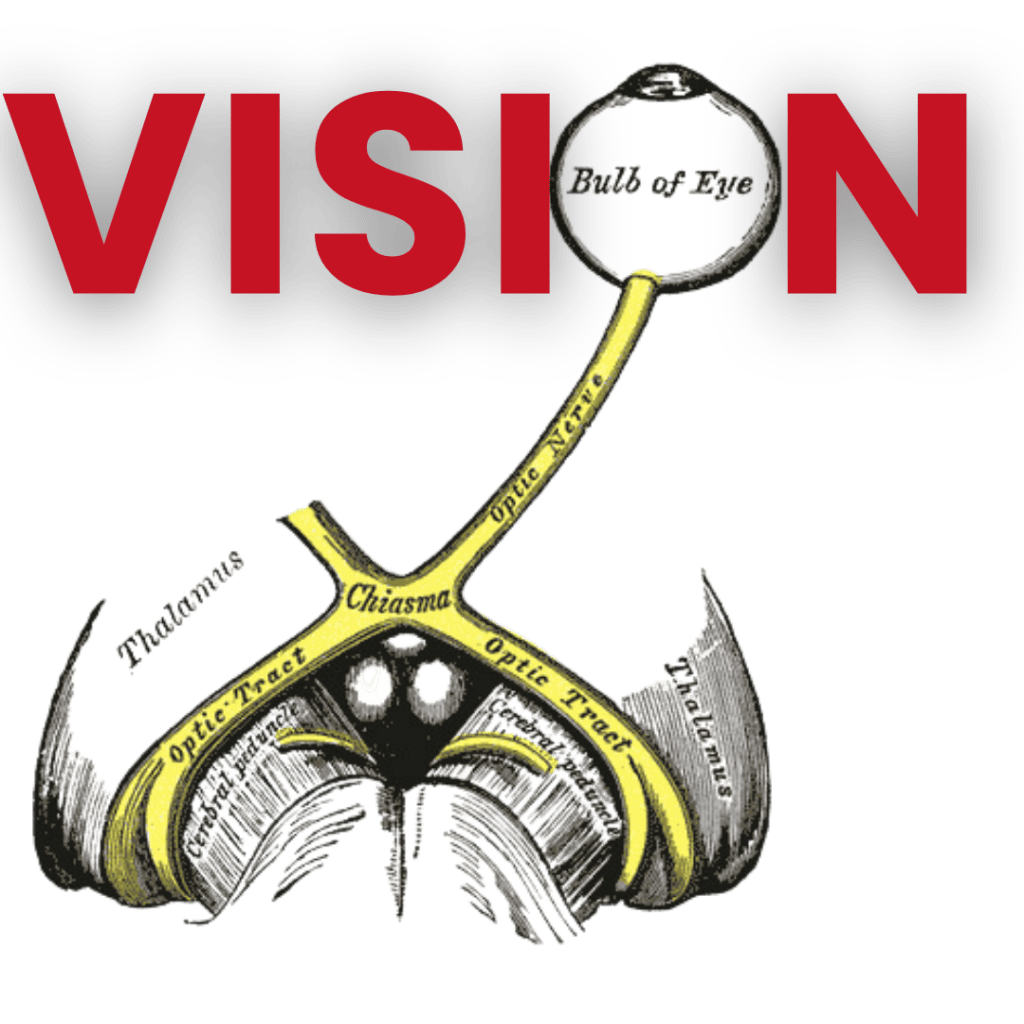
We often think of the eye as a separate organ, designed solely to receive light and pass visual information to the brain. In truth, however, the eye is not merely a passive recipient—it is an active extension of the brain, intricately connected in ways that shape our experience of the world. The eye’s physical design is so closely linked to the brain that the two are almost indistinguishable in their functions, a seamless integration that allows us to process not only what we see, but also how we feel, respond, and live in harmony with the rhythms of light.
The eye, as we know it, is a sophisticated system, comprised of specialized cells and structures designed to capture and process light. But the true marvel lies in how it transmits this light into the brain. The retina, the light-sensitive layer at the back of the eye, is where the real magic begins. It contains millions of photoreceptor cells, rods and cones, which convert light into electrical signals. These signals travel through the optic nerve, a direct extension of the brain itself, which carries this information to the brain’s visual cortex for processing. But the optic nerve is not just a simple conduit for visual data—its roots run deep into the brain, integrating with neural circuits responsible for regulating mood, alertness, and even sleep.
This connection between eye and brain is not simply a structural feature; it is a functional one that reflects the symbiotic relationship between light and brain function. The photoreceptors in the retina are connected to the brain’s circadian clock, a cluster of cells located in the hypothalamus. This clock governs our sleep-wake cycle, and it is highly sensitive to light. When the retina absorbs light, especially blue light during the day, it sends signals directly to this clock, helping to regulate our internal rhythms. The light we encounter through our eyes becomes the very stimulus that guides the synchronization of our bodies with the external world. It’s a subtle, yet profound interaction—a constant feedback loop between the eye and brain, shaping our entire biological experience.
Furthermore, the retina is so closely connected to the brain that it can be considered a continuation of it. The same neural tissue that forms the retina is actually an extension of the brain itself. This connection is often overlooked, but it underscores the deep integration between the two. When light enters the eye, it not only impacts how we see but also affects our brain’s functions, including cognition, mood, and even our overall sense of well-being.
But when artificial light—especially blue light emitted from screens—interferes with this delicate balance, it disrupts the signals being sent to the brain. Exposure to this light, particularly at night, confuses the brain into thinking it’s still daytime, inhibiting the production of melatonin and throwing off our circadian rhythms. This disconnection between the natural flow of light and our brain’s expectations can lead to sleep disturbances, cognitive fog, and a range of other health issues.
In essence, the eye is not merely an organ that receives light; it is an integral extension of the brain that plays a pivotal role in our biology. Light enters through the eyes, and in doing so, it shapes our physical, emotional, and mental states. The physical design of the eye, with its direct connection to the brain, is a perfect example of how our bodies are crafted to live in harmony with the natural rhythms of the world. When we honor this design and allow ourselves to connect with natural light, we can align our bodies and minds, fostering a sense of balance and well-being. But when we disconnect from this design, the result is a fragmentation of our internal rhythms—an imbalance that leaves us out of sync with both our biology and the natural world.
THE PSYCHOLOGICAL FALLOUT
This screen addiction is not simply a physiological issue—it’s deeply psychological. Studies reveal that chronic screen useIn this world of curated perfection, anxiety, depression, and loneliness have become omnipresent shadows, lurking in the corners of our minds. People are drowning in the illusion of others’ lives, comparing their deepest fears to the highlight reels of those who seem to have it all together. The result? A suffocating sense of inadequacy that grows with each scroll, until reality itself feels like an unbearable weight.
But this avoidance, this escape from ourselves, is not confined to the glowing screens we so often fixate on. It permeates every aspect of our lives, taking on countless forms:
- Busyness: We overload our schedules to drown out the silence, filling every waking moment with noise, as if to convince ourselves that our frantic pace somehow equates to purpose.
- Substances: In a desperate attempt to numb the pain, we turn to drugs, alcohol, and food—each a temporary balm for wounds that only grow deeper in their absence.
- Entertainment: Endless hours of binge-watching and gaming serve as a fortress against the harsh realities of life, distracting us from the uncomfortable truths we are afraid to confront.
- Consumerism: We shop, we acquire, we collect—hoping that the next purchase will fill the emptiness within, only to find it never does.
But what, ultimately, are we avoiding? It is the existential weight of life itself—the unanswered questions that linger in the back of our minds, the unresolved traumas that echo through our every step, and the gnawing, insatiable sense that something is profoundly missing. Are we truly finding what we seek in these distractions, or are we simply delaying the inevitable confrontation with ourselves?
As the saying goes, insanity is doing the same thing over and over and expecting different results. Yet here we are—caught in the cycle, desperately hoping that somehow, someday, the things we chase will finally make us whole.
A CRISIS OF IDENTITY IN A “FOURTH TURNING” WORLD
To understand the broader context, we turn to Strauss and Howe’s Fourth Turning. According to their generational theory, we are living in a “crisis” phase, marked by upheaval, uncertainty, and societal disorientation. These periods force individuals to confront foundational questions about meaning and identity.
In times like these, it’s tempting to withdraw into escapism. When we are confronted by crisis we have a choice to make. We can either engage or escape; avoidance only deepens the crisis. As C.S. Lewis wrote,
“If you look for truth, you may find comfort in the end; if you look for comfort, you will get neither comfort nor truth.”
Crisis on the scale represented by the Fourth Turning, can cause societal level stress responses from which we will be tempted to escape. By avoiding reality, we avoid the transformative growth that crisis demands of us. And yet, the reality we avoid, is precisely the reality we are longing for.
PART II: THE SOLUTION — EMBRACING REALITY
FULFILLMENT LIES IN REALITY, NOT ESCAPISM
Life was never meant to be devoid of pain or free from challenges. It is in the very nature of existence to be an arduous journey, marked by moments of struggle, doubt, and hardship. This is why we speak of “growing pains”—for it is only through discomfort that we are reshaped and refined. Like a butterfly that must make an conscious effort to shed its chrysalis to emerge and spread its wings, we too must confront the trials of life with courage and determination. There is no softening the truth: transformation is not easy, but it is worth it. It is certainly easier than remaining in the comforting, though ultimately destructive, cycle of self-defeat and escapism.
The temptation to avoid discomfort, to seek the quick relief of distraction, can feel like the only way to survive the weight of life’s challenges. But true freedom is not found in avoidance; it is found through effort, through the courage to confront what we most fear. This is how we discover our true capacity for growth. It is in the very shedding of the chrysalis—the very struggle we desperately seek to escape—that the butterfly is freed to soar. Without that resistance, it cannot spread its wings and take flight.
The path to true transformation is not the easy road, but who said the easy road is the best road, it’s only easy. The best and most rewarding path is the one that requires us to engage with the very things we wish to avoid. It is through the struggle, the discomfort, and the willingness to face the unknown that The butterfly does not become what it is without first enduring the struggle within the chrysalis, and neither do we. The very thing we avoid is the key to unlocking our potential and setting us free. This is how we achieve the deep satisfaction we seek, it is the key to our transformation. It is when we shed the old that we can embrace the new.
EMBRACING THE STRUGGLE: THE HERO’S JOURNEY TO TRANSFORMATION AND FREEDOM
This is the essence of the hero’s journey—the timeless narrative of the individual who dares to choose the difficult path, the one less traveled, over the seductive lure of an easy escape. The hero is not defined by their ease of passage but by the trials they face head-on. The easy path is a siren’s call, tempting us to retreat into comfort, to shield ourselves from the harsh winds of growth. But it is the hero—through fire, through struggle—who emerges transformed, not merely surviving, but thriving in the knowledge that they have become more than they were before. The hero’s transformation is not a product of avoiding the storm but of walking straight into its fury, with eyes wide open and heart steeled for the fight.
True meaning in life is not born from the absence of pain, but from our willingness to endure it with resilience and unwavering faith. And change is often painful. Life does not promise ease or comfort; it promises the opportunity to rise, to learn, to grow, and to become stronger. It is not the absence of hardship that defines a meaningful existence, but the courage to face it, to meet it head-on, and to transcend it. The very challenges we shy away from—those moments of gut-wrenching uncertainty, those trials that seem impossible to bear—are often the ones that will set us free.
The greatest freedom comes not from escaping the discomforts of life but from transforming through them. The hero does not escape the challenges, they embrace them, knowing that they are the crucible of their transformation. Every obstacle overcome, every fear faced, is a step closer to becoming who we are truly meant to be. In the end, it is the path through the struggle that leads us to the liberation of our truest selves—stronger, wiser, and with wings spread wide, ready to soar into the life we were destined to live.
REDISCOVERING THE BODY AS A SACRED VESSEL
In a world increasingly dominated by the virtual and the intangible, we have lost touch with the profound truth that our bodies are not mere vessels for convenience or function; they are sacred, living temples, designed to house the very presence of the Divine. The modern obsession with screens, notifications, and digital distractions has dulled our awareness of the beauty and depth of the physical world around us. We have become spectators in our own lives, detached from the senses that were meant to immerse us in the richness of God’s creation. The body, rather than being viewed as a burdensome, temporary shell, is a vessel of divine purpose, a sacred instrument through which we experience the miraculous wonders of life itself.
The Apostle Paul reminds us in 1 Corinthians 6:19 that our bodies are temples of the Holy Spirit, a truth that transcends the limitations of time, place, and circumstance. Each movement, each breath, each sensation is an opportunity to connect with the Creator who formed us with love and intention. Our bodies are not to be neglected, objectified, or numbed, but cherished and honored. In their vulnerability and fragility, they are a sacred space, set apart for experiencing the divine mystery of existence.
When we avoid physical engagement—whether through the seductive pull of virtual spaces or the numbing effects of substances—we rob ourselves of the deep satisfaction that comes from being fully present in the here and now. The world around us, though often noisy and chaotic, is brimming with beauty and meaning, waiting to be discovered through our senses. We miss the sacredness of life when we withdraw into distractions, retreating from the earthy, tactile experiences that ground us.
Consider the simple act of walking barefoot on the earth, feeling the cool grass beneath our feet or the warmth of the soil. In that moment, we are reminded that we are a part of this world, connected to its rhythm and pulse. Or the feel of a pen in hand, gliding across paper, the weight of it grounding us in the act of creation. Each stroke is not just a mark, but a manifestation of our humanity, our ability to bring order and meaning into the world. And then, the intimate act of sharing a meal face-to-face—savoring food prepared with love, tasting every bite, and exchanging conversation with those we cherish. In these moments, we are reminded that life is not a series of digital transactions or fleeting interactions, but a sacred exchange of presence, of connection, of spirit.
The act of reconnecting with our bodies is not simply a return to physicality; it is a return to the sacred. It is in the physical world that we find our place in the divine narrative, where every touch, every movement, and every sensation points us back to the Creator who made us. In rediscovering our bodies as sacred vessels, we rediscover the fullness of life itself—rich, textured, and alive with the presence of God. And it is in this sacredness that we find true satisfaction, for we are no longer mere observers of life, but participants in the divine dance of creation.
SPIRITUAL AND PSYCHOLOGICAL ROOTS OF AVOIDANCE
The roots of avoidance run deep, both in the psyche and the soul, and often find their expression in patterns of anxiety, denial, and self-destruction. These patterns can accurately be called Patterns of Avoidance. Swiss psychologist Carl Jung famously spoke of the “shadow“—the darker, unacknowledged aspects of ourselves that we prefer to ignore or repress—to avoid. Of course this seems easier that doing the inner work of cultivating and protecting the Garden of God within (Genesis 2:15).
When we avoid confronting this shadow within we experience fragmentation within ourselves.
When we avoid confronting the “shadow” within—the unacknowledged, darker parts of ourselves—we experience what Carl Jung referred to as fragmentation. The shadow encompasses all the aspects of our personality that we suppress, deny, or deem unacceptable, such as our fears, weaknesses, desires, or unresolved emotions. By avoiding these hidden aspects of ourselves, we create a divide within, leading to inner conflict and a profound sense of disconnection. In doing so, we reject valid and essential parts of who we are—our inner garden—and, as a result, prevent it from flourishing.
This fragmentation manifests in various ways: anxiety, depression, self-destructive habits, and projecting our insecurities onto others. Instead of understanding the root of our struggles, we externalize blame or seek escape, further deepening the divide within us. Jung believed that wholeness—true psychological and spiritual health—can only be achieved when we acknowledge and integrate the shadow. Confronting it does not mean indulging in its darker impulses, but rather understanding and reconciling those parts of ourselves so they no longer wield unconscious control over our thoughts and actions.
In essence, avoiding the shadow is like avoiding a wounded part of ourselves—it doesn’t heal but festers. The journey toward integration requires courage, humility, and honesty, but it is through this confrontation that we find unity, authenticity, and ultimately, freedom.
We become divided, disconnected from the fullness of who we are, and thus, we can no longer live in harmony with ourselves. This avoidance creates a constant inner turmoil, a quiet storm that often erupts in the form of anxiety, irrational fears, projection, and destructive behaviours. We become trapped in a cycle of denial, where we project our unresolved issues onto others, constantly searching for what we refuse to face within.
Jung’s work highlights the importance of integrating our shadow, of bringing our hidden fears, desires, and insecurities into the light so they can be understood and healed. Without this integration, we remain perpetually at war with ourselves, unable to experience peace or wholeness. The avoidance of this truth leads to a life of fragmentation, where we become isolated not only from others but from the deepest parts of our own soul.
In a similar vein, the Bible calls us to “renew our minds” (Romans 12:2), a directive that invites us to confront and embrace the flaws, imperfections, and brokenness within us. Rather than hiding from our struggles or pretending to be something we are not, we are encouraged to face our flaws head-on, knowing that God’s grace is more than sufficient to heal and restore us. It is only when we stop avoiding the painful truths about ourselves that we can begin the process of transformation. By acknowledging our weaknesses, we open ourselves to the power of God’s grace, which has the ability to heal, renew, and make us whole.
To embrace reality—flaws, mistakes, and all—is the first step toward true wholeness. It is the refusal to hide from the uncomfortable truths of our lives that enables us to step into the fullness of who we are called to be. When we avoid reality, we live in a falsehood, a half-life, but when we face it with courage and humility, we open the door to true spiritual growth. This is where healing begins: in the acknowledgment of our imperfections, and in the acceptance that God’s grace covers every imperfection, offering us a path to peace, reconciliation, and inner harmony. Only by confronting our shadow, by bringing our brokenness into the light, can we experience the wholeness that we were always meant to have.
GOD’S CALL TO ENGAGE WITH THE REAL
In the opening chapters of Genesis, we encounter a powerful and foundational truth about humanity’s purpose. In Genesis 2:15, God places Adam in the Garden of Eden “to work it and keep it,” a mandate that is far more than a mere directive to tend a physical space. It is a divine calling to engage with the world, to take responsibility for the creation entrusted to us, and to actively participate in the unfolding of God’s plan. From the very beginning, God has intended for us to be stewards, not passive observers, of the world around us. This mandate to “work and keep” speaks to the heart of human dignity and purpose: we are called to be co-creators with God, engaging fully with life, nurturing it, cultivating it, and allowing it to flourish.
Escapism, in any form, is a rejection of this divine calling. It is an abdication of our responsibility to engage with the real, to confront the challenges, joys, and pains that come with living in a fallen world. Whether through distractions, substances, or the numbing comfort of technology, escapism invites us to turn away from the very life God has given us, urging us to flee from the discomforts that are an inevitable part of the human experience. But fulfillment and purpose cannot be found in avoidance. They are discovered only in our willingness to engage with the real—unfiltered, unvarnished, and sometimes difficult as it may be.
God’s call to engage is not a call to denial or escape, but a call to trust in His sovereign will and to lean into the discomforts of life with faith and courage. We are reminded in Romans 8:28 that God works all things for good for those who love Him and are called according to His purpose. This assurance does not promise a life without difficulty, but it guarantees that in the midst of every trial, hardship, and moment of suffering, God is at work, bringing about something beautiful, even if it is not immediately apparent. Our struggles are not wasted; they are the very places where God’s transformative power is most clearly revealed.
In choosing to engage with life—no matter how challenging or uncertain—we align ourselves with God’s divine plan for growth and restoration. It is in the hard work of living, of facing our fears and embracing our responsibilities, that we find true fulfilment. This is where God’s work in us and through us takes shape. Fulfilment is not found in escaping life’s realities but in engaging with them, trusting that in every moment, God is making all things new. The beauty of life lies in our willingness to show up, to step into the real, and to allow God to work in and through us, even in the midst of discomfort.
PART III: INSPIRED ACTION — STEPS TOWARD RECONNECTING
DISENGAGE FROM VIRTUAL REALITY
The modern world pulls us into a never-ending digital cycle, often blurring the line between reality and the virtual. It’s crucial to establish boundaries and protect our minds and spirits from the overwhelming pull of screens. Begin by setting clear limits on your screen time. Use apps that help you track and manage your online activity, ensuring that you don’t lose yourself in endless scrolling. Start small—replace just one hour of screen time with something nourishing for your body and soul. Take a walk in nature, prepare a healthy meal, or dive into the peaceful rhythms of gardening. These small changes create space for you to reconnect with the tangible world around you.
RECONNECT WITH THE PHYSICAL WORLD
The physical world is rich with experiences that awaken our senses and reconnect us with the present moment. Embodied mindfulness is a practice that grounds you in your body, allowing you to fully experience the here and now. Focus on your breath—feel its rhythm as it moves in and out. Notice the textures beneath your fingertips, the warmth of the sun, or the coolness of a gentle breeze. These are sacred moments that root you in reality, away from the distractions of the digital world. Engaging in regular physical activity is another powerful way to reconnect. Movement, whether through yoga, hiking, or dancing, is not just exercise; it is a vital link between mind, body, and spirit. When we move, we connect to the pulse of life itself.
DEVELOP SPIRITUAL PRACTICES
If we are truly honest with ourselves, we must recognize that what we are thirsting for remains elusive, which is why we keep searching. As C.S. Lewis writes in Mere Christianity:
“If I find in myself a desire which no experience in this world can satisfy, the most probable explanation is that I was made for another world.”
This suggests that we must look beyond the confines of the physical world to find the fulfillment we seek. Spiritual practices help us to do just that, guiding us toward a deeper connection with the eternal and the unseen.
Amid the noise and chaos of modern life, developing spiritual practices is essential for cultivating peace and clarity. Begin by spending time in silent prayer or meditation, allowing space for God’s voice to speak into your heart. In these quiet moments, you can shed the distractions of the world and attune yourself to divine truth. Gratitude is a powerful tool for reconnecting with the present moment and with God’s provision. Start each day with a gratitude practice, focusing on the blessings that surround you—big or small. This simple act can transform your perspective, shifting your focus from what is missing to what is already present. Finally, immerse yourself in Scripture, allowing it to replace the lies of comparison and insecurity with God’s eternal truth. Let the Word of God shape your identity and give you the strength to face each day with courage and conviction.
QUESTIONS TO PONDER
- What am I avoiding by staying distracted?
- How can I embrace discomfort as a path to growth?
- Where is God calling me to engage more fully with reality?
- How does escapism mask deeper anxieties and unmet needs?
- What are the spiritual and physical costs of digital addiction?
- How can embracing discomfort lead to genuine self-discovery?
- How does our biology influence our susceptibility to digital distraction?
- What spiritual and practical steps restore a meaningful existence?
- Who do I want to be?
A PRAYER FOR RECONNECTION
Lord, I confess my tendency to avoid the reality You’ve placed before me. Forgive me for seeking escape rather than facing the life You’ve given me. Teach me to embrace the beauty of the present moment, to engage with my body, mind, and soul fully, and to trust in Your guidance. Renew my strength, and help me walk the path You’ve set before me. Amen.
SUMMARY OF KEY POINTS
- THE PROBLEM: We avoid reality through screens, busyness, and substances, often exacerbated by societal crises.
- THE SOLUTION: Embrace reality as the path to growth, fulfilment, and spiritual wholeness. Rediscover the sacredness of the physical body and the value of the present moment.
- INSPIRED ACTION: Limit virtual distractions, engage with the physical world, and deepen spiritual practices to reconnect with God and yourself.
It’s time to unplug, step into the real, and rediscover the life you were created to live. Reality is waiting for you—choose to engage.
 The Hungry Hearts Collective
Leave a comment