
AUDIO PODCAST
HOW TO BE GOOD
“Be good.” These words echo from pulpits, parents, and philosophers—a simple command often left hanging in the air without direction. Alan Watts once observed that many sermons boil down to this refrain, yet they rarely tell you how to “be good.” The admonition feels like standing at the foot of a mountain, staring at the summit without a map, compass, or supplies. To find our way, we must dig deeper, peeling back layers of theology, philosophy, and self-understanding.
Salvation—spanning justification, sanctification, and glorification—provides the framework for this journey. Each phase addresses not just where we are in relation to God but also who we are in relation to ourselves. As we navigate these stages, the timeless question resurfaces: Who am I?
The Threefold Journey of Salvation

Salvation is not a single event but a continuum of divine action and human response.
- Justification (Present): The moment of salvation where we are declared righteous before God and the human spirit is regenerated (2 Corinthians 5:17). This is the starting point, where grace rescues us from the penalty of sin. We are just-as-if we had never sinned.
- Sanctification (Continuous): The ongoing process of being made holy, a daily dying to self and living in Christ. This stage is the “how” of being good or living out our goodness that has been gifted to us and continually imparted to us by Christ through spiritual practice (1 Thessalonians 5:23).
- Glorification (Future): The ultimate fulfilment of salvation, where we are freed from the presence of the sin-inclined flesh, and united with God in perfection. Our flesh bodies are transformed and thus become glorified, that is lifted up, to a higher state of living ()1 Corinthians 15:40-44.
Together, these phases, or aspects, map out the journey of salvation, but they also hint at something more profound: the rediscovery of identity.
Who Am I? The Universal Crisis of Identity
The question of identity has haunted humanity since our exile from the presence of God in Eden. In that sacred moment, we read of Adam and Eve hiding from their Creator, overwhelmed with shame and acutely aware of their profound separation. This was not merely the fall of two individuals, but the inception of a timeless crisis: Who am I now that I am severed from the One who breathed life into me?
Thus, humanity is plagued by a profound and universal amnesia, where the memory of our original identity slips away, swallowed by the mists of time, and yet it lingers in the hidden chambers of our subconscious. We are, each of us, unknowingly striving to reclaim the paradise lost and rediscover the fullness of our true selves—the selves we once knew, before the fracture of the fall.
The modern world has only magnified this crisis. We seek to define ourselves through external markers—our work, relationships, accomplishments—but these labels prove insufficient, mere shadows of the paradise we truly long for. They are the original “fig leaves.” We cling to these identities because, deep within, we know the brokenness within us is far too deep to mend on our own. Our efforts are not merely attempts at fixing; they are desperate cover-ups, veils designed to hide the Adamic wound from others and from ourselves, for fear that its true depth might be revealed and we would be confronted with the stark reality of the devastation we find ourselves in. And so, the fracture expands, festers, concealed beneath the surface, growing ever more uncontainable.
When we say “I” or “me,” who is speaking? Is it the persona we project to the world, the sum of our roles and responsibilities? Or is it something deeper, the imprint of the divine?
Distinguishing Body, Soul, and Spirit: A Biblical Framework
The Bible presents a holistic yet distinct understanding of human composition, emphasising the interplay between body, soul, and spirit. These three aspects are not merely components but interconnected dimensions of our being, each with a unique role and function. Key passages such as Genesis 2:7, Hebrews 4:12, and 1 Thessalonians 5:23 provide foundational insights into this trichotomy.
Genesis 2:7: The Origin of Humanity’s Composition
In Genesis 2:7, we see the first delineation of body, soul, and spirit:
“Then the Lord God formed the man of dust from the ground and breathed into his nostrils the breath of life, and the man became a living being.”
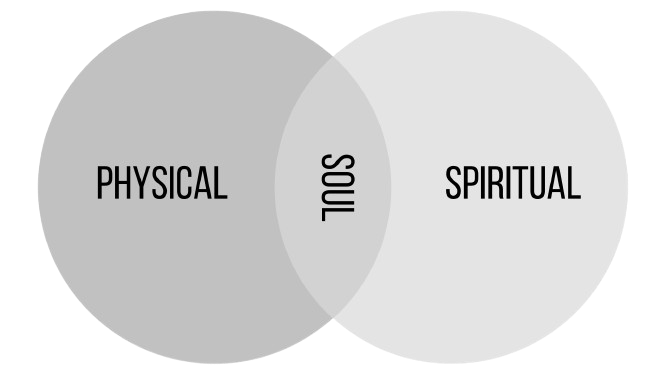
Here, the “dust from the ground” signifies the physical body, the “breath of life” represents the spirit imparted by God, and the “living being” (or soul) emerges as the integration of body and spirit. This verse underscores the interconnectedness of these aspects, with the soul acting as the seat of human individuality and consciousness.
Hebrews 4:12: The Precision of God’s Word
Hebrews 4:12 further illuminates this distinction:
“For the word of God is living and active, sharper than any two-edged sword, piercing to the division of soul and spirit, of joints and marrow, and discerning the thoughts and intentions of the heart.”
This passage reveals the ability of God’s Word to discern the fine line between soul and spirit. While the soul encompasses emotions, intellect, and will, the spirit connects directly with God as the locus of divine communion and spiritual life. The reference to “joints and marrow” parallels the physical body, rounding out the complete human makeup.
1 Thessalonians 5:23: Sanctification of the Whole Being
Paul’s prayer in 1 Thessalonians 5:23 offers a clear trichotomous vision:
“May the God of peace himself sanctify you completely, and may your whole spirit, soul, and body be kept blameless at the coming of our Lord Jesus Christ.”
This verse emphasises the distinct yet unified sanctification of spirit, soul, and body. The spirit reflects our divine connection, the soul governs our mind and emotions, and the body serves as the physical vessel through which we interact with the world.
Practical Implications
Understanding these distinctions allows us to live with greater intentionality and clarity, especially when we utter the words “I” or “me.” Are we speaking of the body, bound by its earthly constraints—its fleeting desires, its fragile nature—or of the human spirit, which has been made new, regenerated, and awakened to a higher reality when we enter into an alliance—whether through the new covenant or a spiritual marriage—with Christ? This awareness changes everything, for it reveals that our true identity is not defined by the temporal, but by the eternal.
Our spirit, renewed in Christ, transcends the limitations of the physical world. It is bound to a divine reality, one that is not confined by the passing seasons, nor by the fleeting triumphs or failures of our earthly existence. As we come to grasp this deeper understanding, our perception of self shifts. We begin to see our identity not as a mere reflection of our physical body or our worldly accomplishments, but as a reflection of the divine nature that now resides within us.
This shift in perception transforms the way we interact with the world. Identity becomes the determining factor for behavior and ultimate experience. As the saying goes, “We do not see things as they are, we see things as we are.” If our perception of self is rooted in the eternal, then we begin to view the world through the lens of that higher truth. We act not merely in response to our circumstances, but in alignment with the spirit within us—acting with intentionality, purpose, and divine wisdom. Our actions, then, are a reflection of the deeper reality we have embraced, as we live out our true identity, not as mere inhabitants of the physical world, but as heirs of the eternal.
This highlights to vital importance or correctly identifying who we are.
- Spirit:
- This is the true you. You are an eternal spirit living in a temporary body. THe soul is the connection between the human spirit and the body.
- The eternal, regenerated part of us, made new through the alliance with Christ (new covenant or spiritual marriage).
- Transcends the limitations of the physical world, bound to the divine and eternal.
- The true essence of our identity, rooted in the higher reality of God’s nature.
- Determines our ultimate behavior and experience, as our actions align with this divine truth.
- ACTION: Cultivate a deeper connection with God through prayer, worship, and the guidance of the Holy Spirit (John 15).
- Soul:
- The seat of our emotions, mind, and will—our inner life and thoughts.
- Intermediary between the body and spirit, reflecting and expressing our the struggle between these two realms for dominance.
- Can be shaped by the renewal of the spirit, transforming thoughts and desires to align with God’s will.
- Mirrors our inner transformation and informs our actions, as the soul learns to reflect the spirit’s truth.
- If not monitored can rely solely on the “physicality” of life to inform identity.
- As a consequence, it can facilitate in the creation of a false sense of self we call “ego.”
- ACTION: Align thoughts, emotions, and will with God’s truth, allowing Scripture to renew and transform the mind from within (Romans 12:2, James 1:21).
- Body:
- The physical, earthly vessel that operates within temporal constraints.
- It’s prime objective is survival of genetic information.
- Governed by the five physical senses which cannot penetrate spiritual reality.
- Subject to the limitations of time, space, and the natural world.
- Often the most immediate source of identity confusion, as we tend to define ourselves by physical characteristics or accomplishments, or the limits of the senses.
- Must submit to the guidance of the spirit for true freedom, as it is meant to be a temple for the divine spirit within us, not the dominant force in our lives.
- ACTION: Honor God by compelling the reluctant body to participate in the spiritual discipline of dedicating sacrificial time in His presence (Romans 12:1).
These three components together shape our total experience of identity, with the spirit as the highest and most defining aspect, leading the soul and guiding the body toward alignment with the divine reality.
This biblical framework reminds us that the Christian life calls for the holistic surrender (alignment) of every part of our being to God’s transformative work. The body, soul, and spirit are distinct, yet they harmonise to fulfill God’s purposes in and through us.
Made in the Image of God: Rediscovering the Divine Imprint
Genesis 1:27 declares that we are made in the image of God, a truth that anchors our identity. This imago Dei is not erased by sin but obscured, like a masterpiece covered in grime. THis is not unlike a dirty lost coin that is found, cleaned and restored to God’s divine treasure store, Sanctification is the process of restoration—God’s Spirit working to reveal the image beneath (Matthew 22:20).
Understanding ourselves as image-bearers transforms the question of identity. It shifts the focus from what we do to who we are i.o.w. who we have become in Christ (2 Corinthians 5:21). To “be good” is not merely to follow a moral code but to be transformed by living in harmony with our Creator. In short, it is not what we do for God by our own volition (will or choice), but what God does to and for us, by His.
The Practical “How”: Sanctification in Action
The process of sanctification is the heart of the “how,” it is what connects justification with glorification. It’s where theory meets practice, where divine grace intersects human effort. Here are three practical steps to navigate this continuous journey:
- Daily Surrender: Sanctification begins with yielding to God’s will. This involves prayer, meditation on Scripture, and the conscious choice to let go of our desires in favour of His. As Paul writes, “Offer your bodies as a living sacrifice, holy and pleasing to God—this is your true and proper worship” (Romans 12:1). This is an active duty not passive.
- Community and Accountability: Growth happens in the context of relationships. Surrounding ourselves with others who are also pursuing God provides encouragement, correction, and perspective. The church becomes not just a gathering but a laboratory for sanctification where both theory and process are refined through practice.
- Reflection and Repentance: Regular self-examination, akin to the principle of Kaizen—the Japanese philosophy of continuous improvement—helps us identify areas where we fall short and bring them before God. Sin, at its core, is a turning away from God, and for Christians, it manifests as a failure to spend time in His presence. Repentance, therefore, is not merely regret but a conscious decision to turn away from the neglect of God and to realign ourselves with Him, embracing a continual pursuit of His presence and guidance. This ongoing process reflects our commitment to spiritual growth and deeper intimacy with Christ.
The Symbol of the Tzaddik: A Visual Aid for the Journey
The Hebrew word tzaddik (צדיק), meaning “righteous one,” offers a profound pictographic insight. Breaking down the Hebrew letters reveals:
- Tzade (צ): Often depicted as a hook, Tsade signifies humility and the readiness to be led, as well as the deliberate act of guiding the flesh to the altar of sacrifice. Beyond its literal associations with hunting or trapping, Tsade embodies the broader themes of pursuit and capture, reflecting the deeper spiritual concepts of striving, seeking, and intentional effort. It can also carry meanings such as “hunt,” “catch,” or “trap.”
- Quf (ק): This word means “monkey” or “ape” in Hebrew. It refers to the animal commonly known for its primate / animalistic characteristics of genetic self-preservation. Qāf in Arabic meant “nape”—back of the neck—where the “yoke” is placed. What Christians must recognise is that the “quf” our flesh is an autonomous vehicle with its own agenda and appetites.
Together, these letters encapsulate the essence of righteousness: a life marked by the disciplined submission of the flesh, a spiritual practice that reflects our holiness. In one sense it provides us with a visual road map to a right-eous living aligned with God.. Holiness is defined as time set apart for time in His presence, This pictographic breakdown stands as a striking reminder of the sanctification process—a sacred journey of setting apart the flesh to His divine purposes. This is what is meant with Matthew 11:29,
“Take my yoke upon you and learn from me, for I am gentle and humble in heart, and you will find rest for your soul”
Instead of remaining stiff-necked, we subject the flesh to an activity it, by its very nature, cannot comprehend. The flesh designed for the earth is purely physical and isn’t equipped to perceive spiritual realities. Yet, just as the land, when exposed to the rain, flourishes in its seasons, so too does the brutish flesh when immersed in the presence of God. Neither the land nor the beast need understand the mystery to be enlivened by the rain from heaven; they need only be subjected to it. In the same way, we need not fully grasp the divine mystery of GOd’s presence, but merely surrender ourselves to it. It is in so doing, in that eternal struggle of surrender that we are transformed, made to flourish in ways beyond our understanding or ordinary ability.
The End Goal: Glorification and True Identity
The ultimate answer to the question “Who am I?” is found in a comprehensive understanding of salvation—one that encompasses not only justification, but also sanctification and glorification. This understanding must take into account the entire human framework as described in Scripture, acknowledging not just the human spirit, but also the soul and the body and their relationship to one another.
While we experience the blessings of salvation in the here and now, we must also recognise that there is a future fulfillment of salvation yet to come. In this future reality, our bodies will be glorified and transformed into the same type of body as that of the risen Christ—free from the grip of sin and fully restored to live as we were originally created to be. As 1 Corinthians 15:40-44 reveals, this transformation will be profound, as our mortal bodies are sown in weakness but raised in power, sown in dishonor but raised in glory, a reflection of the eternal, imperishable life that awaits us. This is the final act of our salvation—the ultimate realisation of who we truly are in Christ.
“40“There are also bodies in the heavens and bodies on the earth. The glory of the heavenly bodies is different from the glory of the earthly bodies. 41 The sun has one kind of glory, while the moon and stars each have another kind. And even the stars differ from each other in their glory.
42 It is the same way with the resurrection of the dead. Our earthly bodies are planted in the ground when we die, but they will be raised to live forever. 43 Our bodies are buried in brokenness, but they will be raised in glory. They are buried in weakness, but they will be raised in strength. 44 They are buried as natural human bodies, but they will be raised as spiritual bodies. For just as there are natural bodies, there are also spiritual bodies.”
and
“He will wipe every tear from their eyes, and there will be no more death or sorrow or crying or pain. All these things are gone forever.” (Revelation 21:4)
Glorification is the culmination of identity’s rediscovery. It is the day when we will see God face to face and know fully, even as we are fully known (1 Corinthians 13:12).
Conclusion: Living the “How”
The journey of salvation offers not just a destination but a path forward. Justification declares who we are in Christ; sanctification teaches us how to live out that identity; glorification promises its ultimate realisation. Along the way, we learn that “being good” is less about striving and more about surrender—allowing the divine image to shine through.
In the words of Augustine, “Thou hast made us for thyself, O Lord, and our heart is restless until it finds its rest in thee.” The practical application of salvation is this: to rest in God, to reflect His image, and to let Him show us, day by day, how to be good.
QUESTIONS FOR REFLECTION
- How does the understanding of salvation as a journey, encompassing justification, sanctification, and glorification, impact your daily life and your relationship with God? Consider how each stage addresses not only your relationship with God but also your understanding of self.
- The text suggests that our identity is not found in external markers but in our divine nature. How do you currently define yourself and how might shifting your focus to your eternal, regenerated spirit change your self-perception?
- The sources describe the human being as composed of body, soul, and spirit, with each aspect having a distinct role. How do you see these three components interacting within you, and how can you ensure that your spirit leads your soul and guides your body?
- Sanctification is described as a continuous process involving daily surrender, community, accountability, and repentance. Which of these practices do you find most challenging, and how can you apply the symbolism of the Tzaddik (צדיק) to your pursuit of holiness?
- The ultimate goal of salvation is glorification, where we are fully united with God and transformed. How does the promise of glorification and the vision of our ultimate identity in Christ impact your current struggles and aspirations?
SUMMARY
The text offers a comprehensive and insightful perspective on salvation, focusing on the practical application of its principles in daily life and the rediscovery of one’s true identity. Here are some observations and evaluations, drawing on the sources:
- Emphasis on Process over Event: The text emphasises that salvation is not a one-time event but an ongoing journey with distinct stages: justification, sanctification, and glorification. This contrasts with some teachings that may overemphasise the initial act of salvation, without focusing on the continuous process of transformation. This focus on process allows for a more dynamic and nuanced understanding of the Christian life.
- Identity as a Central Theme: The text connects the journey of salvation to the rediscovery of identity, noting that the question, “Who am I?”, has haunted humanity since the fall. This theme is powerfully integrated into the discussion of the three stages, showing that understanding our new identity in Christ is crucial for living out the Christian faith. This is particularly highlighted in the descriptions of the spirit, soul, and body and how they relate to our true identity. The text suggests that we often seek to define ourselves through external markers, which it calls “fig leaves,” but our true identity lies in our divine nature.
- Practical Application of Sanctification: The text provides concrete steps for pursuing sanctification, such as daily surrender, community, accountability, and repentance. It frames sanctification as a daily, active process, not a passive one. The use of the Tzaddik symbol provides a memorable and practical visualization of this ongoing struggle between flesh and spirit, where the “flesh” needs to be led and submitted to the presence of God. This approach moves beyond theoretical discussions and gives readers specific actions to take.
- Holistic View of Humanity: By distinguishing between body, soul, and spirit, the text provides a holistic understanding of human composition. This framework emphasises that true transformation involves all aspects of our being, not just the spiritual. This distinction highlights that each component has its own role, but the spirit should guide the soul and body towards alignment with the divine. This can only happen if the spirit is given priority. This view is supported by biblical references.
- Integration of Theology and Practice: The text effectively integrates theological concepts with practical advice, making the material accessible and relevant. It connects biblical truths with daily living, offering a balanced approach that avoids both legalism and license. For example, it relates the idea of being made in the image of God with practical advice for how to be good by living in harmony with the creator, not by one’s own volition, will or choice.
- Emphasis on Surrender over Striving: The text suggests that “being good” is less about striving and more about surrender. This is a valuable point that challenges the common tendency to try to earn God’s favor through our own efforts. The emphasis is on allowing the divine image to shine through as we rest in God. This idea contrasts with some teachings that may emphasise personal effort and works-based righteousness and provides a helpful insight into God’s grace.
- Use of Metaphors and Imagery: The text employs powerful metaphors and imagery, such as the “fig leaves,” the “Adamic wound,” and the Tzaddik symbol, which enhance the reader’s understanding and engagement. These metaphors help make abstract concepts more relatable and memorable. The example of the land being enlivened by the rain, and the flesh by the presence of God, illustrates that we don’t need to understand the mystery to be transformed, just surrender to it.
- Compared to Other Teaching Material: Compared to some other teaching material, this piece offers a more integrated and practical approach to salvation. It goes beyond the usual discussion of justification and delve into the day-to-day importance of sanctification and the ultimate destiny of glorification. By placing identity at the center of the salvation journey, it provides a more engaging and personal understanding. Additionally, this text incorporates biblical references, making it theologically sound, while its use of imagery helps it resonate with the reader on a deeper level.
In summary, this text provides a comprehensive and insightful view of the journey of salvation, emphasizing its practical application in daily life, the importance of identity in Christ, and the need for a holistic understanding of humanity. It encourages readers to move beyond a mere understanding of theology to actively engage in the transformative process of sanctification, leading to the ultimate glorification and realization of their true identity.
DEVOTIONAL PRAYER
A Prayer to Accompany the Podcast: “How to Be Good”
Heavenly Father,
We come before You, humbly seeking Your presence as we journey through the complexity of who we are in You. We recognise that the world often tells us who we should be, but only in Your light can we discover our true selves—our identities, formed in Your image, yet so often obscured by the weight of sin and the confusion of this world.
Lord, we thank You for the gift of salvation—justification, sanctification, and glorification. We acknowledge that each of these stages is not merely a moment in time, but a process, a transformation that You initiate and carry out. You have rescued us from the penalty of sin, and You are continually shaping us, day by day, to reflect Your glory. We thank You for this ongoing work in our lives.
Father, help us to understand and embrace the fullness of our identity in You. May we no longer define ourselves by the fleeting markers of this world, but by the eternal, regenerated spirit You have placed within us. Teach us to see ourselves through Your eyes, not through the lens of our failures or successes, but as Your beloved children, redeemed by the blood of Christ.
As we move through the stages of salvation, help us to surrender daily to Your will. Teach us the discipline of sanctification—how to die to ourselves and live fully for You. Guide our spirits, minds, and bodies into alignment with Your truth. May we be a reflection of Your holiness, living in harmony with the image You have stamped upon our hearts.
We ask for the strength to walk this path with intentionality and purpose, even when the way seems unclear. May we find our rest in You, knowing that You are not only the author of our salvation but the perfecter of it. Help us to trust You, not in striving, but in surrendering, knowing that You are at work in us both to will and to do according to Your good pleasure.
Lord, we thank You for the promise of glorification—the day when we will see You face to face and know fully, even as we are fully known. Until then, help us to live in the hope of that future, allowing it to shape the way we live today.
We surrender our bodies, souls, and spirits to You, and we ask that You would continue to sanctify us, making us more like Your Son, Jesus Christ, that we might live as faithful witnesses of Your grace.
In Jesus’ name, Amen.

 The Hungry Hearts Collective
Leave a comment