
AUDIO PODCAST
In a world where countless people feel lost, drifting from one meaningless job to the next, it’s easy to forget that we were created for more than paychecks and productivity. So many of us long for purpose—a reason to rise in the morning beyond surviving another shift or chasing another dollar.
The ache for significance is universal, rooted deep within the heart, whispering that life was meant to be lived for something greater than ourselves. What we are truly searching for is the chance to sacrifice ourselves for something of meaning and worth—to give ourselves fully to a cause that outlasts us and reshapes the world.
True fulfilment doesn’t come from serving ourselves, but from serving a higher calling—a holy purpose that connects us to God, to one another, and to the restoration of all things.
When we rediscover that purpose, when we understand ourselves as bearers of a sacred mantle, life is no longer a grind but an offering. In that moment, every task—no matter how humble—becomes a piece of the grand design, a chance to walk out the calling that was woven into us from the very beginning.
ETYMOLOGY
The Sanskrit varṇa, rooted in the idea of “covering” or “enveloping,” finds a beautiful resonance in the biblical concept of the mantle—the holy “covering” or spiritual annointing, that signifies a person’s divine calling and spiritual authority. In Scripture, the mantle is far more than a piece of cloth; it is a symbol of God’s anointing upon an individual, marking their role within His kingdom.
When Elijah cast his mantle upon Elisha (1 Kings 19:19), it was a visible sign of a holy appointment, a covering that set him apart for a sacred purpose. In the same way, the ancient concept of varṇa reminds us that every person is clothed with a calling, a spiritual hue granted by the Almighty.
In the same way that varṇa speaks of an outer covering expressing an inward nature, the biblical mantle signifies the outward sign of an inward grace—a holy trust placed upon a person by God Himself. Together, these ideas capture a profound truth: our covering is not just what we wear, but who we are called to be, a living expression of God’s glory upon the earth.
THE FOUR VARNAS: A GLIMPSE OF CALLING
In ancient times, the four callings or duties shaped the understanding of certain societies. Applying it to our lives can provide us with a lens to recognise what the ancients knew. In Christ, we can understand these as four callings within the Church:
| Ancient Sanskrit Word | Vocation/Duty/Service | Role in the Church Today | Examples from Scripture | Cashflow Quadrant | Gospel | Symbol / Colour |
|---|---|---|---|---|---|---|
| Brahmins | Priest, Teachers, Poets, Prophets | Those called to teach, pray, and lead people deeper into God’s truth. | Jesus, Moses, Ezra, Paul | Investor | John | Eagle / Blue |
| Kshatriyas | Protectors, Leaders, Administrators | Leaders, defenders, and warriors for righteousness and justice. | Jesus, Joshua, David, Nehemiah | Self-Employed / Business Owner | Matthew | Lion / Purple |
| Vaishyas | Stewards, Specialists, Entrepreneurs | Givers, builders, and entrepreneurs supporting the Church’s work. | Jesus, Lydia, Boaz, Barnabas | Business Owner / Self-Employed | Luke | Man / Red |
| Shudras | Servants, Helpers | Helpers and workers dedicated to serving the Church and its people. | Jesus, Phoebe, Stephen, Dorcas | Employee | Mark | Ox / White |
Each role is sacred, no matter how insignificant it may appear in the eyes of the world. In the eyes of God, if He has entrusted you with a task, it is precious and set apart. Every role carries eternal significance. All gifts flow from the one Spirit, and every calling is sustained by the same divine fuel—faith firmly anchored in the Word. It is not what we do that truly matters, but for whom we do it.
While there may be overlaps between various roles, each of us has a distinct primary role and a specific gift uniquely designed to fulfill that purpose. This main calling is the focal point through which your God-given abilities are most effectively expressed to accomplish the goal set before you.
And never forget: While Kiyosaki’s Cashflow Quadrant gives an indication of the usual income stream that may accompany a role, we must never limit God. The psalmist warns, “They limited the Holy One of Israel” (Psalm 78:41), and the gospels tell us that Jesus “could do no mighty work there… because of their unbelief” (Mark 6:5–6). Our true remuneration does not come from the role itself, but from the Lord we obey and who has commissioned us, and who, “supplies every need of yours according to His riches in glory in Christ Jesus” (Philippians 4:19).
ORIGINAL MEANING
The four varnas (duties)—Brahmin, Kshatriya, Vaishya, and Shudra—have rich linguistic roots in Sanskrit, describing ancient roles within society. The table below captures their direct translations and etymology, offering a glimpse into their original meaning and significance.
| Varna | Direct Translation | Etymology |
|---|---|---|
| Brahmin | Priest / Seer / Teacher | From Sanskrit brāhmaṇa, related to Brahman—the sacred or spiritual force. The root is br̥h (“to expand, to grow, to rise“) implying those dedicated to spiritual knowledge and teaching. |
| Kshatriya | Warrior / Protector | From Sanskrit kṣatra, meaning “rule, dominion, or power.” Rooted in the concept of strength and authority—those called to protect and govern. |
| Vaishya | Merchant / Producer | From Sanskrit viś, meaning “to settle” or “to inhabit.” Refers to the common people—cultivators, traders, and those who create prosperity. |
| Shudra | Servant / Labourer | From Sanskrit śūdra, referring to those engaged in service, support, and manual work. The root suggests belonging to the service and nurturing of society. |
EDENIC & PICTOGRAPHIC ANALYSIS
For those fascinated by Edenics—the idea of a pure, original language scattered at Babel (Genesis 11) whose roots still resonate in every language—and the concept of Pictographs, where each letter represents a distinct idea—take a look at the following table:
| Varna | Hebrew Link | Hebrew Concept / Root | Connection | Pictograph Meaning |
|---|---|---|---|---|
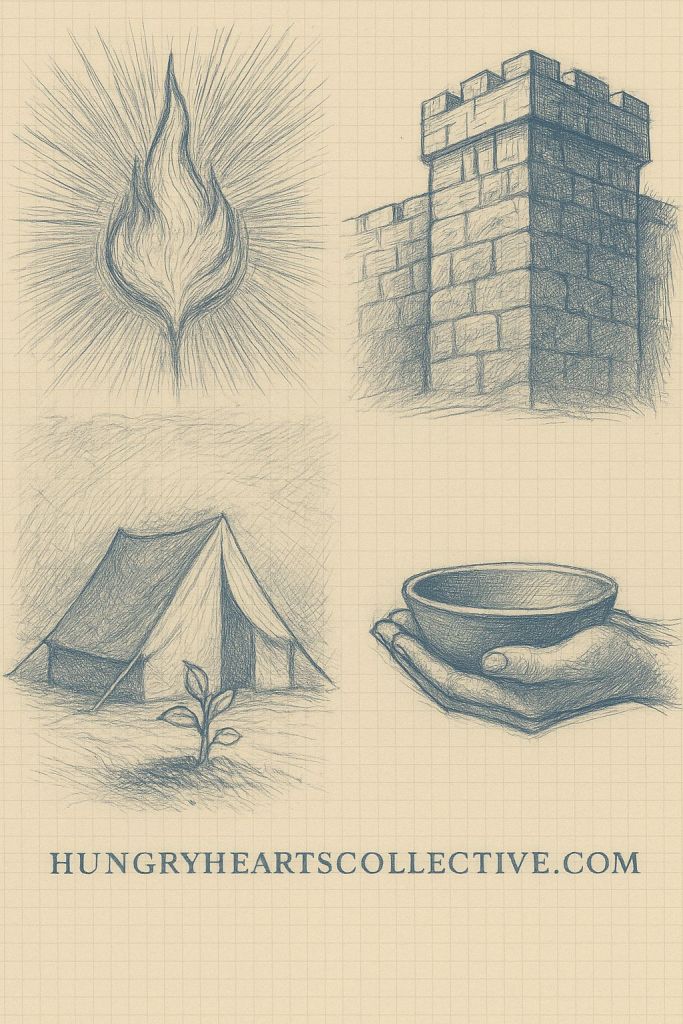
| Brahmin | Bara (בָּרָא) | From bara, “to create” (Genesis 1:1) | The Brahmin, as a teacher and seeker of sacred knowledge, mirrors the creative force of the Word—aligning with God’s act of bringing wisdom and order from chaos. | “In Light”—Creation by illumination. |
| Kshatriya | Shoter (שׁוֹטֵר) | From shoter, “officer, protector” (Exodus 5:14) | The Kshatriya role as warrior and protector finds resonance with Hebrew ideas of guardianship and justice. | “Wall of Protection”—Shielding life. |
| Vaishya | Yashav (יָשַׁב) | From yashav, “to dwell, inhabit” (Genesis 4:2) | The Vaishya as cultivators and merchants relate to the Hebrew concept of inhabiting and stewarding the land God has promised. | “Tent and Soil” — Dwelling in abundance. |
| Shudra | Sharat (שָׁרַת) | From sharat, “to serve, minister” (Exodus 28:41) | The Shudras reflect the Hebrew ideal of servanthood—faithful service that ministers to God and people. | “Hands and Bowl”—Serving with humility. |
Bara—“In Light” (Creation by Illumination):
The pictograph “In Light,” “with light,” or even “by light” captures the heart of the Brahmin calling. In the Hebrew word בָּרָא (Bara), meaning “create,” we witness the Creator Himself speak light into being, dispelling darkness and shaping order from chaos. This sacred act is deeply embedded in the very letters of the word:
- ב (Bet) = House / In / Within
Originally a simple house or tent floorplan, Bet conveys “inside” or “a place where something dwells.” - ר (Resh) = Head / Light / Leader
Resh represents the head or chief, often symbolising authority, leadership, or illumination. - א (Aleph) = Ox / Strength / Spirit
Aleph, though silent, stands for strength, breath, or divine spirit—the very life force.
Together, these pictographs reveal a profound meaning: “creation from within by divine illumination.” The Creator brings light in (Bet) as the leading (Resh) power, empowered by Spirit (Aleph). This aligns perfectly with the biblical account of God creating light first (Genesis 1:3).
The Brahmin role mirrors this holy moment, reminding us that every teacher, priest, or seeker of sacred knowledge is called to illuminate the path for others. To carry this mantle is to stand as a beacon—drawing upon the original light of Genesis to enlighten hearts, creating space for understanding, wisdom, and revelation. Every word of teaching echoes that first divine command that birthed light itself.
Shoter—“Wall of Protection” (Shielding Life):
The pictograph “Wall of Protection” paints the heart of the Kshatriya role. The Hebrew word שׁוֹטֵר (Shoter), meaning “officer, guard, protector,” carries this protective imagery deeply within its letters:
- ש (Shin) = Teeth / Fire / Sharp / Consume
Symbolizing something sharp and protective, like teeth or fire—elements that guard or destroy threats. - ט (Tet) = Basket / Surround / Enclose
Tet conveys the idea of surrounding, enclosing, or protecting something inside. - ר (Resh) = Head / Leader
Resh again signifies leadership or authority.
Combined, these pictographs illustrate a strong, unyielding barrier—a fortress that preserves life and defends the sacred. The Kshatriya is called to stand watch, shielding the vulnerable and rising when injustice threatens peace. This role is rooted in the biblical charge to protect the flock, guard the boundaries of righteousness, and defend those who cannot defend themselves.
The protector is a living depiction of God’s own heart—a shield and refuge, a stronghold for those in need.
Yashav—“Tent and Soil” (Dwelling in Abundance):
The pictograph “Tent and Soil” speaks to the essence of the Vaishya calling. From the Hebrew word יָשַׁב (Yashav), meaning “to sit, dwell, settle,” we glean the idea of planting deep roots, inhabiting a space, and making the land fruitful. The letters carry these meanings:
- י (Yod) = Hand / Work / Power
A small hand symbolizing action, work, or possession. - ש (Shin) = Teeth / Fire / Sharp / Consume
Here, it suggests protection or sustaining life, as fire can both consume and nurture. - ב (Bet) = House / In / Within
Signifying a dwelling or enclosed place.
Together, these pictographs suggest “working within a protected dwelling”—symbolising dwelling, settling, or establishing roots. The tent is a symbol of belonging, making a place a haven, while the soil reminds us of the sacred trust to cultivate, nurture, and multiply abundance.
The Vaishya is called to holy stewardship—planting seeds of provision, cultivating the land, and building commerce that serves the common good. In this role, the faithful become a channel of God’s blessing, making the earth a richer place for all.
Sharat—“Hands and Bowl” (Serving with Humility):
The pictograph “Hands and Bowl” captures the heart of the Shudra calling. From the Hebrew word שָׁרַת (Sharat), meaning “to serve, minister,” we see the image of hands outstretched in service, a bowl offered in humility and grace. The letters themselves reveal this calling:
- ש (Shin) = Teeth / Fire / Sharp / Consume
Symbolising vital life force or action. - ר (Resh) = Head / Leader
Suggesting a person or individual taking initiative. - ת (Tav) = Mark / Sign / Cross
Representing a mark or covenant—a sign of dedication or commitment.
“Sharat” suggests a person actively serving under a sacred covenant. This role is a holy one—a reminder that in God’s kingdom, the greatest are those who serve. The Shudra embraces a posture that reflects the heart of Jesus Himself, who came not to be served but to serve and give His life for many.
It is in this sacred service—in unseen gestures of compassion and obedience—that the kingdom of God finds its strongest foundation. Every role, when offered unto the Lord, shines with holy glory.
Each Hebrew letter originally functioned as a pictograph—a simple picture conveying a concrete idea. By combining these pictographs, we reconstruct the root meaning of a word, revealing its deeper spiritual and cultural significance. This method connects language, symbolism, and calling, showing how words themselves embody sacred concepts.
The Bhagavad Gita (ansceint Hindu text states,
The actions of priests, warriors,
commoners, and servants
are apportioned by qualities
born of their intrinsic being.(Bhagavad Gita 18.41, translated by Barbara Stoler Miller)
WHILE THESE CALLINGS/DUTIES MAY HAVE EVOLVED INTO A CASTE SYSTEM IN SOME CULTURES, THIS WAS NOT ALWAYS THE CASE.
BROKEN CULTURAL TELEPHONE
These callings and vocations were divine gifts, placed within each person by God and released into the world to hold chaos at bay. This is the very heart of the “Kingdom of Heaven” (מלכות השמים Malkut HaShamayim)—a realm defined not by borders or geography, but by dominion, authority, and holy influence.
Throughout history, cultures have made astute observations about these roles, yet good observations do not necessarily lead to good conclusions. What was intended as a sacred stewardship often became twisted into a rigid hierarchy or a justification for oppression. But this was never God’s intention.
The New Testament captures this reality with the Greek term Βασιλεία (Basileia)—referring not to a place, but an active force, an expression of God’s sovereignty breaking forth into the world. Interestingly, this word evolved from the Greek Basileia into the Western Germanic root baas, and eventually the English word boss—referring to one who governs, guides, or stewards. Yet this authority was always meant to be delegated, granted by God for one holy purpose: to restrain chaos, to align earth with heaven (Matthew 6:10), and to advance His peace until the glory of the Lord fills the whole earth.
To walk in this kingdom authority, one must first submit to God. As James reminds us,
“Submit yourselves, then, to God. Resist the devil, and he will flee from you” (James 4:7)
In Hebrew, this concept is expressed in the word מלכות (Malkut)—signifying reign, kingdom, and dominion. To walk in God’s Malkut is to carry a measure of His authority within ourselves and to release it upon the earth. These gifts were never meant to create division or impose status. They are a holy trust—a charge to:
- Illuminate darkness (Bara)
- Shield life (Shoter)
- Cultivate abundance (Yashav)
- Serve in humility (Sharat)
Each role is a piece of the grand design—a sacred stewardship intended to restore order, protect life, and nurture abundance. Together, these callings form the living fabric of God’s Kingdom—a reign that operates through obedience, service, and sacrifice, making space for peace (Shalom) and fruitfulness to flourish across the earth.
This is why the Psalmist declares,
“Sit at my right hand until I make your enemies a footstool for your feet” (Psalm 110:1)
The Kingdom of God was never about borders or institutionalised control. It is about dominion—an intimate partnership between God and His people, a holy collaboration for the restoration of the world. It is about being faithful stewards, keeping chaos at bay, and aligning ourselves with the heart of God until His glory fills the earth.
INTERDEPENDENCE, NOT INDEPENDENCE
The Kingdom of God has never been about rigid borders or institutionalised control; it is about interdependent stewardship under the sway of divine authority. We are called to stand firm, to hold back the tide of chaos, and to govern our own calling and sphere of influence as living echoes of His glory until the earth is filled with His presence.
Consider how each vocation thrives in its own domain:
- The trader excels at commerce—navigating markets, negotiating exchanges, and sowing the seeds of provision. Yet no amount of profit will repel an advancing army or deter marauding bandits. Be a provider, not an oppressor. The businessman mobilises capital, orchestrates enterprise, and drives innovation. He depends on the labourer’s skill and the trader’s network to realise his vision.
- The warrior is empowered to defend the realm, to stand resolute against every threat. But without the trader’s resources, the warrior’s shield soon rusts and morale falters. Be a protector, not a bully.
- The worker labours faithfully—building, crafting, and maintaining the foundations of society. Yet even the most diligent labourer needs the protection of the warrior, the exchange of the trader, and the direction of the priest. Be reliable, not lazy.
- The priest (or teacher) stands above all, not as a ruler, but as a guardian of justice and compassion. He guides every class—ensuring workers are not crushed by exploitation, warriors do not descend into tyranny, and business leaders do not sacrifice their humanity on the altar of profit. Be rooted in the community, not separated.
United we stand, devided we fall.
This is not a model of co-dependency, but of aligned autonomy. Each person exercises their God-given authority independently, yet in harmony with the others, forming a holy coalition against darkness. In this way, we fulfil our charge to restore the world, to keep chaos at bay, and to manifest the reign of heaven in every corner of creation.
Moreover, Christians must cultivate a deeper level of organisation and connectivity within the true Body of Christ. By intentionally pooling our gifts, talents, and resources—among genuine believers rather than mere institutional facades—we prevent needless drain or resources, and become, together, a formidable force for God’s kingdom on earth.
HEARTS, FAMILIES & TRIBES
Romans 12:6–8 tells us, and as 1 Corinthians 12 affirms, each of us is gifted by the grace of God—called to teach, to serve, to lead, to give, to encourage, or to show mercy. To discover these callings, we can certainly look inward at the stirrings of our own heart, the things that deeply resonate within us. Yet often, we can also look outward—to our families and heritage—because calling frequently weaves itself across generations. The Scriptures are filled with examples: Moses, Aaron, Miriam, and Hur (cf. Exo 17:10) were all family called to a distinct role (Brahmin-priestly), in God’s great story of deliverance and worship.
In the same way, the Levites passed priestly duties from father to son, David came from a line destined for kingship, and Asaph’s descendants became carriers of music and praise. These holy threads remind us that God often plants gifts like seeds within families and nations, allowing a legacy of grace to flourish across generations. What one generation embraces by faith can become the seed that another generation cultivates—a holy inheritance shaping the Church for the glory of God.
Your gift is a supernatural “power tool” that must be “plugged in” to unleash its full potential and accomplish the task at hand. Without this connection, it can become a burden, making your work more difficult rather than easier.
God has placed His divine tool within you for the blessing and service of others. This sacred gift, when embraced and activated, becomes a channel of God’s grace, flowing outward to meet the needs of those you are called
THE DOUBLE EDGE OF THE GIFTS
Unfortunately, these gifts—holy and profound as they are—can remain undeveloped, neglected, or even twisted towards evil. Every calling contains within it the potential for three expressions:
- An evil distortion, rooted in ego, greed, or pride.
- A neutral expression, where the gift operates for worldly gain or survival.
- A righteous expression, aligned with God’s heart and kingdom.
Each gift operates within the paradigm we choose to inhabit. When rooted in intimacy with the Lord, a calling becomes a channel of life and renewal. When detached from Him, it can degrade into a weapon for exploitation or control.
For example:
- The Brahmin calling (illumination) can be twisted into elitism, spiritual arrogance, or manipulative teaching when evil.
- The Kshatriya role (protection) can degrade into aggression, tyranny, or abuse of power when evil.
- The Vaishya calling (stewardship) can become greed, exploitation, and hoarding when evil.
- The Shudra role (service) can degrade into servility, resentment, or apathy when evil.
But when surrendered to God and rooted in obedience, these same callings flourish in their righteous expression. They become sacred tools of renewal—gifts for cultivating life, for serving others, for building peace, and for restoring order where chaos threatens to overwhelm.
In this way, every gift reminds us that the Kingdom of Heaven is not a static title, but a daily choice. Will we steward these gifts as holy trust, co‑labouring with the Lord to restore the world? Or will we distort them, aligning ourselves with the forces that seek to corrupt and destroy?
Each moment, each decision, is an invitation to lean into the heart of God allowing His glory to shape these gifts and illuminate the world around us.
Here’s a fully developed, eloquent, and structured section you can use, with the title, table, explanations, and spiritual anchoring you requested:
STRENGTHS, WEAKNESSES, AND THE CALL TO MASTER OUR GIFTS
Each calling or varna carries its unique strengths and vulnerabilities. Understanding and mastering our gifts is not only vital for fulfilling our purpose—it is the path to gaining the freedom God intends for us. As the Apostle Paul reminds us:
“Whatever you do, work at it with all your heart, as working for the Lord, not for human masters” (Colossians 3:23)
And further:
“Were you called while a slave? Do not be concerned about it. But if you can gain your freedom, do so” (1 Corinthians 7:21)
Mastering our God‑given role is an act of obedience and worship. In doing so, we align ourselves with His design, gaining the liberty to flourish and the authority to walk fully in our calling.
STRENGTHS & WEAKNESSES OF EACH VARNA
| Varna | Strengths | Weaknesses | Focus On | Watch Out For |
|---|---|---|---|---|
| Bara (Brahmin) | Wisdom, illumination, teaching, spiritual insight | Pride, elitism, detachment from everyday struggles | Humility, making spiritual truths accessible | Spiritual arrogance, disconnection, isolation |
| Shoter (Kshatriya) | Courage, protection, loyalty, sense of justice | Aggression, abuse of power, tyranny | Tempering strength with mercy, integrity and compassion | Anger, vengeance, overreach |
| Yashav (Vaishya) | Stewardship, resourcefulness, cultivating abundance | Greed, exploitation, obsession with wealth | Generosity, ethical commerce, aligning resources with God’s kingdom | Materialism, stinginess, exploitation |
| Sharat (Shudra) | Service, humility, obedience, resilience | Resentment, servility, passivity | Dignity in service, making every act holy | Bitterness, despair, apathy |
THE INTERWOVEN CORD: WORKING TOGETHER UNDER GOD
“Two are better than one, because they have a good return for their labor: If either of them falls down, one can help the other up… A cord of three strands is not quickly broken” (Ecclesiastes 4:9, 12)
Each calling shines when it operates within the body of Christ, but it finds its enduring strength only when it is entwined with the Lord Himself. This is why every varna—regardless of its holy assignment—must be rooted deeply in Christ. Our talents and efforts must be laid upon the altar of obedience.
“Only what we present to God is blessed, sanctified, empowered, and multiplied”.
It is in this sacred space of surrender that work becomes worship, and gifting becomes glory. Together, as we root ourselves in Christ, our callings unite to form a threefold cord—you, your fellow believer, and the Lord Himself one that can bear the strain of any storm and carry forth the glory of the Kingdom until the earth is filled with His presence.
THE MEANING OF VARNA: A HOLY PATTERN IN CREATION
The term Varna derives from the Sanskrit root vṛ, meaning “to cover,” “to enclose,” or “to categorize”—a word that came to describe the ancient ordering of society. According to the Encyclopaedia Britannica, the earliest mention of the varnas appears in the Rig Veda (c. 1500–1200 BCE). In the hymn known as the Purushasukta (Rig Veda, Book X, Hymn 90, Verse 12), we read:

“The Brahmin was his mouth.
The ruler was made from his two arms.
As to his thighs—that is what the freeman was.
From his two feet the servant was born.”
(Translation by Stephanie Jamison and Joel Brereton)
This ancient cosmogonic image—Brahmin from the mouth, Kshatriya from the arms, Vaishya from the thighs, and Shudra from the feet—is a symbolic depiction of an ordered universe, not a literal caste system. As with all mythic language, it is a spiritual symbol wrapped in poetic imagery, pointing to a deeper reality.
The Apostle Paul captures this very truth when he reminds the Church:
“For the body is not one member, but many… The eye cannot say to the hand, ‘I have no need of you’; nor again the head to the feet, ‘I have no need of you’” (1 Corinthians 12:14, 21)
Each role—priest, warrior, farmer, servant—is an integral part of a holy body, a living organism where every member has a unique calling and contribution. What this ancient picture reminds us, and what Scripture confirms, is that we are all expressions of parts of God Himself. Our true identity is not defined by human labels, but forged in the fire of His presence. It is when the flame of His glory burns within us that we truly come alive, and it is then that every member shines with the light of His kingdom—one body, many callings, united under the lordship of Christ.
SERVICE VS BURNOUT
If you’re like me, you might be thinking,
“That all sounds noble, but in the reality of today’s work culture, corruption abounds. Wages are withheld, remuneration is unfair (as James reminds us in James 5:4), and those in positions of authority often demand more while giving less.”
You are right—this is precisely why we must root ourselves deeper in faith.
For it is the Lord Himself who is the ultimate Judge, the true Dispenser of Justice.
“Many seek an audience with a ruler, but it is from the Lord that one receives justice” (Proverbs 29:26).
We must remember that we can only bear fruit and carry out the calling placed upon us when we abide in Him. As Jesus Himself reminds us,
“Apart from Me you can do nothing” (John 15:5).
This is why a consistent spiritual practice—a daily returning to the “petrol station” of prayer—is vital. It is in His presence that the energy we spend every day is replenished, where strength is renewed, and where vision is restored. The Apostle Paul captures this beautifully when he declares,
“I can do all things through Christ who strengthens [charges my dynamo] me” (Philippians 4:13).
To return to the Lord in prayer is to repent in its truest sense. Repentance simply means to turn away from looking to the hands of earthly masters to open their hands, and to fix our eyes upon the One who holds all resources in His hand. As the Psalmist reminds us,
“You open Your hand and satisfy the desire of every living thing” (Psalm 145:16).
Beloved, you were never meant to run this race on your own strength. Return to the Lord. Let prayer be the channel through which His grace floods your heart, refuels your spirit, and reminds you of who you truly are and Whose you truly are. In Him, you will find strength for service, rest from striving, and a peace that no corrupt system can take away.
Here’s a short piece you can use:
CHRIST IN US—THE HOPE OF GLORY
If we look at the four varnas—the priest, warrior, steward, and servant—one example shines brighter than any other: Jesus Christ Himself. He embodies every role, and it is His life within us that empowers ours. As the Apostle Paul reminds us,
“Christ in you, the hope of glory” (Colossians 1:27).
These aren’t just talents we muster up ourselves. They are gifts of the Spirit, expressions of His life flowing through us— of Him living in and through us. It is Christ who does the work within us, and through us. Here James reminds us,
“the body without the spirit is dead” (James 2:26).
We are the body, His body, and He is the Spirit that animates us.
Just as Solomon offered sacrifices and the glory of God came down with holy fire to fill the temple (2 Chronicles 7:1), so too must we present ourselves as a living temple—a holy sacrifice—for His Spirit to inhabit.
God is still seeking a body to fill. When we surrender ourselves to Him, Christ Himself enters by His Spirit, animating our hands, our words, and our calling, making our very lives a living altar for His glory. In this way, every role we walk out—priest, protector, steward, or servant—becomes a holy vessel for Christ Himself, working through us and in us to establish His kingdom upon the earth.
He is the gift. He is the priest, protector, steward, or servant. Our job is simply to come to Him so that HE can comes inside of us. This is what He meant when He said,
“Remain in Me [through spiritual practice, Romans 12:1], and I will remain in you.” (John 15:4)
Notice the sequence. Implement the sequence. Experience the results.
FIVE PENETRATING QUESTIONS TO CONTEMPLATE
- What unique gifts has God placed within me, and how am I stewarding them?
- Do I approach my calling with obedience, humility, and integrity?
- In what ways am I allowing greed, pride, or passivity to distort my role?
- How can I better unite with others in the Body of Christ to fulfill the Kingdom mission?
- Am I presenting my work to God daily, allowing Him to sanctify and multiply it?
PRAYER OF DEDICATION
Lord,
I surrender my calling, gifts, and labours to You. May I walk faithfully in the role You have assigned, stewarding it with obedience, humility, and integrity. Help me to master my gifts. Strengthen me where I am weak, guard me where I am prone to stumble, and root me deeply in Christ, that every work of my hands may rise as a holy offering. May I unite with others in Your Body, yielding a threefold cord that cannot be broken. Let all I do reflect Your glory, that Your Kingdom (dominion) may come and Your will be done, on earth as it is in heaven.Amen.
KEY STATEMENT
Mastering the calling God has placed within you is not only obedience—it is the pathway to freedom, a holy trust that transforms work into worship and gifts into glory.This is the path to true happiness.
MEMORY VERSE
“Whatever you do, work at it with all your heart, as working for the Lord, not for human masters” (Colossians 3:23)
FAQ
LIKE & SUBSCRIBE!
READ MORE
HAS THIS POST HELPED YOU?

SUPPORT THIS COMMUNITY
If you have been helped by the posts on this blog, consider donating to keep the ball rolling.Your gift makes a difference and helps improve this community!
£10.00
 The Hungry Hearts Collective
Leave a comment