
VIDEO
PODCAST
INTRODUCTION: THE QUESTION OF “I”
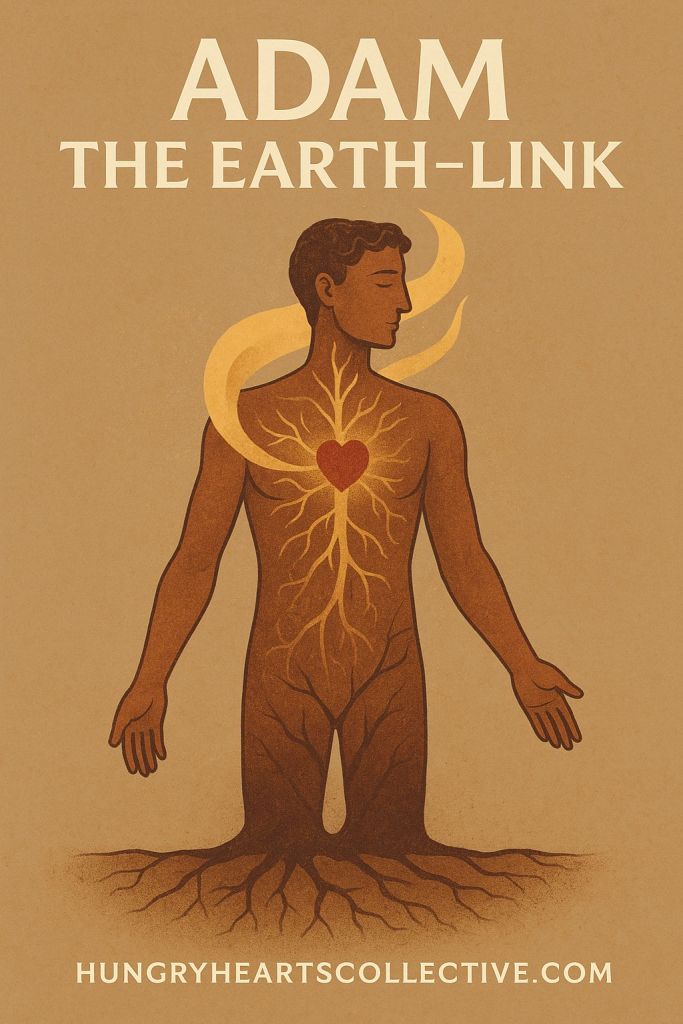
Some of the most fundamental existential questions humanity has ever asked are: Who am I? Where do I come from? Who made me? Why am I here?
Every time we say “I” we invoke identity. Yet the way we answer this “I” determines the entire framework of our lives.
When I am physically conscious—when I allow my senses to dictate who and where I am—my thinking is automatically limited. My horizon is bound by what I can see, hear, taste, and touch. I am defined by the dust, the circumstance, the evidence of the material.
But when I say “I” and refer to my eternal, transcendent identity, I invoke a higher state of consciousness. I step into the awareness that I am not merely clay but also breath, not merely dust but also image, not merely temporary but eternal.
One state looks at the waves and says: “The water is too deep, it’s too risky.” The other state, aligned with the eternal “I,” steps out of the boat and walks on the water. Our spiritual identity is primary while our physical identity is secondary.
This is the great paradox of Adam: the dust-bound earthling called to live as a divine reflection.
CONSCIOUS VS SUBCONSCIOUS / PHYSICAL VS SPIRITUAL
The Scriptures often contrast these two dimensions: the carnal mind and the spiritual mind (Romans 8:6), the outer man and the inner man (2 Corinthians 4:16), the seen and the unseen (2 Corinthians 4:18). It is our duty to be effective stewards of this duality.
To put it another way, we are constantly choosing whether to live from the conscious, sense-driven identity or from the subconscious/spiritual, God-rooted identity. We are the choosers; that is why it is vital for us to renew our minds (Romans 12:2).
In this context James states:
“the body without the spirit is dead” — James 2:26
If we are carnally minded, Paul says plainly, we walk in death (Romans 8:6). That is Egypt—the house of bondage, the realm where fear dictates, senses dominate, and limitation becomes the ceiling of our lives.
But this is not our inheritance. Paul also writes that to be spiritually minded is life and peace. Walking in the spirit—small s, our renewed inner man aligned with God’s Spirit—is the secret key to living free from limitation. It is the doorway out of slavery into the Promised Land.
Here is the contrast:
| Carnal / Physical Mind | Spiritual / Eternal Mind |
|---|---|
| Small “i” | Big “I” |
| “i” can’t! | “I” can! |
| External focus | Internal focus |
| Egypt | Promised Land |
| Slavery | Freedom |
| Scarcity minded | Abundance minded |
| Fear fueled | Faith fueled |
| Reactive | Responsive |
| Defensive | Offensive |
| Survival | Thrival / Rulership |
| Limited | Unlimited |
| Sensory | Imaginative |
| Temporary (timebound) | Timeless (eternal) |
| Vehicle | Passenger |
| Physical Interface | Spiritual Interface |
| Earth tethered | Heaven tethered |
| Downward pull (dust) | Upward pull (breath) |
This is not merely psychology. It is theology. It is the mystery of Adam, the dual being who is both Adamah (earth) and Aleph (divine).
To live by the carnal mind is to be trapped by dust. To live by the spiritual mind is to walk as the “second Adam,” Christ, who modelled for us what it means to transcend the limits of sense and manifest the rule of Spirit.
EXPANSION: THE TWO “I’S”
- The carnal I is an identity born of earth. It is bound by DNA, by circumstance, by the signals of the senses. This “I” is fragile, time-bound, and reactive.
- The spiritual I, however, is rooted in the eternal. It is the breath of God within me, the image of God reflected through me, the inner man renewed day by day.
Paul writes, “It is no longer I who live, but Christ lives in me” (Galatians 2:20). Here Paul identifies the death of the dust-driven “i” (ego) and the awakening of the eternal “I.”
- The first “I” fears drowning.
- The second “I” walks on water.
- The first “I” is limited by what the senses dictate.
- The second “I” is governed by what faith imagines.
To say “I” without reference to God is to be bound to the dust. To say “I” in union with God is to be boundless.
“Then the Lord God formed man from the dust of the ground and breathed into his nostrils the breath of life, and the man became a living being.”
— Genesis 2:7
In the ancient breath of Genesis, the name Adam (אָדָם) is more than a label—it is a revelation. It unveils identity, dignity, destiny, and divine reflection. It is both etymological and theological, speaking of humanity’s place in creation as the sacred conjunction of heaven and earth.
Adam is not merely from the soil; he is the soil awakened. He is dust infused with Spirit, clay crowned with breath. He is the place where heaven kisses earth.
Rashi notes that Adam’s formation was intentional and intimate, setting him apart from all other creatures. Matthew Henry affirms this, writing that man was shaped by divine counsel, not by mere decree. Humanity is unique: not spoken into existence with a word, but moulded with hands, kissed with breath.
ADAM: THE EARTH-LINK
The Hebrew אָדָם (Adam) shares its root with several profound words:
- אֲדָמָה (Adamah) – ground, soil, earth
- דָּם (Dam) – blood
- דָּמָה (Damah) – to resemble, to be like
- דְּמוּת (Demut) – likeness
Thus, Adam is not merely “man,” but also “earthling”—a being bound to the soil, yet fashioned to mirror heaven. His very name carries a paradox: he is drawn from the dust, yet stamped with the likeness of the Divine. In German, the word Odem means “breath,” reminding us of God’s life breathed into him—a subtle echo of his divine origin.
Even linguistically, Adam’s form mirrors his destiny. If we reverse his name in English, Adam becomes mud. He is mud that moves, clay that breathes. And yet, in Hebrew, the word begins with Aleph (א)—the first letter, the symbol of the divine, the silent breath of eternity.
This Aleph links Adam to elevated words in many languages. Consider: elephant (the exalted beast), elevate, aloof, elves (otherworldly beings), and even the Greek Olympus, the exalted abode of the gods. Beekes speculates Olympus originally meant “mountain”—an elevated place. Adam himself is a mountain of dust, raised up, lifted, crowned with breath.
The duality of Adam is thus written into his very sound: lofty Aleph fused with earthy Dam. Spirit and blood. Heaven and soil.
ALEPH AS A REVELATORY CATEGORY
In Hebrew thought, letters are not mere signs but ontological seeds of creation. Each carries both numerical (gematria) and symbolic meaning. Aleph (א), the first letter of the Aleph-Bet, is considered the “mother of all sounds,” often silent, representing both unity and ineffable divine mystery
ALEPH-WORDS AS REVELATORY KEYS
Many of the great theological nouns in Hebrew begin with Aleph—not by coincidence, but by inner design—defining their nature. Consider how eternal (elevated) values all begin with Aleph (א) in Scripture:
- Adam (אָדָם) — Humanity, from adamah (earth). The first creature made in God’s image. Aleph here represents the divine imprint in man.
- Adonai (אֲדֹנָי) — Lord, Master. The relational name by which Israel addresses God in worship.
- Eloah (אֱלוֹהַּ) — Singular of Elohim, highlighting the personal God.
- Elohim (אֱלֹהִים) — God as Creator, Judge, source of all powers.
- Emet (אֱמֶת) — Truth. Tradition says “Aleph is the beginning, Mem the middle, Tav the end — together spelling Emet, showing God’s truth spans all.”
- Ahavah (אַהֲבָה) — Love. Rooted in Aleph, showing divine love as primal.
- Or (אוֹר) — Light. The first spoken creation in Genesis 1:3.
👉 All these reveal Aleph as the hinge of primal realities — God, man, truth, love, light.
BREATH AND BLOOD
Genesis 2:7 reminds us that Adam is not simply shaped dust. He is animated dust. He is dust kissed with breath.
The divine breath (נִשְׁמַת חַיִּים, nishmat chayyim) is what turned innert soil into living soul. And yet within Adam’s name is also Dam (blood).
“For the life of the flesh is in the blood.” — Leviticus 17:11
Blood carries life (breath i.e. O2 etc.) and thus destiny. Dust without breath is nothing. Breath without blood has no dwelling. In Adam, dust, breath, and blood converge.
The reddish hue (adom) of the earth symbolises both life and sacrifice. The body is not a prison but a temple, a vessel of glory. Jesus compares it to a field with hidden treasure (Matthew 13:44) and to a jar containing heavenly riches (2 Corinthians 4:7). The clay is sacred precisely because it is chosen to hold Spirit/spirit.
DEMUT AND DAMAH: MADE TO REFLECT
“Then God said, ‘Let Us make man in Our image, after Our likeness.” — Genesis 1:26
Two key Hebrew words frame the divine intention:
- בְּצַלְמֵנוּ (b’tsalmenu) – in our image
- כִּדְמוּתֵנוּ (kid’mutenu) – after our likeness
These words are not redundant. They reveal depth:
- צֶלֶם (tselem) – a visible form, a carved or sculpted representation
- דְּמוּת (demut) – a functional likeness, a resemblance in role, not just in form
The verb דָּמָה (damah) means not only “to resemble” but also “to act in resemblance, to function in alignment.” Humanity does not merely look like God—we are called to operate like Him, to reflect His will in creation.
You always reflect what you stand close to.
Thus, Adam is not just shaped like God; he is positioned to mirror God—reflect the invisible into the visible. To be Adam is to be a living parable of the Invisible.
THE HUMAN BLUEPRINT AND THE DIVINE TRINITY
Scripture presents man as a triune being, echoing the Godhead:
| Divine Parallel | Human Expression | Scripture Reference |
|---|---|---|
| Father (Will/Authority) | Soul (Mind, Will, Emotions) | Genesis 2:7; Psalm 139:14 |
| Son (Embodied Word) | Body (Physical Vessel) | Colossians 2:9 |
| Spirit (Holy Spirit) | Spirit (Inner Man) | 1 Thessalonians 5:23 |
You are a living trinity in miniature, a walking reflection of the eternal Trinity.
This threefold nature also mirrors the Tabernacle:
| Realm | Tabernacle Zone | Light Source | Biblical Type | State | Lineage |
|---|---|---|---|---|---|
| Spirit | Holy of Holies | Shekinah / Ark | Promised Land | Freedom | Shem |
| Soul | Holy Place | Menorah (Word of God) | Wilderness | Formation | Japheth |
| Body | Outer Court | Sunlight | Egypt/Exile | Slavery | Ham |
The Spirit is the Holy of Holies, the place of glory. The Soul is the Holy Place, illuminated by the menorah which represents the Word of God. The Body is the Outer Court, dependent on natural light to function properly in the same way our souls depend on God’s word and our spirits on God’s presence.
We are walking talking temples.
Paul warns in Romans 1–2 that when we disconnect from truth, each layer collapses. The body becomes enslaved, the soul corrupted, and the spirit darkened. But in Christ, the temple is restored, and the Spirit once again dwells within.
CONTRAST: THE NAKHASH AND THE DUST
The serpent (nakhash, נָחָשׁ) in Genesis 3 was no ordinary snake. Scripture describes him as arum—crafty, shining, elevated. Isaiah 14 and Ezekiel 28 hint at his celestial splendour before his fall.
The letters of nakhash (N-CH-S) can be rearranged into sachan—to hiss, to enchant, to cast a spell and even sanach (snake). He was not crawling when he first approached Eve, as a reptilian hominid; crawling on his belly was his curse. His fall banished him to the realm of dust—the very realm where Adam was appointed to reign.
Thus, the story is more than a tale of a snake and a tree. It is the eternal antagonism between fallen spirit and divine image, between corrupted glory and sanctified dust.
“Dust you are, and to dust you shall return” (Genesis 3:19).
Yet dust filled with divine breath becomes unconquerable.
THE MISHKAN AND THE SKIN OF ADAM
The Hebrew Mishkan (משכן)—tabernacle—means dwelling, resting place. It shares roots with words of covering and protection:
- סֻכּוֹת (Sukkot) – booths, shelters
- Mosque (Arabic: masjid) – a place of prostration, covering space with reverence
- Magasin (French) – storehouse, a covering for goods
- Moccasin (Algonquin) – a covering for the feet
- Skin (English) – the covering of the body
This S-K-N phoneme runs like an ancient echo across languages, tied to the concept of covering, presence, and protection. The sky covers the earth, the skin covers the body, the Mishkan covered the Ark.
Early rabbinic commentators such as Nahmanides taught that Adam was clothed not in animal skin originally, but in garments of light (אוֹר). Only after sin did his skin become opaque, a lesser covering. But even then, his body remained a temple, awaiting the return of the garment of glory and righteousness.
ADAM: YOU, IN BLUEPRINT
Adam is not only the first human—he is the blueprint. His story is your story. His name is your name. You are the earthling faced with the same choices.
He is:
- Soil with memory
- Breath with shape
- A temple with skin
- A reflection with choice
To be human is to embrace paradox. You are dust and divinity. Mud and majesty. Earth and eternity.
You are the doorway between realms. You are the only creature who exists at once in the physical and the spiritual. That is why you are a priest—called to mediate, to steward, to represent.
To live as Adam is to live as a ruler—not dominating creation for selfish gain, but stewarding it in alignment with the Creator’s will. You are placed in Eden not to consume but to cultivate, to guard, and to glorify.
COMMENTARY INSIGHT
Rashi on Genesis 1:26:
“‘In our image, after our likeness’—This teaches us that man was created with deliberation, with counsel. The humility of the Holy One is here revealed, for He consulted with His heavenly court before creating man.”
Matthew Henry on Genesis 2:7:
“Man was a piece of divine workmanship, formed by the hand and counsel of God. He was not made by a word of power, as the beasts were, but with solemnity. He was the product of a divine conference.”
Nahmanides on Adam’s skin:
“Adam and his wife were created with garments of light, splendour and glory. When they sinned, the garments of light were taken, and they were clothed with garments of skin.”
Each commentary affirms Adam’s uniqueness, dignity, and destiny. Humanity is no accident. Humanity is divine intention.
SUMMARY
So the next time you are faced with either an opportunity or a challenge and you say, “I”—pause. Do not rush past that word. For in that simple syllable lies the fork in the road between two worlds.
You can choose the small “i” that is bound to Egypt—the house of bondage—where you are enslaved to your senses, ruled by fear, and chained to limitation. This “i” says, “I can’t, it’s too deep, it’s too much.”
Or you can awaken the eternal “I,” the “I” that belongs to the Promised Land—where you are free, where you are response-able, where you stand not as a slave but as a ruler. This “I” knows no chains, for it was breathed by God Himself. This is the “I” that steps onto the waves and walks where others sink.
Every decision, every response, every dream, every prayer begins at that moment of identification. Which “I” will you let speak for you? The captive of Egypt, or the son of promise?
Pause. Breathe. Choose. And walk forward as the eternal “I AM” in you rises to meet the world.
DEVOTIONAL PRAYER
Lord,
Remind me that I am not random matter but designed meaning.
Let me walk as one formed from dust, but filled with divinity.
Let my every breath reflect the image I bear.
And let the earth remember You through me.Amen
QUESTIONS FOR REFLECTION
- What does it mean for me to be a “living image” of God?
- Where in my life do I forget that I was formed with both dust and destiny?
- How do the roots of Adam (adamah, dam, damah) shape my understanding of my origin and purpose?
- How does Jesus restore the broken image within me?
- What would change if I saw myself as a temple of divine breath today?
MEMORY VERSE
“Then God said, ‘Let Us make man in Our image, according to Our likeness; and let them rule…’” — Genesis 1:26
FAQ
1. What is the fundamental paradox of Adam’s identity, and how does it relate to the human experience?
The fundamental paradox of Adam lies in his dual nature: he is both a “dust-bound earthling” and a “divine reflection.” This means humanity is formed from the soil (Adamah), making us physical, temporary, and subject to the limitations of the senses. However, we are also infused with the “breath of life” (Aleph), carrying the image and likeness of God, which signifies an eternal, transcendent, and spiritual identity. This paradox is central to the human experience because every individual faces the choice of whether to live primarily from their physical, sense-driven identity (the “carnal I”) or from their spiritual, God-rooted identity (the “eternal I”).
2. How do the “carnal mind” and “spiritual mind” differ, and what are the implications of choosing one over the other?
The “carnal mind” (or physical mind) is rooted in the senses, fear-fueled, scarcity-minded, reactive, defensive, and focused on survival. It is limited by what can be seen, heard, tasted, and touched, leading to a life bound by “Egypt,” a state of bondage and limitation. In contrast, the “spiritual mind” (or eternal mind) is faith-fueled, abundance-minded, responsive, offensive (in the sense of proactive engagement), and oriented towards “thrival/rulership.” It operates from a higher state of consciousness, aligned with God’s Spirit, and leads to a life of freedom, peace, and boundless potential, akin to entering the “Promised Land.” Choosing the carnal mind leads to spiritual death and limitation, while choosing the spiritual mind leads to life and peace.
3. What is the significance of the Hebrew name “Adam” and its linguistic roots in understanding humanity’s place in creation?
The Hebrew name “Adam” (אָדָם) is deeply revelatory. It shares roots with “Adamah” (ֲאָדָמה – ground, soil, earth), signifying humanity’s connection to the physical world. It also relates to “Dam” (ָּדם – blood), representing life and destiny, and “Damah” (ָּדָמה – to resemble, to be like) and “Demut” (ְּדמּות – likeness), emphasizing our resemblance to the Divine. Linguistically, reversing the name “Adam” in Hebrew begins with “Aleph” (א), the first letter of the alphabet, symbolizing the divine, unity, and ineffable mystery. This fusion of earthy roots with the lofty “Aleph” illustrates Adam as a “mountain of dust, raised up, lifted, crowned with breath,” embodying the sacred conjunction of heaven and earth.
4. How does the concept of “Aleph” serve as a revelatory category in Hebrew thought, particularly in relation to key theological terms?
In Hebrew thought, “Aleph” (א) is not just a letter but an “ontological seed of creation,” carrying deep symbolic and numerical meaning. As the “mother of all sounds” and often silent, it represents divine mystery and unity. Many foundational theological nouns in Hebrew begin with Aleph, underscoring their eternal and elevated nature. Examples include “Adam” (humanity, divine imprint), “Adonai” (Lord, master), “Eloah” (personal God), “Elohim” (God as Creator), “Emet” (truth, spanning all), “Ahavah” (divine love), and “Or” (light, primal creation). This indicates that Aleph functions as a “hinge of primal realities,” connecting God, humanity, truth, love, and light.
5. What is the distinction between “image” (tselem) and “likeness” (demut) in Genesis 1:26, and what does it imply about human purpose?
In Genesis 1:26, “image” (tselem) refers to a visible form, a carved or sculpted representation, indicating that humanity possesses a divine form or structure. “Likeness” (demut), however, goes beyond mere appearance. It signifies a functional likeness, a resemblance in role and action. The verb “damah” (from which demut derives) means not only “to resemble” but also “to act in resemblance, to function in alignment.” Therefore, being made in God’s image and likeness means humanity is not just shaped like God but is also called to “operate like Him,” to reflect His will, authority, and character within creation. Humans are positioned to mirror the invisible into the visible, acting as “living parables of the Invisible.”
6. How is humanity presented as a “triune being,” and what divine and biblical parallels are used to explain this structure?
Humanity is presented as a “triune being” – body, soul, and spirit – mirroring the Divine Trinity and the structure of the Tabernacle.
- Spirit (inner man) parallels the Father (Will/Authority) and the Holy of Holies (place of Shekinah glory, Promised Land).
- Soul (mind, will, emotions) parallels the Son (Embodied Word) and the Holy Place (illuminated by the Menorah, representing the Word of God, Wilderness/Formation).
- Body (physical vessel) parallels the Holy Spirit (Life-giver, though the table shows “Son” for body, it’s Spirit/body/soul) and the Outer Court (dependent on natural light, Egypt/Exile/Slavery). This threefold nature highlights that humans are “a living trinity in miniature,” a walking reflection of the eternal Trinity, with each part having a specific function and significance that, when aligned, leads to freedom and spiritual life.
7. What is the significance of the serpent (nakhash) in Genesis 3 being banished to the realm of dust, and how does this relate to Adam’s destiny?
The serpent (nakhash) in Genesis 3 is described as “arum” (crafty, shining, elevated) and is hinted to have had celestial splendor before its fall. Its curse was to crawl on its belly and be confined to the “realm of dust,” the very domain where Adam was appointed to reign. This signifies an “eternal antagonism between fallen spirit and divine image, between corrupted glory and sanctified dust.” While the serpent’s fall subjected it to dust, Adam, though also formed from dust, is infused with divine breath. This distinction means that “dust filled with divine breath becomes unconquerable,” highlighting Adam’s destiny to rule over the realm to which the serpent was banished, demonstrating the triumph of sanctified dust over corrupted spirit.
8. What is the ultimate “blueprint” of Adam, and how does this understanding empower individuals in their daily lives?
The ultimate “blueprint” of Adam reveals that every human is “the earthling faced with the same choices” as the first man. We are “soil with memory, breath with shape, a temple with skin, a reflection with choice.” This means embracing the paradox of being both “dust and divinity, mud and majesty, earth and eternity.” Humans are unique as “the doorway between realms,” existing simultaneously in the physical and spiritual. This understanding empowers individuals to recognize their inherent priestly calling – to mediate, steward, and represent the Creator’s will on earth, not to dominate for selfish gain, but to cultivate, guard, and glorify. Every decision becomes an opportunity to choose between the “I” bound by senses and fear (Egypt) or the “eternal I” that is free, response-able, and capable of walking in God-given authority (Promised Land).
 The Hungry Hearts Collective
Leave a comment